MATRIXSYNTH


Thursday, May 15, 2008

Modular 2006

flickr by parasitk

i, parasite

Akai ME-20 A Midi Arpeggiator


via stamba on the forum

If anyone knows where to find a manual for this please comment or shoot me an email. You can find my contact info on the bottom right of the site.

BTW, I'm open to posting questions for people, just send me something worth posting with the question like an image, video, audio or other. Something that would warrant a post without the question. Just like band promo posts and the like. Hopefully I won't regret this. :)

Update via b rock in the comments (be sure to check out the comments for more):
"I happened across this thread while I was looking for background information myself.

Re: an ME20A manual. Here's a link ...

I haven't pursued that one yet, as I'm just looking to verify what I may have missed in my own explorations. (I've been putting together a .pdf for the newly-revitalized PatchArena.)

I've had an ME20A for years now. The key to using it is in embracing the quirkiness of the design. It's certainly an arpeggiator; just not in a modern sense of the term.

There are 3 algorithms: the usual Up & Down, plus a programmable Seq pattern. Rec Pattern determines octaves & direction. Rec Chord determines the notes that all three algorithms act upon. I don't have any numbers on maximum length yet.

MIDI In is for recording purposes only. The arpeggiated notes don't act upon live input. These are transmitted by Play, or a latching-type footswitch. The parameters cannot be changed with a footswitch plugged in, unless the 'latch' is currently pressed. Play or Stop is triggered on the footswitch release.

Step either extends a recorded note in progress (before note off), or can be entered as a rest by footswitch or front panel. Really old school here.

There is no MIDI Sync on the Speed, although I've used it as a master in a Tap Tempo routing. Gate Time literally lengthens or shortens the MIDI note output. Dynamics varies the velocity values of all outgoing notes from v=1 to v=127.

This may all sound confusing, but it's much easier in practice. That's one reason that I've undertaken an explanation in .pdf format. A picture is worth a thousand words.

In the meantime, I hope this helps someone get started. The ME20A is really a unique & useful device. If you get the opportunity, grab one before it catches on ... ;-) "

flight of harmony Plague Bearer

Quad Voltage-Controlled Resonant Bandpass filter (VCRBPF)

"It is designed to infect, corrupt and pervert a signal beyond recognition. It contains four Voltage-Controlled Resonant Bandpass filters that were designed with the goals of maximum signal alteration and maximum parameter controllability. Each filter has controls for varying the high and low corner frequencies of the passband, as well as variable gain and an input attenuator. Each section of the Plague Bearer can be used as a filter, an oscillator, a noise generator, or even as a resonance oscillator!

Depending on the settings, the filter can be a lowpass, highpass, single-bandpass, or multiple-bandpass. Adjusting the resonance point can cause the filter to self-oscillate in many ways: By adjusting the controls to just below the point of oscillation, and then applying a pulse, square, or other abrupt-edged input signal waveform will “ring” the filter. A simple “click” on the input can give a percussive output sound – from bass drum to bell to a harsh metallic clang; Crank the controls up and this beast will scream like a banshee! The oscillation can be damped or continuous. Chain a couple in series and get accumulating feedback – the build-up can be slow, fast or instantaneous. White Noise is easy to do - you don’t even need an input signal! Turn the input all the way down, and then slowly turn the gain up. You can adjust the “color” of the noise with the frequency controls. Daisy-chaining multiple filters can give a “comb” or multi-phase noise. About phase-shift characteristics: A single filter can give a STRONG chorus effect if so desired, useful as a sub-oscillator or just to “fatten” a sound

The Plague Bearer’s patchbay is designed to fit the most patch options possible in the small space available. Each filter has four Input/Output (I/O) connections: High CV, Low CV, Signal In, and Signal Out. Each of these has two jacks, one 3.5mm phone jack for external signals to avoid floating grounds, and one 0.080” tip jack for internal patching between filters. Each pair is direct-connected as a multiple – NOT a summing node! I have found this setup to be the most fun!

For maximum flexibility, the Plague Bearer can run off two 9V batteries or a 12V.A.C. wall wart (wall wart included with unit). The batteries are mounted externally in an unobtrusive location for ease of replacement. The power source is selected via the power switch.

Version 1 units are mounted in an extruded aluminum enclosure with aluminum panels. These enclosures are some of the best I have ever come across! This initial run will be of only FOUR (4) units! I’ll do another run in this style only if I can get more enclosures. I am constantly searching for more enclosures so, we’ll see!"

You can find more info including images and ordering information on flight of harmony.

The Korg MS-20: Introduction


YouTube via AutomaticGainsay
"Here is the Korg MS-20 series introduction. The series will demonstrate the sound and functionality of the Korg MS-20."

2600 Iowa: Little geek girls playing with x0xb0x!


YouTube via cerexbellum. via synthzoom.
"2600 Iowa: Little geek girls playing with x0xb0x!
Location: Ames, Iowa
Meeting Date: Friday December 7th, 2007"

MIDI retrofit kit for TB-303


YouTube via accenter
"MIDI303 Interface zum nachrüsten der REoland TB-303. Dacnh kann man 5 Oktaven per MIDI spielen (mit Accent und Slide!). Der interne Sequenzer funktioniert natürlich auch weiter wie gewohnt. www.tb303.at"

Wednesday, May 14, 2008

"Staying Alive" - on ELKA X-1000


YouTube via organfairy. follow-up to this Pink Floyd cover.
Be sure to check out the rest of organfairy's videos here.

Dj Skyline Br - The Rose


YouTube via kamitnick
"Chilled mode = on
Track in memory a friend that it died...very sad"

JH Tau Phaser Samples

via Drew on AH:

"A few samples of the two Tau Phasers. I tried to keep it short and sweet so as not to clog too much bandwidth... Go here

the 2 files 1VCO through 2 Tau are just that--one is in the vibrato setting on both, the other is phased setting on both. The 2210 and 3086 show that those 2 are different sounding, even when tuned together and playing the same sequence (controlled by a Kenton Pro4 at the 1v/oct input). Tauseq is a drone with 2 taus tracking each other for a stereo effect Twintau is both running free with pink noise demonstrating the extreme through zero effect.

If you guys want me to put some stinkin' drum loops through these things I can do that too, but these waveforms made it easier to hear what each phaser sounds like.

Thanks to Brandon Daniel for hosting this!

Drew Neumann"

Peavey Midi Bass Guitar

images via this auction
"This is a very hard-to-find midi bass from Peavey. Excellent condition cosmetically and functionally. Use this as a standard bass guitar and/or to control any electronic midi instrument (synth, drum machine, sampler, etc).... Knobs on the body control bass tone, bass level, volume of midi instrument, and master volume. Control a huge array of settings and parameters easily using the toggle switch on the body in conjunction with LED readout (visible in the pics on the top of the body) and fretted notes. For instance you can set it up to play a piano sound on the 'G' string, a full drum kit on the 'D' string, a guitar lead on the 'A' string, and a horn on the 'E' string, plus bring in the sound of the bass whenever you want - all right from the guitar itself! Then instantly change the configuration for the next song by fretting a note (each note location on the fretboard has a different predesignated function for midi purposes) while toggling the data switch once. Also setup the sensitivity of the midi triggering for each individual string, playing style (finger or pick), and a lot of other customizable parameters - all from the bass. This is a bass guitar and so very much more . . . Midi bass systems vary in ability to 'track' played notes (translate normal playing to midi notes) and this one does this extremely well. It also tracks bends and slides! It has a normal 1/4 inch out jack in addition to a proprietary cable to carry the midi information to the included 1 unit rackmount midi converter. The commonly available guitar and midi cords aren't part of this auction but the Peavey cable, user manual, and power adapter for converter are included, as is a mint SKB guitar case."
PREVIOUS PAGE NEXT PAGE HOME


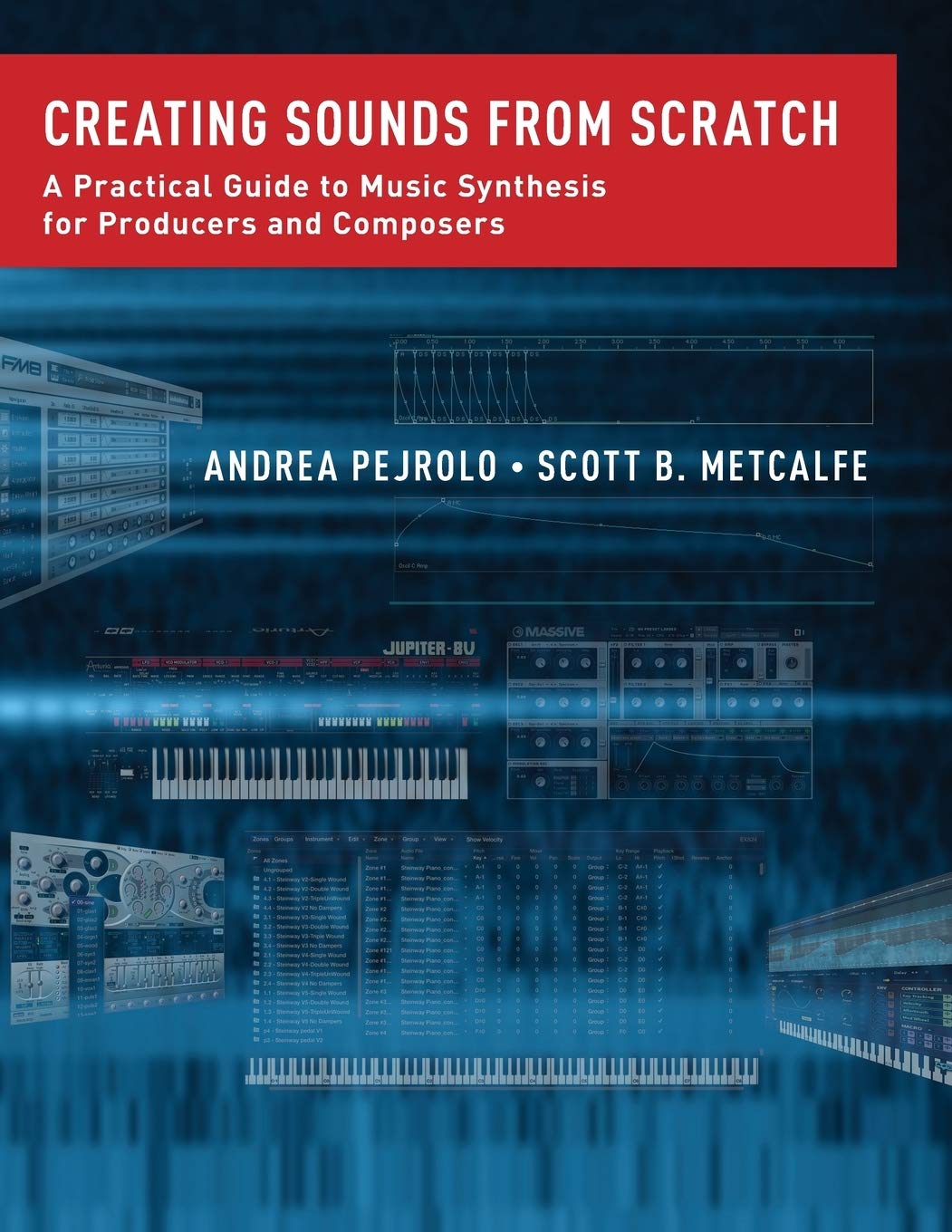
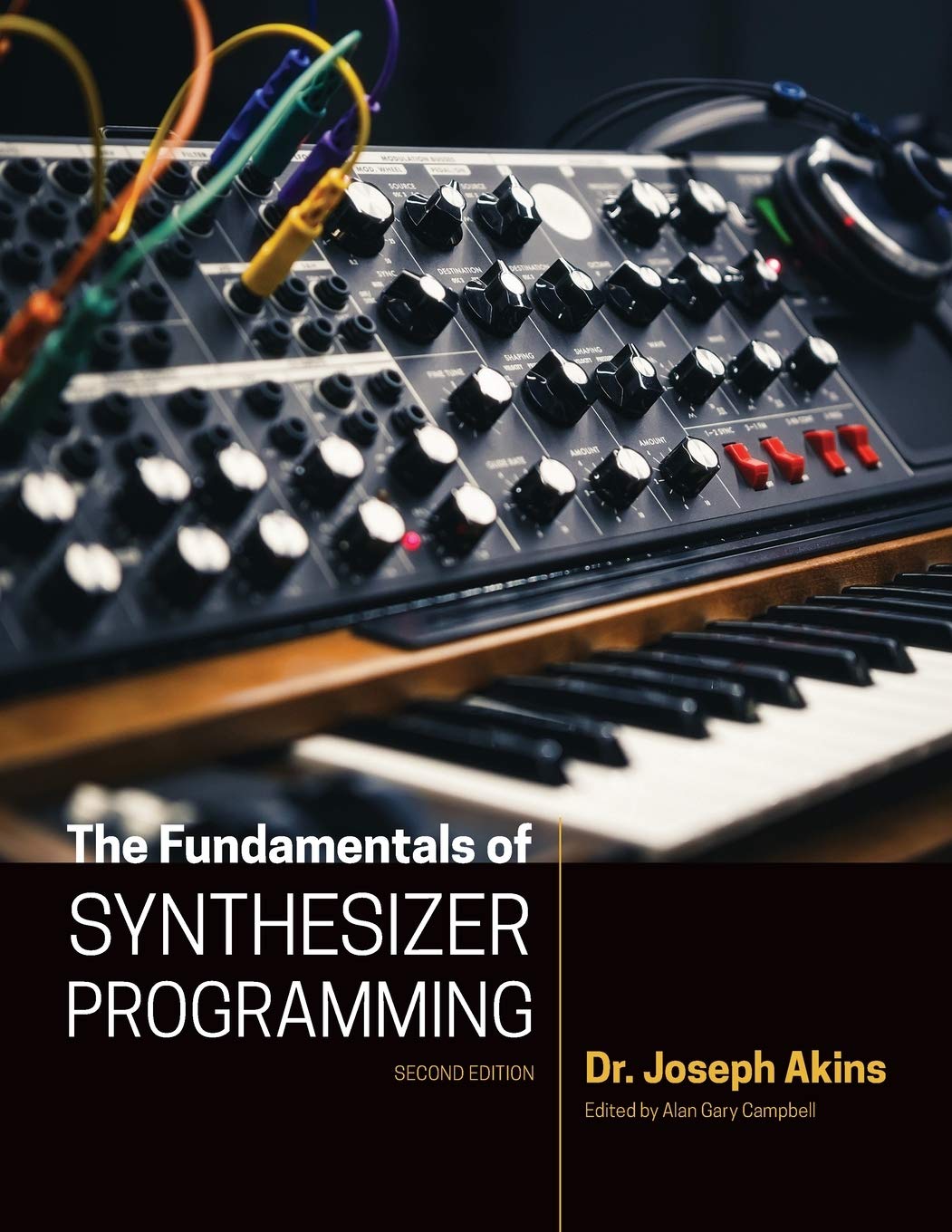
Switched On Make Synthesizer Evolution Vintage Synthesizers Creating Sound Fundlementals of Synthesizer Programming Kraftwerk

© Matrixsynth - All posts are presented here for informative, historical and educative purposes as applicable within fair use.
MATRIXSYNTH is supported by affiliate links that use cookies to track clickthroughs and sales. See the privacy policy for details.
MATRIXSYNTH - EVERYTHING SYNTH