Sunday, June 14, 2009
Descent From Digitana Sequences
YouTube via JeffreyPlaide
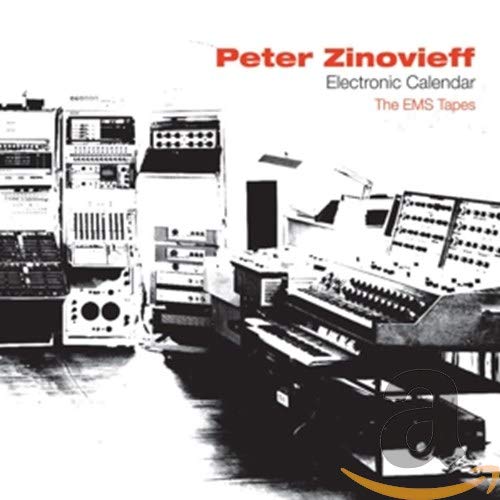
"This work was one of the first musical compositions composed almost entirely on the Alesis Andromeda synthesizer. A basic rhythm patch was programmed on the Andromeda, and this then provided the backing for the multi-part sequences using a short sustain and hard-synched oscillators. The sequences introduce the tempo of the melody with these being backed by a warm string-like pad. The optimism of the piece soon changes as darker pitch modulations come into play with a nightmare of surreal bird samples invading the scene. The Andromeda sequences die away to leave the bird calls and a very dark bass oscillation. This synthesizer experimentation was one of the first to bring about a complete phrasal change from the optimistic plucked sequences to the darkwave tones of the bird passages. The visuals for the music were entirely composed using pure video synthesis and transformational linear modulations created by the Adobe Premier software. This was done for the creation of analogue-like video modulations using entirely synthetic means. The result is an unusual interwoven synthesizer combination blending analogue and sampled sounds with pure electronic video animations. The composition represents a tribute to the EMS Synthi 100 audio synthesizer and the EMS Spectron video synthesizer."

Free Editors for the Oberheim Matrix-1000, Yamaha FS1R, and Waldorf MicroQ
You will find the following on this site in French. Googlish here.
* Editor for Oberheim Matrix 1000 and MacOS9
* Editor for Oberheim Matrix 1000 and MacOSX (native)
* MIDI Harmoniseur for MacOSX
* Editor for Yamaha FS1R integrated into JSynthLib, Print multi-tools in Java and running on Linux, Windows and MacOSX.Ceci said I do not stand over the code but as it is open source anyone can change .
* Editeur MacOSX (natif) pour Yamaha FS1R => en cours
* Publisher MacOSX Waldorf micro Q
via Joel, who used the Micro Q editor, on the Waldorf list:
"It really is very hard to grok the full power of an instrument when you can only see into it from a tiny window. Well designed synth editors really let you see the big picture. Thanks also to the free MQeditor I recently found here I'm now able to really get serious about making new sounds on my MicroQ - it was fine from the front panel, but now I've come to understand the Modulation and routing sections much better, and to get a better feel for what my synth is capable of."
* Editor for Oberheim Matrix 1000 and MacOS9
* Editor for Oberheim Matrix 1000 and MacOSX (native)
* MIDI Harmoniseur for MacOSX
* Editor for Yamaha FS1R integrated into JSynthLib, Print multi-tools in Java and running on Linux, Windows and MacOSX.Ceci said I do not stand over the code but as it is open source anyone can change .
* Editeur MacOSX (natif) pour Yamaha FS1R => en cours
* Publisher MacOSX Waldorf micro Q
via Joel, who used the Micro Q editor, on the Waldorf list:
"It really is very hard to grok the full power of an instrument when you can only see into it from a tiny window. Well designed synth editors really let you see the big picture. Thanks also to the free MQeditor I recently found here I'm now able to really get serious about making new sounds on my MicroQ - it was fine from the front panel, but now I've come to understand the Modulation and routing sections much better, and to get a better feel for what my synth is capable of."
12DECODE Waldorf Microwave Editors for Macintosh
 http://12decode.de/
"This page is about my system exclusive based sound editors for Waldorf’s MicroWave Synthesizers. The current version is 4.1
There is an editor for the original Microwave (aka Microwave I, with software version 2.0 installed) and an editor for the Microwave II (including the XT line).
The sound generating architecture of the Microwave II is very similar to the MicroWave I, except the different concept with the “modulation matrix” and the possibility to change many parameters simply by control change messages and by turning the little knobs manually, so system exclusive programming may not be so important."

Saturday, June 13, 2009
RMI Harmonic Synthesizer

via this auction
"The RMI Harmonic Synthesizer. This is serial number 128. There were under 200 of these made, and this one is in amazing condition and fully functional. It was recently calibrated and this unit comes with built in stand, owner's and service manuals, and lots of hard to find spare chips incase you ever need them. I would almost want to call this mint, but I have a hard time calling any 35 year old synthesizer mint.
 From Sonic State [link]:
Totally excellent,marvellous synthesizer. The very first digital, additive synthesizer on market.
Very rare (only about 200 ever made)
Notably user : Jean Michel Jarre on Oxygene,Equinoxe,Rendez-Vous,Oxygene 7-13
For more information about how it works, see here"
Jupiter 6 Track Demo
YouTube via JMPSynth
"In the tradition of my other videos, this is a short demo track made entirely with the Roland Jupiter 6. Reverb and a bit of delay added to some sounds otherwise no other effects. Drums are from the EMU ESI 4000 sampler."
APC40 Hack 1: Monome Emulator for the APC40
APC40 Hack 1: Monome Emulator for the APC40 from !INCLUDE on Vimeo.
"This video shows a max msp patch I made for Akai's APC40. It basically allows you to use all of the Monome apps with an APC40. Download the app for free at: trackteamaudio.com"
A Janko Musical Keyboard Project

Click here for another Janko DIY project. The following is a short blurb from the site: "Have you ever thought about why the keys are arranged the way they are on a piano? The piano keyboard is extremely well established and few people question if its a good or bad keyboard layout. It has taken quite some time for me to realize that the piano keyboard really couldn't be an ingenious device. From a historical viewpoint the key arrangement on the piano is actually a remodification of some really old designs that were used in the renaissance period. The Janko keyboard is named after its inventor Paul von Janko which was a hungarian matematician. Indeed I could spend all day and night just talking about the theory and background of the piano keyboard versus the so called Janko keyboard and I believe this wikipedia article explains it pretty good."
 The site mentions the only manufacturer of Janko keyboards is a Japanese company called Chromatone. Although similar to the C-Thru Axis controllers it is different. I did a little digging and according to this site: "C Thru Music's harmonic table and the Shape of Music's Melodic Table are both based on Tonnetz by Euler and Riemann(http://www.thummer.com/blog/2007/06/eulers-tonnetz.html , http://members.cox.net/dysartp/traditionalTonnetz.html)." Be sure to see this thread for more info on alternate keyboard controllers. Also see the labels below for prior posts here on MATRIXSYNTH.
See dealers on the right for pricing and availability on gear.
LABELS/MORE: Alternate Controllers, Alternate Keyboards, C-Thru, Chromatone, DIY
LABELS/MORE: Alternate Controllers, Alternate Keyboards, C-Thru, Chromatone, DIY
Memorymoog Multisamples on a Waldorf Blofeld
via Boele of SCD:
"Well, here is a little example of the usage of a Memorymoog multisample in the Blofeld. Bare recording.
I combined the sample (sort of bellish bass) with a VA pulse waveshape from the Blofeld, added all kinds of modulation on that pulse waveshape, FM-ing one of the sample oscillators a little, added some noise, delay etc. etc.
http://www.synthmusic.info/mpdries/mm.mp3
Now one can argue if this sound isn't possible without the Moog's multisample which in fact is quite a basic one. I say no :-) At least not without a lot of extra programming. The characteristics of the Memorymoog's low end and overall EQ can't be simulated well on the Blofeld. Plus the randomness of pitch and other things of the Moog's samples.
Another important thing with multisamples from other instruments: the level-curve from a whole keyboard range is not easy (if not impossible) to simulate on the Blofeld.
Boele"
"Well, here is a little example of the usage of a Memorymoog multisample in the Blofeld. Bare recording.
I combined the sample (sort of bellish bass) with a VA pulse waveshape from the Blofeld, added all kinds of modulation on that pulse waveshape, FM-ing one of the sample oscillators a little, added some noise, delay etc. etc.
http://www.synthmusic.info/mpdries/mm.mp3
Now one can argue if this sound isn't possible without the Moog's multisample which in fact is quite a basic one. I say no :-) At least not without a lot of extra programming. The characteristics of the Memorymoog's low end and overall EQ can't be simulated well on the Blofeld. Plus the randomness of pitch and other things of the Moog's samples.
Another important thing with multisamples from other instruments: the level-curve from a whole keyboard range is not easy (if not impossible) to simulate on the Blofeld.
Boele"
Reason 4.0 CV/Gate Controlling an Oberheim S.E.M.
YouTube via PeffTV. volta
"http://www.peff.com/journal/2009/06/1... Reason CV signals converted to audio signals via the THOR Polysonic Synthesizer, will send a DC voltage through the Mark of the Unicorn 896 HD audio interface. In this manner Reason 4.0 can be used to control a variety of analog synthesizers that comply to the traditional CV/Gate voltage protocols. I tested this configuration with the ARP2600, which also works very well."
See dealers on the right for pricing and availability on gear.
LABELS/MORE: MOTU, Oberheim, Propellerhead, Video, Volta
LABELS/MORE: MOTU, Oberheim, Propellerhead, Video, Volta
PREVIOUS PAGE
NEXT PAGE
HOME
© Matrixsynth - All posts are presented here for informative, historical and educative purposes as applicable within fair use.
MATRIXSYNTH is supported by affiliate links that use cookies to track clickthroughs and sales. See the privacy policy for details.
MATRIXSYNTH - EVERYTHING SYNTH
© Matrixsynth - All posts are presented here for informative, historical and educative purposes as applicable within fair use.
MATRIXSYNTH is supported by affiliate links that use cookies to track clickthroughs and sales. See the privacy policy for details.
MATRIXSYNTH - EVERYTHING SYNTH