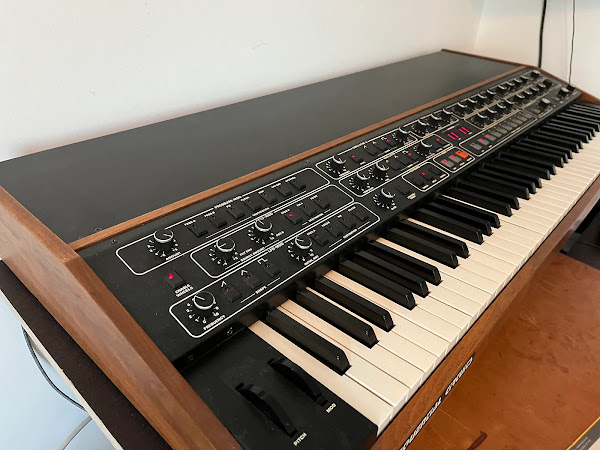
"Sequential Circuits T8 the beast! teh bigger sister of the Prophet 5 8 voices, velocity, release velocity, and polyphonic aftertouch! extensive poly Mod / Pressure Mod section can be 8voice single, 4+4 voice split or 4+4voice dual layers basic sequenzer as scratchpad
weighted wooden 76keybed with hammermecanic same keyboard was used in the SynclavierII full Midi implementation incl Mono mode = MPE way before MPE existed
in excellent condition - serviced - comes in flightcase with manuals"
"1980's Roland Juno-106 analog synthesizer in near mint, collector-grade condition, fully serviced and calibrated, and complete with the original molded case and manual. Recently imported from Japan, the Juno 106 is one of the most enduringly popular Roland synths of the '80s, virtually the same synth engine as its predecessor the Juno 60, yet with extensive MIDI capability and over twice the patch memory storage (128 patches)."
"This module contains all the elements of a single synth voice. The audio signal paths from the VCO to VCF to VCA are all made internally, as are the keyboard and EG inputs to the VCF and VCA. These connections can be overridden by inserting a jack into the relevant socket. A few features are missing, but that's not surprising, considering the module's 4X9‑inch size."
"A quick look at the Latvian-made synth which brings MIDI and patch programmability to the classic EMS VCS3 and Synthi A layout. www.markjenkinsmusic.com"
"The MCFx2 is our state variable ‘MCF’ filter made double. It features 2 identical classic analog 3 pole filter cores each with Low, High and Band Pass (or Notch) outputs. Direct and voltage control is provided for both filter cut offs and resonance.
Two switches allow the filters to function as one, with the ‘Feed’ switch internally routing audio from one filter to the other in series and the ‘Link’ switch linking the cut off controls for both filter cores.
MCFx2 expands on the great sounding MCF filter (previously available only as part of the System Coupe) to offer both serial and parallel functionality for stereo operation, dual peak, tighter slopes and other complex filtering set ups.
"There don't seem to be many videos on the Ginko Synthese Seeds VCO, so I figured I'd do a general overview.
It's not fancy. With an underpowered CPU (8 bit, 16 MHz Arduino Nano), it's not high fidelity. But what it lacks in crystal clear sound it makes up for in character.
There are 9 modes. In theory it can run as either a free-running VCO with an external gate/VCA, or as a voice with its own internal gate/VCA. I built this one, and apparently screwed something up because it doesn't do the free-running mode. I'll have to ask about that.
Nothing else here but the Seeds and a little reverb at the end. Except for the last part where I add some chorus and filtering to try and tame the noise….
00:00 Intro 00:20 0: The original "Grains" formant peaks 02:14 1: Tri wave w/ asymmetrical wave-wrapping 03:42 2: Super-saw with PWM 05:10 3: Classic FM 07:20 4: Saw-wave with hard sync 08:30 5: Phase-distortion 09:56 6: Tuned noise 11:11 7: Square wave with PWM 12:30 8: Ring mod 14:00 With chorus and some filtering"
Note the serial number on the back is 780632 while the slip on the inside is 780633.
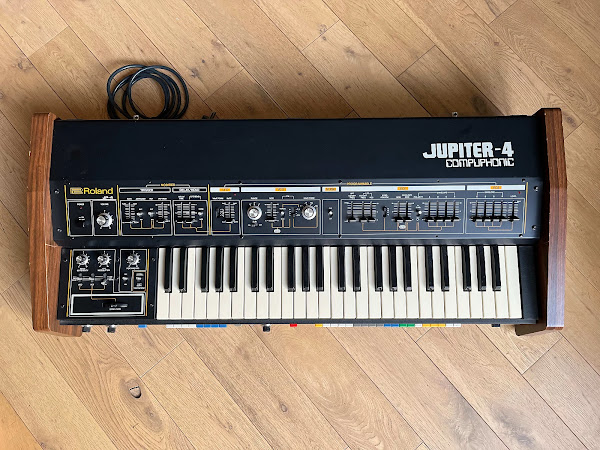
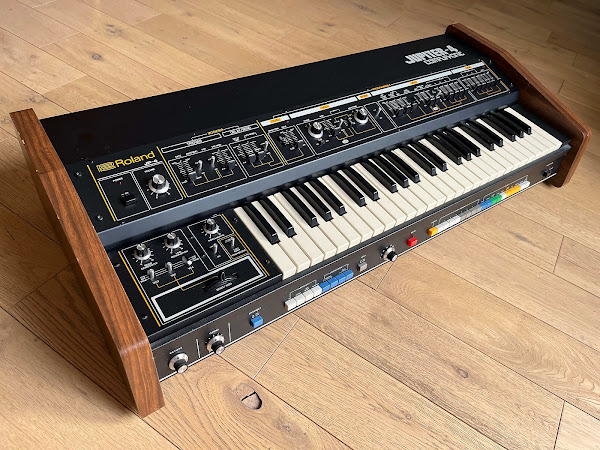
"Vintage 4-Voice Polyphonic Analog Synthesizer - with upgrades
Serial number dating it from January 1979, likely an early revision.
In great clean cosmetic condition inside and out, only a couple reasonable bumps and small chips to the wood sides, and what looks like an ancient sticker mark on top opposite the logo, nothing too eye catching overall, everything shown in the pictures.
Has the following upgrades :
- MIDI in to receive notes on channel 12
- Memory expansion accessible from an added rotary knob, 8 banks of 8 slots for a total of 64 user presets
- A Detune knob mainly useful to spread oscillators/voices further in unison mode.
220V model, fitted cable with standard European plug."

 "Sequential Circuits T8