video upload by MicroKits
"See more at MicroKits.net/blogs/news/introducing-the-microsynth-theremin-kits
Thanks to Dan Maloney for the inspiration https://hackaday.com/2018/05/11/styli... [featured here]
Thanks to Evil Monkeyz for selling the silicon wafer you see near the end https://www.evilmonkeyzdesignz.com/"

The also make a Theremin breadboard kit available on Amazon.
 In 1920, an engineer named Leon Theremin discovered he could create music and sound by waving his hands around electric fields. Since then, the theremin has inspired musicians and engineers to create new sounds and instruments. MicroKits continues that tradition by designing a version of the theremin that anyone can build, including you! What sounds will you discover?
Build Your Own Invention.
With your MicroKits theremin, you can create music and sound by waving your hands around electric fields!
Learn Science & Engineering.
Discover the physics of electrical capacitance and practice working with real electronic parts.
Easy to Follow Instructions.
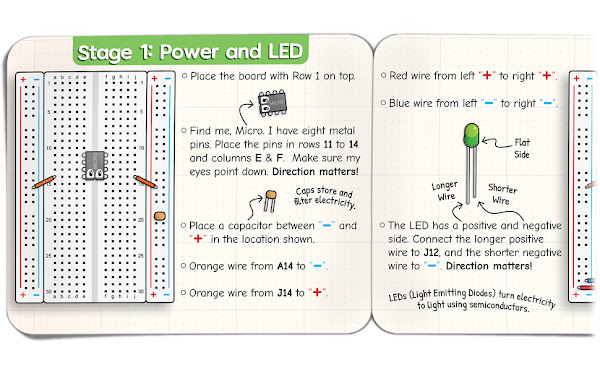
Colorful 22 page instructional booklet. Build step by step, with breaks to check your work and learn how your circuit works.
No Tools Needed.
Everything you need is in the box. Start creating electronics without having to learn soldering, and simply place parts in the breadboard to connect. Yes, batteries included too!