Note: links to listings are affiliate links for which the site may be compensated.
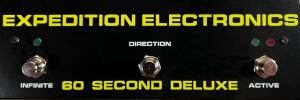
"The NastyMono was designed for the KORG Mono Series and will work properly with any of the following devices:
Monotribe Original Monotron Monotron Duo Monotron Delay
You still can use the NastyMono with any other Analog Synth that features a VCF Input and Multiple Audio Outputs or a Separate Headphones Output. However due to the nature of the KORG Mono Series the 1/4” Auxiliary Input and the 1/4” Audio Output Signals on the NastyMono rely on the RING contacts found on the 3.5mm I/O cables, there for the 1/4” Auxiliary Input won’t work if your Synth features a Mono VCF Input, the same goes for the 1/4” Audio Output, if the NastyMono is being feed by a Mono Signal the 1/4” Audio Output won’t work. Despite the fact that the 1/4” connectors won’t work depending on your specific Analog Synth, the Feedback Knob will still work, giving you the desired Distortion Effect, a nice example is the Moog Minitaur which will keep all the NastyMono’s functionality except for the 1/4” Auxiliary Input."
via Circuitbenders.co.uk
Click through for demos. Details on the mods captured for the archives:
"This is the 'next! SPACEBASS 3.3' version (the exclaimation mark remains a mystery), which is exceptionally rare. As far as we know, this version was only ever available very briefly in the US and this is the only one we have ever seen in Europe. Most versions found in the US appear to be imported Freebass' or MB33's, so we'd suspect that very few of these models were ever produced.
Our mods add 5 switches, 2 knobs and a jack input round the back to allow a whole extra smorgasbord of sonic mayhem. A veritable 3 course breakfast of orgasmic analogue delight! Something along those lines anyway :) .
This post is developing. Check back for new videos and updates below.
Street price appears to be $999. See dealers on the right for availability. In via Alex Timchak.
"We are delighted to announce the release of Syntakt – the 12 track drum computer and synthesizer that fuses digital and analog synthesis together in one music megabox.
Enter this sonic metropolis and experience epic sounds from the past, while pulling others into existence from the future. Syntakt is a drum specialist, full of percussive possibilities, but its four analog and eight digital tracks can be used for melody, harmony, and bass sounds too, giving you a musical melting pot with dozens of machines at your disposal.
Affect the sound of each machine with the intuitive and playful graphics. Add analog distortion and filtering to your mix or separate tracks, using the FX block. Run wild and free with the four expressive modifiers. Access a variety of different scales via the keyboard mode. And create dynamic soundscapes with its phenomenal sequencer.
The streets of Syntakt are never-ending, the neon lights are never-dimming, its underground is fathomless. Discover worlds within worlds."
"Syntakt is a sonic metropolis of machines, fusing digital and analog synthesis together in one drum and melody megabox. A 12 track drum computer & synthesizer melting pot like Syntakt needs a majestic guide. Let the intrepid Elin Piel show you around the many features at your disposal."
Baseck Plays : Elektron Syntakt : 12 Track Analog & Digital Synthesizer / Drum Computer
"Elektron's newest device is finally here : The Syntakt ! A 12 Track Synthesizer and Drum Computer!
Let's see how far our friend Baseck can push this new machine.
Grab one NOW : https://bit.ly/3EEzgOE
"Our pal Mario from Elektron came down to the Perfect Circuit HQ and walked us through the ins and outs of their newest Synthesizer and Drum Computer : Syntakt
0:00 - Intro & overview
1:30 - Machines & Visual Language
3:27 - Beats To Melt Brains To
3:59 - Modifiers
7:40 - FX Track
11:50 - Outro Jams
"Elektron's new instrument, the Syntakt, is a powerful combination of analog drum sounds, digital synthesis, and new performance features not seen on any other Elektron product. In partnership with Elektron, watch as our host Fess breaks down these features."
"In this video I perform one of my new tracks using the Elektron Syntakt and the Octatrack MK2. All the sounds in this video are from the Syntakt, I am using the Octatrack with my performance template.
"Some patterns I’ve made with Syntakt. No processing.
Things I love: The machines! The flexibility!
It can be so many things.
8 tracks of Model cycles chord machines with deeper control, 2x LFO per track, full envelopes, dual filters, p-lockable FX track. Or half a Rytm , plus new digital drum synth and bass/lead synth machines.
Or a mix between.
All with a tasty chunk of analog Heat drive, filter, and EG, but p-lockable!
There is an inverted envelope shape in the analog fx that I use as a master compressor. The drive is lovely.
I also love using some of the analog kicks with a bandpass filter for textures. Can even get kinda of vinyl pops and clicks out of these.
Can have up to 3 simultaneous analog DVCO machines."
"The brand new Elektron Syntakt is here!
I'm doing a brief overview, followed by a SID emulation rendition of Rob Hubbard's theme music for the C64 game 'The Last V8' from 1985. Then it grows into a live jam, using all the 12 digital and analog tracks of the Syntakt, including the features such as analog distortion.
0:00 Intro
1:50 Song starts
3:57 Live jam!"
Full details:
12 Track Drum Computer & Synthesizer
Enter a sonic metropolis with Syntakt. Analog and Digital synthesis. Drum and melody. In full fusion.
All your sound crafting, sequencing, and performance needs are fulfilled, in an all-round music mega box that fits in your lap. Syntakt is a drum specialist, full of percussive possibilities, but its four analog and eight digital tracks can be used for melody, harmony, and bass sounds too. Experience epic sounds from the past, pulling others into existence from the future.
The streets of Syntakt are never-ending, the neon lights are never-dimming, its underground is fathomless. Discover worlds within worlds. Adore now. Explore forever.
Meet the machines There are 35 sound-generating machines to call on, covering a wide range of drum and melodic sounds. Some machines have been reimagined from Analog Rytm and Model:Cycles, with deeper sound control for the latter, while others are entirely new to the world.
For you to create and personalize your sound, we’ve made sure you’ve got a set of parameter controls tailor-made for each machine. They let you quickly tweak the nature of each type of sound, showing you just the relevant options. Comprehensive without being overwhelming. Let loose with analog or digital overdrive, depending on the tracks you’re playing with.
The graphics more than play their part too, with plenty of animated icons offering visual guidance and extra clarity on how each parameter affects the sound. The joys of tweaking shouldn’t only be for the ears after all.
Special effects Syntakt lets you route any of your synth tracks or external audio sources through the FX block. This gives you analog distortion and filtering, and a couple of LFOs to go to town with. Additionally, you can also call on Delay and Reverb as powerhouse send effects.
And all of the above effects can be sequenced with the FX track. Have them kick in at just the right moment. Add accents and dramatic changes to the selected tracks or external audio. Or use it as a master track for ducking and gating effects.
Modify the moment Wield a little extra trig craft using the four modifiers, offering four varied levels of expression. Configure the first two modifiers to give you the retrig or velocity behavior you desire, and use the other two to access custom intensities of other parameters. They’re ready for action regardless of which synth track you’re using.
And the best bit is that they don’t just give you that extra playability fun in the here and now, you can also capture the moment by recording to the sequencer.
The keys to the city Syntakt’s keyboard mode gives you a whole bunch of different scales to play with.
There are some familiar faces and some maybe a little less familiar for you to try out, helping you discover new places and taking things to another level.
Play across a single octave like on a piano keyboard. Or use fold, and have several octaves laid out in front of you.
Deep sound-shaping Syntakt comes full of filter and envelope goodness. All tracks have a Multimode filter to put to use allowing you to emphasize different parts of your sound, with the digital tracks also able to call on Parametric EQ and a Base-width filter – an additional filter giving you even more sonic control.
Choose from two amplitude envelope types to define the ideal contour of your sound. Try out the ADSR envelope – for your wicked synth lines – or the simpler AHD envelope – perfect for transient percussive sounds.
"We are delighted to announce the release of Digitone II. Pull your sound through the prism and into a spectrum of dazzling tones and timbres. Get set for the reimagining of our box of FM Synthesis into a multi-machine, many-realm-reaching wonder, taking the evolution of Digitone synthesis and sequencing to new heights. Digitone II is a multitimbral polyphonic synth framed in a modular workflow. Its 16 tracks can be used for any of its synth machine - Wavetone, Swarmer, FM Tone and FM Drum - or for MIDI, with 16 voices available across those selectable synth machines. On top of this flexible flavor, there’s also an abundance of filters, an expanded Elektron sequencer, playability unlocking goodness, a powerful note editor, and a whole bunch more. The rabbit hole is deeper and more magnificent than ever imagined.
Pricing on elektron.se is 999 USD/1049 EUR." Check with dealers on the right for availability.
"Digitone II is a 16 track, 16 voice polyphonic synth capable of unleashing dimensions of exciting sonic possibilities, all framed in a modular workflow. There are multiple forms of digital synthesis to explore, offering deep sound-sculpting satisfaction. Here, Hissquiet and Jeremiah Chiu take turns guiding your eyes and ears around the awesome new features and exceptional sounds on offer.
Digitone II is available to purchase from the Elektron website or from retailers carrying the Elektron range of products. Pricing on elektron.se is 999 USD/1049 EUR."
Check with dealers on the right for availability.
User videos (use the player controls to skip around):
Playlist:
Digitone II - a look into a Preset Pattern - tubesockor
Elektron Digitone II (it is fun + can get really weird). - Sarah Belle Reid
Review: DIGITONE II vs OG Digitone // Everything new in Elektron's Digitone 2 // Detailed tutorial - loopop
DIGITONE 2 - First Track! - True Cuckoo
Details:
16 track polyphonic digital synthesizer Pull your sound through the prism and into a spectrum of dazzling tones and timbres. Digitone II unleashes layers of exciting sonic possibilities. Get set for the reimagining of our box of FM Synthesis into a multi-machine, many-realm-reaching wonder, taking the evolution of Digitone synthesis and sequencing to new heights.
Transcend tonal realms Digitone II is a multitimbral polyphonic synth framed in a modular workflow. Its 16 tracks can be used for any of its synth machines or for MIDI, with 16 voices available across those selectable synth machines. On top of this flexible flavor, there’s also an abundance of filters, an expanded Elektron Sequencer, playability unlocking goodness, a powerful note editor, and a whole bunch more. The rabbit hole is deeper and more magnificent than ever imagined.
Machine by machine Synth machines are your route to generating sound with Digitone II. There are four synth machines to play with, each with their own character and every single one stuffed with tweakability.
Dive into Wavetone, a fresh take on the classic 2-oscillator synthesizer. Morph between oscillator shapes, add phase distortion and oscillator modulation, or define with precision the flavor of your noise. Take the buzz to the next level with Swarmer. A super saw-in-origin cluster offering lots of waveform control across the swarm. Pick your shape, combine detune and noise modulation controls, and reach rich, complex textures. FM Tone is the original Digitone FM synthesis engine, and still capable of twisting your sound in all manner of delicious directions. Unleash FM Drum, with heaps of percussive flexibility and fine-tuning on offer to craft your own smacks and booms, and everything in between. And despite the name, capable of melodic magic too.
"The 'Fragments' are a set of pings, or short bursts of sound created by a trio of Twin-T filters. The Twin-T filter circuit was used by some classic analog drum machines to create percussion sounds. Realistic tom-toms, congas, and kick drums can all be made using this method. The Twin-T filters included in the Fragments Generator have been adapted and optimized for a specific purpose. The idea was to create an analogue method of generating sounds at the level of individual "grains" or "fragments" similar to a traditional digital Granular synthesizer. By approaching the process from another angle we have come up with an entirely new sub-genre of synthesis.
The sound produced by the basic Twin-T filter is quite close to the idealized grain, a decaying sine-like waveform that can easily be varied in amplitude, frequency, and position. Typically, the Twin-T filter produces a single sound up to a few times a second. What would happen if that occured a thousand or more times per second? The Fragments Generator creates a constant tone that consists of overlapping and interacting fragments which can be manipulated in a number of ways.
Amplitude
The amplitude of each fragment is set at its initiation. This is important as just creating a variable mix of "full strength" tones would not relize a wide enough scope of fragment-to-fragment variability.
"I guess 50 (60?) of these were produced, either as kits or assembled products. I bought this to complete my own rack full of Grant Richter modules. It was a largely an impulse buy fueled by the tingly feelings my Wiard 300 modules give me. Make no mistake--this is NOT a Wiard module nor does it sound like one. It is not nearly as awe-inspiring overall, though it does have a few tricks that make it worth exploring. Definitely a cool piece of synthesizer history.
I found this to be, overall, one of those "sweet spot" machines, where nuanced wiggling can give you some really unique and impressive sounds. This is particularly true with the bandpass filter, which really sounds like Satan yelling about the weather while contending with a head cold. Very cool.
There are a few peculiar aspects to this, such as the weird gain staging. Any setting after 12 o'clock in the VCA will saturate/distort. Maybe you like this. I don't care for it personally. That's just the way these things work, as confirmed by several other owners, as well as Cary Grace, who currently builds all modules under the Wiard name, and who tours with an Evenfall Mini Modular (largely because it's small and light, I guess). This is a very lightweight synthesizer.
The pots are all mini pots, like attenuator pots on lots of modern Eurorack modules. I'm a bit of an oaf for these, but they're not difficult to work with.
I have not opened it to check internals or perform any mods. I'm not sure whether there are schematics floating around, but if you choose to go that route I'm sure you're an intrepid enough lad or lass to chase them down.
Cosmetically, there is some damage on the lower right edge of the panel; I have straightened this to the best of my ability.
Their words (copy/pasted info from around the web):
The Evenfall Mini Modular Synthesizer is a rack mountable semi-modular analog synthesizer featuring the warm, organic sound of real analog circuitry and the flexibility of individual control knobs and a patch cord interface.
The Mini Modular also features internally "pre patched" or "normalized" connections among the modules. These connections make the Mini Modular a capable synthesizer even without inserting patch cords. These internal connections can be overridden by inserting 3.5mm patch cables as desired.
The Mini Modular can be patched to make sound by itself or in conjunction with another voltage-controlled synthesizer. It can also be controlled from a MIDI controller via the built-in MIDI to CV interface which provides pitch, velocity, gate, pitch bend, portamento on/off, and modulation output voltages.
-
This synth was designed by Grant Richter of Wiard synthesizers and there were roughly 60 sold, 30 in kit form and 30 assembled. The previous owner told me this is a factory-assembled unit.
Grant wrote this on the old Wiard Yahoo list:
"That is a great little instrument.
It was originally slated to be the Wiard Model 3600, but I decided to pass on it because we could not find knobs to fit the little nubby pot shafts. They are just like TR-808 tuning pots. I feared the lack of knobs would limits sales too much.
Here's a fascinating bit of synthesizer history sent my way via Brian Moore. Apparently Casio claimed their synthesizers fell under "electrical articles which produce sound" taxed at 3.9%, rather than, "electronic musical instruments" taxed at 6.8%. They argued this because they were sold without an amplifier, speakers or headphones and because they went beyond that of "electronic musical instruments." Title link takes you to the case brief for Casio v. U.S. Below are some exerpts. The case was decided against Casio in 1996. Good stuff. Thanks Brian. Makes you wonder what Roland, Korg and Yamaha classified their synths as during the same time...
"Casio imports into the United States electronic musical synthesizers. All of the imported synthesizer models were classified by the Customs Service, upon entry into the United States, as "Electronic musical instruments: Other," TSUS 725.47, with a duty rate of 6.8% ad valorem.
Casio timely challenged the classification by filing suit in the United States Court of International Trade. Casio argued that these synthesizers were improperly classified as electronic musical instruments and should instead have been classified under TSUS 688.34 as "Electrical articles and electrical parts of articles, not specifically provided for: Electrical articles using pre-programmed digital integrated circuits to produce sound," dutiable at the rate of 3.9% ad valorem."
"In addition, Casio argued that five of the imported models, VZ-1, VZ-10M, HZ-600, MG-510 and PG-380, could not be classified as electronic musical instruments because they were imported and sold in commerce without an amplifier and speakers or headphones and thus did not make an audible sound as imported. The ability to make an audible sound, they argued, was a requirement for classification as an electronic musical instrument."
"The trial court's finding that the synthesizers do not possess features substantially in excess of those within the common meaning of the term "electronic musical instruments" is not clearly erroneous. All of the additional features are designed primarily to make it easier for a musician to create music or embellish the sound he or she would normally be able to produce. The auto-rhythm and auto-accompaniment features allow inexperienced users to create chords and accompaniment with the press of a key, and the sequencer features allow a single musician to play, in essence, multiple instruments simultaneously. The only feature which does not appear to enhance a musician's ability to play the instrument is the one that plays prerecorded melodies. However, Casio admitted that this may be a musical instrument feature because it is similar in nature to a music box, which was specifically designated a musical instrument by Congress. TSUS 725.50."
Update via Dave Manley in the comments: "Apparently Casio tried to do this more than once. In Pinch and Trocco's book "Analog Days" there is a short description of a 1994 case that sounds similar, but I guess is different: Casio Inc. versus the United States", October 7, 1994. The products aren't described but apparently they only played preprogrammed patterns.
"What the court had to decide was whether the Casio devices were machines or musical instruments. It fell to Bob [Moog], testifying for Casio, the plaintiff, to argue that the Casios were machines and to Herb [Deutsch], testifying for the government, to argue that they were musical instruments. Bob pointed out the essence of a musical instrument is that the performer should have "real-time control" and that the Casio takes this away. The judge did not buy this argument, describing it as a "seemingly myopic premise" and contrary to legislative inent. The government won the case and the judge decided that, for tariff purposes anyway, the Casio, as long as it contained an amplifier and loudspeakers, was a musical instrument, and thus subject to the higher rate of tariff."
Interesting that Casio tried this twice once arguing with amplifier and loudspeakers, and once without.
Herb Deutsch played an interesting part in the development of the synthesizer. He met Moog when he sold Theremins and started requesting features that eventually led to the synthesizer. Take a look at Analog Days for more details (read it for the story, not for the authors' editorializing and analysis)."
For over 13 years we have been creating and supplying aural havoc with rewired childrens toys, modified drum machines, abused samplers and audio insanity machines. We have supplied and modified custom machines and sounds for:
The Chemical Brothers, Factory Floor, Senser, Nurse With Wound, BICEP, Yoad Nevo, Pedigree Cuts, Raiden, The Plump DJ's, Jacknife Lee, Bloc Party, Twisted Records (Hallucinogen, Shpongle, OTT, Younger Brother etc), Def Jam Records, Groove Criminals, Sweet Noise, Noise Inc and many many more.
TODAYS VICTIM: YAMAHA RX17
This has been hanging around for some time and we're sick of the sight of it, so its got to go! Bidding starts at 1p
Sometimes you might wonder why Yamaha released so many drum machines under the RX name that were so similar in many ways, and we don't have an answer for you, The Yamaha RX-17 was near the bottom of the RX range with only the RX21 and the dreadful preset only RX120 beneath it in terms of features. Having said that, when the RX17 has been circuit bent like this machine, it is capable of eating its older cousins such as the RX15 or RX11 for breakfast, dinner and any other meal you might care to mention!
The circuit bent RX17 has a kind of gentle savagery to it that you don't find on any other bent drum machine, as the sounds tend to be a little more crisp and separated, rather than mashed together in one terrifying wall of distorted glitching noise.
This machine includes a 24 way Bend Bus switching matrix that warps and glitches the onboard sounds in all manner of unlikely and disturbing ways. Each switch connects one bend point to the common 'bend bus' when activated. If you then use another switch to connect another bend point to the bend bus, these two bend points will interact with each other to create some of the most bizarre and extreme audio mangling effects you'll ever hear.
Each bend point has a different effect and will also change its effect depending on which other points its connected to at the time. You can activate as many switches as you want at any time, but you will need at least two switched on to activate any effect. Effects available range from what sounds like comb filters, ring modulation, bit crushing, distortion, bizarre time stretching, EQ, and what can only be described as audio smearing™.
The RX-17 seems especially good at shimmering ring mod and chopping effects on the high frequency sounds, along with unexpected percussion sequences on each drum hit i.e. the crash cymbal can start as a crash and then strangely morph into a clap, timbale or any / all of the other sounds in sequence. It also seems keen on creating looping within the sound sample, as if a short loop has been set up and the loop start point is moved along the sample as it plays back.
This machine will never be a punchy bass monster, but if you want a cheap source of some of the most bizarre circuit bent percussion sounds you'll ever hear, you won't go far wrong with a RX17.
The RX17 has 26 typically 80's Yamaha onboard sounds, with Midi in/out, and a pair of audio outputs. You can find a copy of the manual HERE, although its about as difficult to use as a toothbrush, so we doubt you'll need it.
Take a listen to the demos below to get an idea of the kind of sounds this machine can now produce. With none of the switches activated, it acts like a normal RX17."
Glitch button [with knob for variable strength]
Variable heavy distortion/feedback knob
Crunchy/fuzzy distortion switch
Heavy distortion/feedback opto-theremin
Hidden sound/voice selection switch
Kick drum trigger button
Snare drum trigger button
1/8" (3.55mm) output jack
RCA (aux) Video Output Jack
Speaker on/off switch
Blue power indicator LED
Also...
--Black, Blue and Green paint job--
I've built upwards of 40-50 machines for different bands, musicians and producers across the world on commission (and through eBay) over the years who would assure you that I know what I'm doing ~ check my feedback! These various instruments are being used in live performances and studio production. This keyboard is not only noisy, but made to be musical. Most of my circuit bent instruments with musicians and performers in mind... and, in this case, also for everybody else who enjoys the endless amount of glitching sounds the Casio SA series keyboards can make.
About the features!
[All are demonstrated in video below]
Glitch trigger:
On the left of the keyboard is a large knob and a button; the knob corresponds to intensity of the glitch that will result from a button press. For instance, if the knob is turned all the way to the right it will make a full connection when the button is pressed which cuts out the sound momentarily and will either result in a heavy glitch when often will continue indefinitely, or a crash (turn the keyboard off & on again). While the keyboard glitches it's also possible to modify what's happening by adjusting the knob and pressing the button again. Pressing the glitch button while the knob is not turned up fully will result in, often, a shorter glitch which does end and then brings the keyboard back to it's original status.
When playing the keyboard, playing the demo song or a rhythm, or (if the knob is turned up higher) while no sounds are happening, glitching will start (may take a few presses if no sounds are going off). Most commonly the resulting glitches are a modification of the sound coming from the keyboard at the time of the button press, but there's really no way to tell what to expect. The video I've made for this keyboard provides some examples of what you can achieve with it. Random patterns, sounds, drones, repetitive noises, mellow slowed down tones... it's essentially limitless.
[To stop glitching/if keyboard stops sounding, just turn it off and back on]
Distortion/feedback knob:
This is the knob to the right of the keyboard. When turned it causes interesting noise/feedback, and while playing the keyboard or rhythms it causes some heavy variable distortion/feedback depending on its position. This mod by itself can transform some of the cheezy sounds of this keyboard into some sort of distorted squealing monster.
Distortion opto theremin:
So on the very right of the keyboard there's a photo cell and a switch above it (bottom switch). When you engage the switch it turns the opto theremin on. The more light hitting the photo cell = the more distortion you get. Be creative with it! Wave your hand over it while you're playing the keyboard to produce sweeping distortions by changing the amount of light hitting the photo cell! A strobe light can cause some crazy pulsating distortion/modulation...
Crunchy/light distortion switch:
This is the top switch on the right of the keyboard. It does what it says and creates a different sounding distortion when engaged. Sounds heavy and very noisy if used in combination with the other distortion; pitch of this distortion slowly steps upward when a key is pressed as well. Goes great with simple rhythms.
Hidden Voices switch:
Fun mod for the SA-2. The middle switch on the right of the keyboard allows you to access 25 additional keyboard voices not included on the stock SA-2. To access them, you engage the switch and use the first 5 lowest keys on the keyboard as you would use the 1-5 buttons to select a voice. So, F = 1, F# = 2, G = 3, G# = 4, A = 5. As seen in the video, by pressing F(1) followed by A(5) while the switch is engaged selects a Jazz Organ voice. After selecting a voice you just flip the switch back. I'm not sure what to name each of the voices available with these buttons, so you can explore :P
RCA Video output:
So here's something that you generally won't find with many other bent devices. Basically, it's just a simple RCA jack on the left of the keyboard at the bottom of the speaker grate. This can be plugged into a TV, projector... anything that accepts RCA video (though I wouldn't suggest sticking it into your big expensive 60" plasma screen.. I offer no guarantees on this!) I have used this on various TVs (large and small, CRT, LCD) and on projectors; it looks pretty cool. The video demonstration doesn't do any great justice to the appearance, but shows you what it does.
The visuals that it creates are, essentially, horizontal black and white waves/lines Higher pitched sounds create lines that are thinner/closer together. Smoother preset sounds (like square and sinewave based voices) are more clear solid lines, while crunchy or distorted voices are more dotted and scraggly. Combinations of notes and other sounds cause interesting clashing wave forms and things. Would be great for live performances. It's somewhat memorizing to watch this while the machine is glitching... random visual patterns that correlate to the sound.
Other features:
Two buttons [to left of distortion knob on keyboard] added for triggering drum sounds. (Left/blue is Kick, Right/green is Snare)
A 1/8" output jack is located on the right of the keyboard for plugging into an amp/mixer/recording device/headphones/etc...
Speaker on/off switch (Left of keyboard, bottom of speaker grate) for when using output jack.
Blue power indicator LED at the top of the speaker grate.
*This keyboard runs on 4AA batteries. The battery compartment cover is included."
Top demo is the TB-303. Bottom is the TT-303 vs. TB-303. Pay attention to the accents.
"first 16 bars of TT-303 clone.
after that 16 bars of TB-303.
after that 16 bars of BOTH playing at the SAME time paned L/R .
after that it's TT-303 and TB-303 back and forth to show the difference in sound.
i matched the settings and turned only cut off & resonance in exactly the same way on both machines. the pattern is programmed same way on both machines.
NO EFX is used, no comp, no eq, no reverb, no distortion.
just pure sound directly in the line in of the a2d."
There's some discussion on the AH that the accent between the two is slightly different. If you listen to 3:24 on you'll hear that the TT-303 doesn't quiet get that classic TB-303 quick accented filter sweep. Could be the settings? If anyone has a TT-303 and get that sound feel free to comment. I'll follow-up with a new post if I hear anything.
And some first impressions by Computer Controlled:
"Just got my TT-303 earlier this afternoon. After a few hours of playing with it, here are my observations.
Build Quality:
Its made of lighter weight plastic than the TB is. So it feels slightly cheaper. With batteries in it, it's lighter than the TB.
It has a glossy finish, as opposed to the TB's matte finish. I like the matte finish much better.
The switches have almost no throw to them. This takes a bit of getting used to.
The knobs do rub against the case, but this doesn't bother me at all.
"Electronic Music Studios Ltd (EMS) London, England. Beginning in a backyard bomb shelter, Peter Zinovieff has created the EMS Company devoted solely to the production of electronic music instruments." Quote pulled from this page.
"Today is another grey day ... I wish I was in Raasay. There was a storm last night and the studio roof started to leak. It has leaked every year since it was built and every year it is repaired. Water is dripping onto the computer section. Part of the ceiling looks as if it is going to collapse."
"What an idiosyncratic place they must have found EMS. Chickens in the garden. Computers in the basement. Children rushing around the kitchen. I wisk Sofka to school on the Honda. I meet Robin half way down Putney Hill. 400 yards zoom. "
"We discuss, rather drunkenly, the future of synthesizers and how organs are becoming more like synthesizers and synthesizers more like organs I explain that I have decided that EMS should not try and compete in this market but that we should continue to stick to educational and sophisticated machines."
"I tell Ludwig about the terrible week that has just passed and the exciting constructive week that lies ahead. Ludwig tells me of the bad financial state we are in and how the studio is too expensive for EMS to support and how I'm too extravagant. I can tell he is tired. I suggest that we discuss it at the EMS meeting tomorrow. Already then the meeting is diluted from microprocessors and Bessel functions into one of financial fussing. Another decision.
Later Ludwig quietens down. Nothing better than tea and cake, wine and a peat fire. We really get on very well. It must be a nightmare running EMS' financial affairs. We get to bed at about 1. I am glad Ludwig is back."
"We discuss the Glasgow Hospital project. This is an application that has been submitted to the Wolfson Foundation for a large amount of money to be spent on the computer interrogation of patients and the computer diagnosis of their illnesses. Apparently the right 12 questions could diagnose any known disease. The idea is that the patients will be asked questions in regional accents by the computer. They would then respond by pressing a set of simple keys. Yes, no, sometimes etc. EMS will provide all the hardware and the hospital would provide the doctors. It would be very interesting if it works. Alan will be in charge of the project."
"I must stop the EMS people drinking too much at these lunches. Peter Eastty will be slurred and cantakerous this afternoon if he has any more.
All the EMS team are very high powered. Even though some - like David Cockerell, Richard Monkhouse and Alan Sutcliffe are friends and consultants, they still play an enormously important role in the company. We are extremely lucky. "
"Two pop stars arrive with a roadie at 7. They meet everyone going off from the meeting to play pool at the pub. David and Tim are experts at billiards. In Raasay we found an old bagatelle set. I hope it pulls them back there. David walked in snow for the first time in his life at the new year in Raasay.
It soon turns out that the roadie is the greatest pop-star. He's from Tangerine Dream. One of the others wears a long furry earring. Call me Indie Robin recognises him from Chicago. He says he's travelling incognito. It's a good earring he wears for that.
German pop-stars always seem more workmanlike than Americans. English ones fall into one or other camp but usually are dressed up. The Germans wear scruffy jeans and shave. They have come to look at the Vocoder. We also show them the latest modules that Tim is making.
Robin soon takes them off for who knows what with some friends. Rose, Leo and I go to a newly-opened Russian restaurant in Putney. I become maudlin for the gypsies and the islands of Petersboorg that I never knew."
"I had a terrible dream last night about my neck being cut away leaving my head stuck rigid on my body. I woke rather sick. It must have been too much wine at dinner. Suddenly I realise that it is pouring with rain and that I had removed the polythene sheeting from the roof for Hans' lunch the day before yesterday. That is why I had nightmares and why I feel sick.
My worst fears are justified. Water is once again pouring into the studio. Two panels have fallen off the ceiling Onto the computer racks."
"We open a bottle of Champagne. Ludwig thinks I am extravagant. After lunch Richard comes with the video camera interface. It works as soon as he plugs in the board. My programs have been adapted and we are able to test it straight away.
With this invention I am able to derive patterns from a video image. At the sirnplest these images might be a waveform drawn on a piece of graph paper but at a more complex level I think I will be able to derive very useful musical patterns from more random video images. For instance say I point the camera at a flower and say I apportion density of image to harmonic content and I scan from left to right across the stern of the flower. Then imagine that these sounds are pretty mediocre. Dull. Say then that I turn the camera slightly to the left or choose another flower. Will the sounds be more or less interesting? They certainly won't be the same. What images will give the best sounds. In a way it is getting a video picture to provide a pattern for improvisation.
We try it out. I point the camera into the garden. I run VOCAB and I assign the Video parameters to control DOB.
Suddenly the most marvellously rich, varied and amazing sounds come pouring out of the speakers. They ripple and change. They are the first alssolutely fantastic sounds that the oscillator bank has made. Everyone is moved. At first no-one believes that they are not pr~omposed but as I turn the camera the sounds change. They are convinced. In some ways we are frightened. It's like in the story of tuning in to the death cries of roses as they are cut.
We call over Ludwig. He rings up Germany. I ring David in Paris we hold the telephone to the loudspeakers but there is probably little chance that they can hear what is going on. The children come down. I dare not alter anything. Perhaps the program has got into a random loop. I save it and restart it. Wherever I point the camera there is another set of sounds. Each more rich and varied than the last.
I must keep this a secret. I shall give it to Harry for Orpheus. We must not allow these marvellous things to be heard for a year or two. Apollo's gift to Orpheus was music. I wonder where these sounds come from. Perhaps it's not fluke that we have been working on Orpheus for 3 years. This is our reward.
What a day ! Perhaps all days will now be magical again!
I shall use the last seven days of this journal for my Glasgow Musica Nova talk.
Peter Zinovieff
Summer 1976
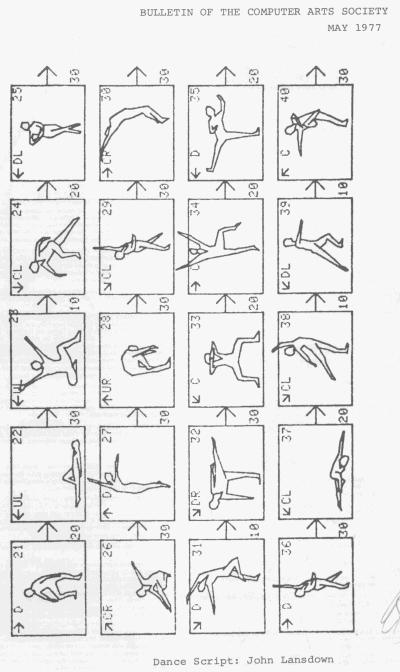
source: Bulletin of the Computer Arts Society May 1977 "
The following interview is by Juan Vílchez Gómez for Hispasonic. Juan sent it my way via The MATRIXSYNTH Lounge. You can find a Spanish version on Hispasonic here. The following interview is posted here in English with permission from Juan. MATRIXSYNTH gets a mention! Thank you to Juan and Hispasonic!
"Hispasonic: This time we are talking with Olivier Gillet, the man behind Mutable Instruments and creator of the famous synth Shruthi-1. He reveals exciting information about his next projects and throws light upon synth design.
JuanVilchez is the interviewer.
Hispasonic: Well... Taking into account that the key questions about the Shruthi-1 have been already answered in the forums, or in the comprehensive documentation of your webpage, I propose that you could speak us about the future of Mutable Instruments... as it seems that some exciting new machines are in the making right now.
Mutable: The exciting new projects:
Next project (september/october): the MIDIpal, a small, inexpensive, MIDI processing unit, running algorithmic transformation on the MIDI notes (arpeggiation, harmonization, delays) along with more traditional filter/splitter/monitoring things. Something you'll want to stick between anything with a keyboard and anything with an audio out in your studio :) This is the first project that will be industrially manufactured - though the first batch will be available as a SMT kit.
A revision of the Shruthi-1 hardware for the next batches of kits - in particular I've spent quite some time cutting the part count on the filter board.
A new Shruthi-1 filter board (MS-20 clone).
A variant of the Shruthi-1 digital board that will replace all the digital oscillators by 12- bits sample playback from a SD card (and will probably do sampling too). This will add a new dimension to the "Shruthi-system" = 3 "controller boards" (Shruthi, Sidekick, Sampler) x 7 "filter boards".
Something that will replace, in the long run, the Shruthi-1 - and in which I'm trying to address most of the shortcomings and design decisions of the Shruthi-1. This is a more ambitious, risky, project as I'm trying to squeeze in a lot of very new features, and design it in such a way that some parts of the project can be interchanged, with both a SMT version for industrial manufacturing and still a through- hole variant for DIYers. While avoiding reinventing too much and keeping it close to the Shruthi sound. Ready in 6 months? 1 year? I don't know.
Least sexy but most important thing: establishing an actual company -- at the moment what I do is registered as a "side-business" and while it is very simple paperwork-wise, it adds many constraints to what I can and cannot do, and exposes me to many risks in case of bankruptcy.
Hispasonic: I think that it could be interesting not only promoting Mutable Instruments but you as well, as I find that you're a really talented guy and that you've the most valuable opinions and tastes. Just saying... I perceive that you're a shy person (am I wrong?), but maybe it could be interesting to know more about "the creator".
Olivier: I wouldn't see the point of promoting myself - I don't sell myself, I sell synths, and they can "speak" or rather "sound" for themselves! Many interesting synthesizer businesses are small, quite often run by one single person, who has to wear both an engineering and marketing hat. Personally, I try to keep my engineering hat as much as possible because this is what I am good at, and because I quite like the values that goes with engineering. Chips datasheets don't cheat, at least not on the first page... I see too much people overhyping stuff in my daily job to want to do anything like that when I am working on my synth projects.
Hispasonic: In Hispasonic we are really proud of our community of synth enthusiasts. Here is a little "window" that is going to be seen by a lot of people. Taking a look into your resumé, we know that we can confidently trust you in regard to software and electronic musical instruments. So... what do you want to say to them?
Olivier: If there had something I had to say to the synth public is that they should try to keep a critical eye and ear when looking at synths - there are so many misconceptions (that I used to have too, until recently!) about synths. Things like: - "UIs with LCD displays / pages [as opposed to 'one knob per function'] suck" Most people having used the Shruthi-1 agree that the interface is very easy to understand. The ESQ-1 looks horrible with only one data entry slider but it's surprisingly very fast to program. While some knob-laden VAs are horrible to use because everything not directly in the front panel might be hidden behind half a dozen of keypresses. - "8-bits => chiptune sounds!" Just because something uses 8-bit resolution somewhere in the signal chain doesn't make it sound like a Nintendo. It's not all black and white: The Fairlight had 8-bit converters ; the Dark Energy uses a sound chip that found its way in some 80s arcade machines. And plenty of other weird combinations inbetween. - "Vintage synths got their good sound from the vintage VCF chips" I was fooled by this too, and this is why I invested time in getting some of those chips and building filters with them. My conclusion is that those chips were very convenient because they concentrated many useful functions in a small area (and thus made reliable, smaller polysynths possible), but there's nothing magical in them - gain cells and linear/exponential voltage->current converters in one small package. I won't bother with those things from the past in new designs, because the magic is outside of the chip. - "Stuff designed by amateurs will always be one step behind commercial products" I hang around a few DIY online communities (for example the SDIY mailing list) and I am amazed by the expertise and knowledge of the people here. And then it struck me that to the most talented electrical engineers it would be a weird career move to actually work full-time on synths, because there are many other fun things to do with their skills. Somehow I think the most difficult thing for a trained EE to go into making synths would not be the challenge of the work, but the challenge of only applying a very small fraction of their knowledge of the field.
Hispasonic: There is a growing community of people that decide to take direct control and create their own synths from the electronic parts (DIY). Any advice for them?
Olivier: A last thing, and this takes the form of a question: "what makes a good synth/DIY project?". To me, three things:
Understanding the difference between a "project" and a "product" It took 2 to 3 months to design something like the Shruthi from A to Z. At this stage you'll have something awesome that you can put in a box, use yourself, post a video to Matrixsynth and be very proud of. But then it will take maybe 5 or 6 months to turn it into a "product", to sort unsexy things like documentation, sound banks, testing on a variety of setups, parts sourcing and validation, more field testing, feature requests from beta testers, etc. I had changing opinions about whether oscillators, filters, modulations, etc. were the most important element to define the "sound of the synth". In the end, my view on that is that what makes a synth good is the presence, or not, of a "vision" or "plot" about how it should sound like, and then the effort made to ensure that every module contributes to this vision and goes in the right direction. This is why I believe "design by committees" efforts like the Tyrell from Amazona are a bad idea - "just making the majority happy" is not the sort of vision to build something upon. At least not in arts. When the designer of a synth has never taken the time to actually listen to its creation, it shows!
Hispasonic: Thank you very much Olivier for some of your time - we know that you are really busy these days - and for really getting involved in the topics treated. We do know that you are not very enthusiastic about being interviewed or talking about your products, as you completely trust on their sound as their best marketing campaign. We can’t wait to hear and play with your last creations. They will give us plenty to talk about, for sure."
1. Bristronica 24: MyVolts The Silent Alchemist Nears Shipping
We caught up with Caroline who gave us the latest update to the *Silent Alchemist*, a versatile power hub designed for musicians. Featuring five isolated USB-C outputs and a high-wattage sixth output capable of delivering 100 watts, the device can power a Mac with the remaining outputs providing 20 watts each. Its independent circuits ensure noise-free operation, catering to a variety of devices including the Dreadbox module and Sysmo slope generator.
The Silent Alchemist uses innovative step-up power tips to convert USB-C input to the correct voltage for various devices. There's also new feature: an uninterruptible power supply allowing seamless transition between wall and power bank sources. Also introduced were updated cables, such as silver candy cords and floating ring TRS to TS cables, expanding connection flexibility. The Silent Alchemist is expected to be available in December with a competitive pricing strategy.
At Bristronica 2024, we caught up with the creator of the *ML2M*, who introduced us to the latest version. The ML2M is a compact Eurorack module with Wi-Fi capabilities, allowing seamless synchronization with Ableton Live, Bitwig Studio, and iOS music apps using Ableton Link without the need for cables. It either connects to an existing network or creates its own, ensuring robust sync even in environments with unreliable Wi-Fi. The module, which retains its 2HP size, now features MIDI integration through TRS jacks. Users can access a web interface to configure each output for different clock divisions and reset triggers, making setup straightforward and flexible.
Alongside the ML2M, there's also the Missing Link Junior. This desktop version offers the same functionality but in a box format, complete with MIDI and CV clock outputs. Both products are now accessible, with a starting price of $250.
At Machina Bristronica 2024, we caught up with Arran from @archaea_modular_synthesis who presented the *Exchange Module*. This programmable patcher, a year in the making, evolved from its early prototype stage to a fully functional module. Arran explained how the Exchange can route synth voices via a beam controller and three exchange modules installed within the skiff, allowing for versatile patching. Operating like a matrix patchbay, it enables users to select inputs and outputs with the push of a button, create presets, and chain multiple modules for synchronized patching.
Communication between the modules occurs over the Eurorack power bus as well as over MIDI via the USB-C connection. The Exchange maintains analog integrity, ensuring there’s no conversion latency. The forthcoming release expected in late November 2024, includes a USB-driven editor for enhanced control capabilities.
YouTube via darenager "Using the Machinedrum to drive a Korg MS10
1. Set up a GND-IMP machine and a GND-SIN machine, in global setting route each of these to their own output - I used E and F in this example.
2. For the GND-IMP machine set it UP to 0, UVAL to 0, DOWN to 64 and DVAL to 127, set the track level and volume to maximum. This will be your trigger pulse, so connect a lead from the output you assigned this machine to into the MS10 trigger input. (output E in my case)
3. For the GND-SIN set it at maximum level and volume, also turn DIST in the routing page fully up (127), set the RAMP and RDEC to zero. This will be your pitch control, route it from its output on the MD you selected earlier into the VCO CV input. (output F in my case)
4. Select accent track and set it to max for all steps and all tracks, it is important that you do this or it won't work as the accent boosts the juice a bit.
5. Program some triggers for the IMP machine, then place triggers on the same steps for the SIN machine, using parameter locks on the PTCH control you can change the pitch played by the MS10, experiment with different envelope settings on the MS and different triggers for the IMP and SIN machines.
As you can tell from the video, there are a few limitations with this technique, first the pitch is not linear and does not act as anything like normal scaling, second on the MS10 you get some bleed though of the SIN sound. If you are electronically minded it should be feasable to build a little circuit to boost the CV output a bit.
You can also route the SIN to the V/OCT input or the filter CV input on the MS10, just remember to set the ENV/EXT knob on the VCO or VCF to a high setting or you won't get as much modulation. This can yield some interesting sounds, have fun and experiment. If you use the V/OCT input you can change the base pitch by playing the keyboard on the MS10.
This technique can also work with other synths or devices with CV inputs with varying degrees of success. Also you can use the LFO on the pitch of the SIN machine for some weird fx.
I think that is everything, if I have left anything out let me know.
This post is a little late going up, but better late than never! :)
I'm going to keep this one a little shorter than usual as I am aware I have a tendency to get a little too wordy at times.
First of all, I want to thank you all for taking a little bit of your day out to visit the site. I want to thank those that contribute to the synthesizer scene and actually give me something to post! Finally, I want to give a HUGE THANK YOU to all the individual supporters of the site, and the sponsors you see on the right and above! Your support literally makes the site as it is possible!
---
And a look back at 2016...
Update: I forgot to mention, we had a total of 13,679 posts in 2016! Update2: also, as always take a look back at the exclusive label for the most interesting bits of synth history.
First a look back at some of the people (and companions) we lost last in 2016.
2016 was rough. On the maker front we lost Don Buchla, who along with Bob Moog, was undoubtably the creator of the synthesizer as we know it today. We lost Ray Wilson of Music From Outer Space, arguably one of the greatest, if not the greatest, influencers in synth DIY. Many makers out there started with his projects.
On the musician front we lost some of synths' greats including Keith Emerson, Isao Tomita, Bernie Worrell and Jean-Jacques Perrey. We lost a couple of pioneers of electronic music as well, namely Jean-Claude Risset and Pauline Oliveros.
Note the above are only those I could tie in with synths. Two artists you might notice missing are Prince and George Michael. Both deserve a mention. Prince I could have tied in with an Oberheim connection. I still remember lusting after an OB-8 after seeing his videos in the 80s.
RIP posts are the hardest to write. Not only because you are mourning the loss of someone great, but because you know your post will never be good enough.
As for new gear in 2016, you might have noticed all of the "New in 2016" labels that have gone up in posts throughout the year. I created the labels back in 2015 as a means to keep track of all the new gear coming in. I also thought it would be a quick, easy, and interesting way to get total counts of everything at the end of the year. Here are the numbers (links will take you to posts for each):
Note, as with anything, labels can be a little tricky. Sometimes there will be overlap, sometimes items will be announced one year, but released in another if at all, and of course, if I'm not made aware of an item it gets missed. You'll likely see a few items from 2015 in the 2016 list for that reason. I also found it can be difficult to categorize certain items. Drum machines for example get bucketed under synths, but I think for 2017 I will create a new label for them and just use both.
All that said, if you look at the numbers above we had 753 new products/items appear on the site last year. Always of notable interest were the items from vintage synth history that were never featured on the site before. Last year there were 21. An interesting side note is that matches the 21 we had the year prior in 2015. I won't go into any in detail as you can take a look at the label yourself and as I mentioned above I'm going to try and keep this post short. You can check out any of the categories above. Also worth noting is there were 101 new makers to the site in 2016! Check them out via the link above.
I was never one for top 10 lists, as although they can be fun, I'm a firm believer that all gear has something to offer. It's up to us to use the gear and find out. That said I do think it's worth mentioning some of the major synth releases this year. Not only does it gives us a quick look at what the major players released but it also lets us see when they were released in the year. The following is a quick list:
 "The NastyMono was designed for the KORG Mono Series and will work properly with any of the following devices: