Title takes you there. Beautiful sample of this obnoxiously putrid beast on site. "Savart'’s Wheel, designed by Bart Hopkin, is widely acclaimed for the fact that it makes the most obtrusive, obnoxious and irritating sound imaginable. The instrument is made up of a series of disks of graduated size mounted on a motorized spindle. The exposed outer edge of each disk is lined with ridged material, with ridges spaced about 1/8 inch apart. As the spindle rotates, the player holds a sort of plectrum against the ridges as they rotate past, producing some number of ridge-bumps against the plectrum per second. That frequency is the frequency you hear; it is what provides the pitch." Via Peter Grenader on AH.
Sunday, March 05, 2006
Savart's Wheel
Title takes you there. Beautiful sample of this obnoxiously putrid beast on site. "Savart'’s Wheel, designed by Bart Hopkin, is widely acclaimed for the fact that it makes the most obtrusive, obnoxious and irritating sound imaginable. The instrument is made up of a series of disks of graduated size mounted on a motorized spindle. The exposed outer edge of each disk is lined with ridged material, with ridges spaced about 1/8 inch apart. As the spindle rotates, the player holds a sort of plectrum against the ridges as they rotate past, producing some number of ridge-bumps against the plectrum per second. That frequency is the frequency you hear; it is what provides the pitch." Via Peter Grenader on AH.

Saturday, March 04, 2006
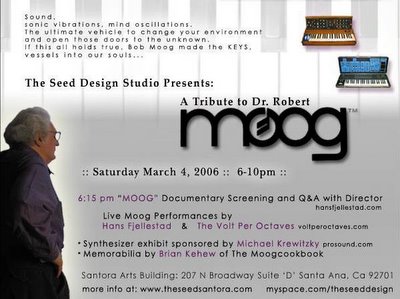
A Tribute to Dr. Robert Moog - Santa Ana, CA
Tonight, Sat March 4. Via GB on AH. Title link takes you to more info.

MooT BooXLe's Synthesizers.com movie
Title link takes you there. Via bleepsandbloops.
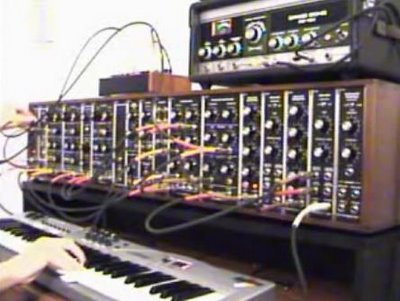
"Me demonstrating the creation of sound using my Synthesizers.com Modular Synthesizer. I'm also using the Moogerfooger CP-251 Control Processor and a Roland RE-101 Space Echo. The video was produced and recorded by me. Visit http://www.mootbooxle.com!"

"Me demonstrating the creation of sound using my Synthesizers.com Modular Synthesizer. I'm also using the Moogerfooger CP-251 Control Processor and a Roland RE-101 Space Echo. The video was produced and recorded by me. Visit http://www.mootbooxle.com!"
MIDI "fingerboard" - New Flickr Shot
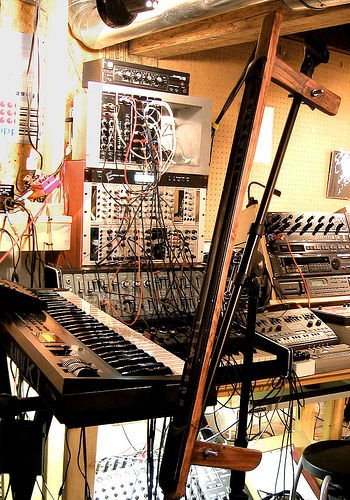 Interesting piece. According to the caption that's a MIDI ribbon controller based on the Kurzweil Expression mate. Shot by royce. "This is a somewhat customized midi controller based on the kurzweil expressionmate. i used to play violin, and especially loved string quartets, so i wanted to have a "fingerboard" for glissando and vibrato effects."
Update: I asked royce how he positioned it when he played it. He replied, "i pretty much play it like a cello, although still use keys for discrete pitches. also use a footpedal extensively. this wendy carlos ripoff used it quite a bit for natural vibrato effects (i used to play alot of classical violin): rrooyyccee-aaddaaggiioo.html
pinkus - New Flickr Set
Title link takes you to shots of pinkus' studio. A bit blurry but that's some fine gear.
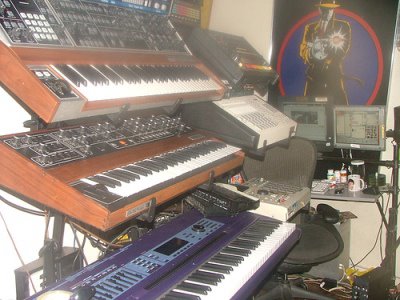
Thanks pinkus!

Thanks pinkus!

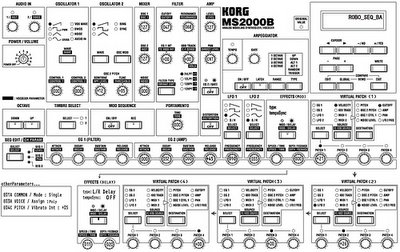
MS2000B Diagram - New Flickr Shot
Shot by floorvan. There is also a shot of Clara Rockmore in the set for theremin fans.

Friday, March 03, 2006
International TB-303 Day!
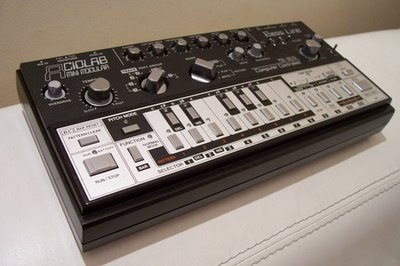
Well, sort of. Fiercefish posted that today is International TB-303 day. I asked if this was real, and he replied sort of. Robin Whittle declared International TB-303 day on March 3, 2003, 3/03, get it? The crazy thing is I remember this! I searched the archives and found the post on AH. Title link takes you there. Below is a shot of an AcidLab sent my way via Fiercefish and a demo. Thanks for reminding us Fiercefish!
TB-303 AcidLab via Fiercefish
Fiercefish AcidLab Demo
"As mentioned earlier, here http://s8.yousendit.com/d.aspx?id=1GUJ9UGH6SEHG01VTE4R8RO2N6 is a demo of my acidlab modded TB-303, for this demo I just concentrated on the FM, decay, and overdrive mods. It is a 2 bar pattern running with a 606 as a timekeeper, no eq was used just the 606 into the mix in on the 303 recorded in mono into audacity on my mac, I added a bit of reverb to the whole mix and did a small amount of audio editing to add a little interest.
I wanted to keep the sound fairly "acid" for this demo so the tweaking is limited to a slight extension of what a standard 303 can do, the acidlab can do some seriously crazy stuff especially with the controls at the extremes and I have recorded about 1 hours worth of other settings but need to edit them down to smaller snippets, they will be just the 303 on its own (no 606) and with no fx or eq, I should post them sometime in the next week.
Enjoy (or not!)
Happy 303 day!
FF"
TB-303 AcidLab via Fiercefish

Fiercefish AcidLab Demo
"As mentioned earlier, here http://s8.yousendit.com/d.aspx?id=1GUJ9UGH6SEHG01VTE4R8RO2N6 is a demo of my acidlab modded TB-303, for this demo I just concentrated on the FM, decay, and overdrive mods. It is a 2 bar pattern running with a 606 as a timekeeper, no eq was used just the 606 into the mix in on the 303 recorded in mono into audacity on my mac, I added a bit of reverb to the whole mix and did a small amount of audio editing to add a little interest.
I wanted to keep the sound fairly "acid" for this demo so the tweaking is limited to a slight extension of what a standard 303 can do, the acidlab can do some seriously crazy stuff especially with the controls at the extremes and I have recorded about 1 hours worth of other settings but need to edit them down to smaller snippets, they will be just the 303 on its own (no 606) and with no fx or eq, I should post them sometime in the next week.
Enjoy (or not!)
Happy 303 day!
FF"
See dealers on the right for pricing and availability on gear.
LABELS/MORE: Acidlab, DIY, Robin Whittle, Roland
LABELS/MORE: Acidlab, DIY, Robin Whittle, Roland
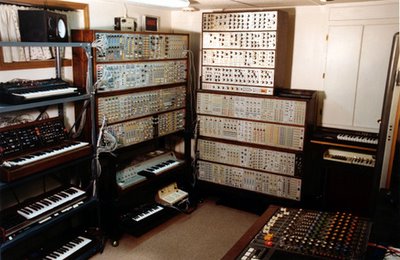
Joe's Modular Synthesizer
Title link takes you to Joe's Modular Synthesizer site. Joe's modular was designed from 1974 through 1988. Via Analog Industries' HGCP. Make sure to check it out.


Roland Juno-G Video
 Video link is up on the Roland site. Too bad it wasn't retro.

OB-X and OB-Xa Motherload on YouTube
That Micke is back. Title link takes you to his post on VSE with more links to video synth goodness, this time featuring the Oberheim OB-X and OB-Xa.
Japan - Ghosts Live (1982). Synths used for texture.
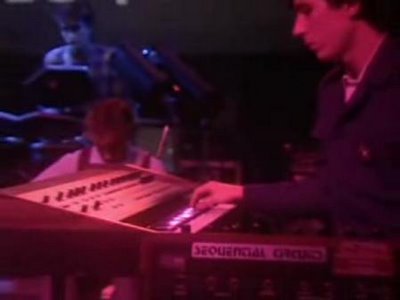
And of course.... Van Halen's JUMP. Synths used for dust.

Look at how dusty that OB-Xa is!!! Eddie is just smiling away. No respect I tell yah. No respect...
Japan - Ghosts Live (1982). Synths used for texture.

And of course.... Van Halen's JUMP. Synths used for dust.

Look at how dusty that OB-Xa is!!! Eddie is just smiling away. No respect I tell yah. No respect...


Korg Wavedrum Shots
 Title link takes you to shots pulled from this auction. More info on the Wavedrum on SOS and SonicState.


Thursday, March 02, 2006
Origami
I've been following the Origami buzz lately. If you haven't heard, it's rumored to be a UMPC or Ultra Mobile PC by Microsoft. I didn't think I was going to be putting a post up on it here, but then it clicked.

Image via Longhorn Blogs
Remember these posts?
miniMusic BeatPad driving a Voyager and 909
Multi-Touch Interaction Research
Apple Lemur?
Lemur Workshop
Live Lab - Tablet 2 MIDI and Live Slice
Audio Pad
Lemur-like Rear projection control
Lemur and a Continuum - Video
Well it just dawned on me that Origami might be an affordable alternative. I'd love to see a more robust miniMusic suite for it. We'll soon know... Title link takes you to the Origami site - still giving teasers.
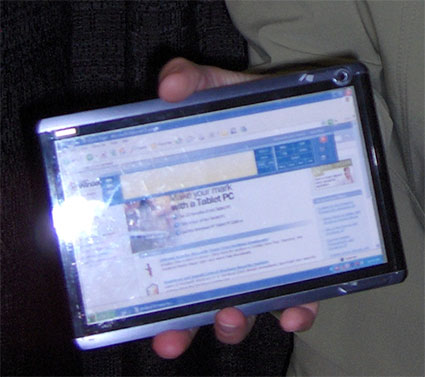
Image via Longhorn Blogs
Remember these posts?
miniMusic BeatPad driving a Voyager and 909
Multi-Touch Interaction Research
Apple Lemur?
Lemur Workshop
Live Lab - Tablet 2 MIDI and Live Slice
Audio Pad
Lemur-like Rear projection control
Lemur and a Continuum - Video
Well it just dawned on me that Origami might be an affordable alternative. I'd love to see a more robust miniMusic suite for it. We'll soon know... Title link takes you to the Origami site - still giving teasers.
See dealers on the right for pricing and availability on gear.
LABELS/MORE: JazzMutant, miniMusic, multitouch, slate devices, Video
LABELS/MORE: JazzMutant, miniMusic, multitouch, slate devices, Video
Seth Elgart's Music vs. Sound
 Title link takes you to Seth Elgart's website. I recently posted Jim Aikin's thoughts on Melody Over Texture. This came from a thread on SynthSights on the topic of the musician and the synthesist and the topic of sound and texture driving a piece of music vs. the musician driving the melody and composition. Seth put up a couple of examples of Music vs. Sound. In one track, Fifty Five, he gets lost in textures from the Waldorf Q, he states that Q drives the composition itself (BTW, this is a good demo of the Waldorf Q 's swirly textures). He states, "It more or less wrote itself. I didn't have much to do with it really. I just played it." In another track, Celebrate Life, Seth critically composes and drives the music. It's interesting when you think about how you create music. I lean more towards the sound leading me - it seems more like an interaction between me and the synth. Two things immidiately come to mind when I think about this, one, Bob Moog's magical description of how you feel sound and the instrument - how you connect to it in an almost metaphysical way; and two, this video of Jean Michel Jarre where he talks about leaving room for the music to drive itself. How do you play?
The ORT Synthesizer
 Title link takes you to Tim Wade's blog on the ORT Synthesizer. Thanks Tim!
 "This is a new blog about the ORT sythesizer that i have been building for about 25 years. Why is it called ORT you may ask? Well about 9 years ago it was sitting on the cupboard at a place i was working at and a collegue placed a label that was the last three letters of "Hyundai Sport" on one of the panels. It from that day on became known as the ORT. I started building it around 1979 or so during my last two years at High School. It has gone in fits and bursts since then. There was a bit if a hyatis between 84 and 2004 while little happened to it. My American Aunt bought me 4 Curtis Electromusic integrated circuits that actually kicked the entire project off. She bought me a set of dual VCA/VCO/VCF/VcADSR. The VCO was the first module built closely followed by VCF and then a selection of modules from the electronics magazine Elektor. Since the ORT has staged a renaisance in the last year or so two new modules have made an apperance. A MIDI to CV module that I have designed myself and a Spring Reverberation module that is based upon a design from the ETI synthesizer from the mid 70's. It is planned to go through each module one at a time and explain the issues with it and how well it worked etc. I then plan to kick off and ORT2 project that will introduce a new set of modules that are so audacious in conception they will take the Analog Sythesis comunity by storm... well probably not as we will be doing well to get that far... but maybe we will."
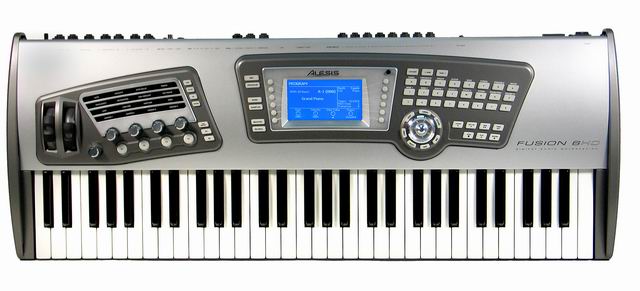
Aleis Fusion Price Drop
Looks like the Fusion 6HD is down to $999, and the 8HD to $1499. Title link takes you to my favorite synth shop for mainstream gear, Novamusik.

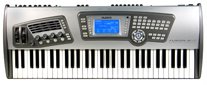


CS80 Motherload on YouTube
Title link takes you to a post on VSE where I found a motherload of YouTube videos featuring the Yamaha CS80 - the credit goes to Micke for finding and listing these. It was a trip back in time seeing the Chariots of Fire video. I didn't realize there was an ARP 2500 featured throughout and this glimpse of a Korg PS3300. The ARP Odyssey lead by Billie Curie of Ultravox in Sleepwalk is worth noting as well; it's an amazing lead. Video links below.
Vangelis - Note the ARP 2500 in the background

Update: looks like the original link I had for Chariots of Fire got pulled, so here is another version currently up on YouTube:
Vangelis ( Chariots of Fire )
Ultravox - Sleepwalk (1980)
ELO - Here is the News (1981)
John Foxx - Underpass (1980)
John Foxx - No-One Driving (1980)
Update: Regarding the Korg modular, "That looks pretty much like a PS3300 as it doesn´t have the two vertical rows of tuning pots down the left-hand side of the 3200. I think Vangelis actually had a 3300, and during the session with Neuronium I believe they also used Huygen´s 3200 alongside the 3300, ARP 2500, and other stuff like Prophet 5 etc. What strikes me even more is the mystery synth on the backside photo of the original "In London" EP by Neuronium and Vangelis... it looks like a Mini Moog but I´m not sure it´s one." Stephen Parsick.
Vangelis - Note the ARP 2500 in the background
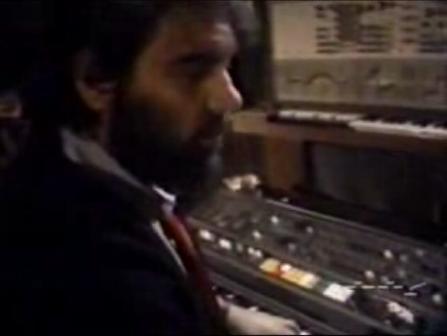
Update: looks like the original link I had for Chariots of Fire got pulled, so here is another version currently up on YouTube:
Vangelis ( Chariots of Fire )
Ultravox - Sleepwalk (1980)
ELO - Here is the News (1981)
John Foxx - Underpass (1980)
John Foxx - No-One Driving (1980)
Update: Regarding the Korg modular, "That looks pretty much like a PS3300 as it doesn´t have the two vertical rows of tuning pots down the left-hand side of the 3200. I think Vangelis actually had a 3300, and during the session with Neuronium I believe they also used Huygen´s 3200 alongside the 3300, ARP 2500, and other stuff like Prophet 5 etc. What strikes me even more is the mystery synth on the backside photo of the original "In London" EP by Neuronium and Vangelis... it looks like a Mini Moog but I´m not sure it´s one." Stephen Parsick.
Audities Foundation

"March 1, 2006
Today the Beta Version of the new Audities Foundation/Studio website has gone live. there are still several items in the works that will be added soon. We decided to post this as it is rather then wait due to the amount of work and time that will be involved to get it totally completed .. in fact I doubt it will ever be totally complete as the collection is constantly growing and evolving.
I am sure there are several little things that have gone unnoticed as the juggernaut that is this site went on, should you notice anything please forward the issues directly to me : echo7even@yahoo.com
It should also be noted that this site contains explicit gear porn and your diapers should be securely fastened.
enjoy
http://www.audities.org"
Indeed. Lot's of Buchla on site.
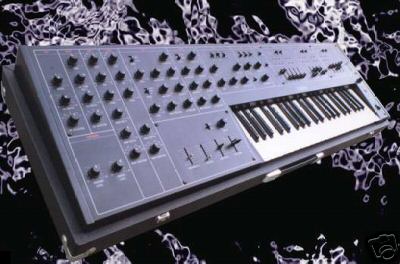
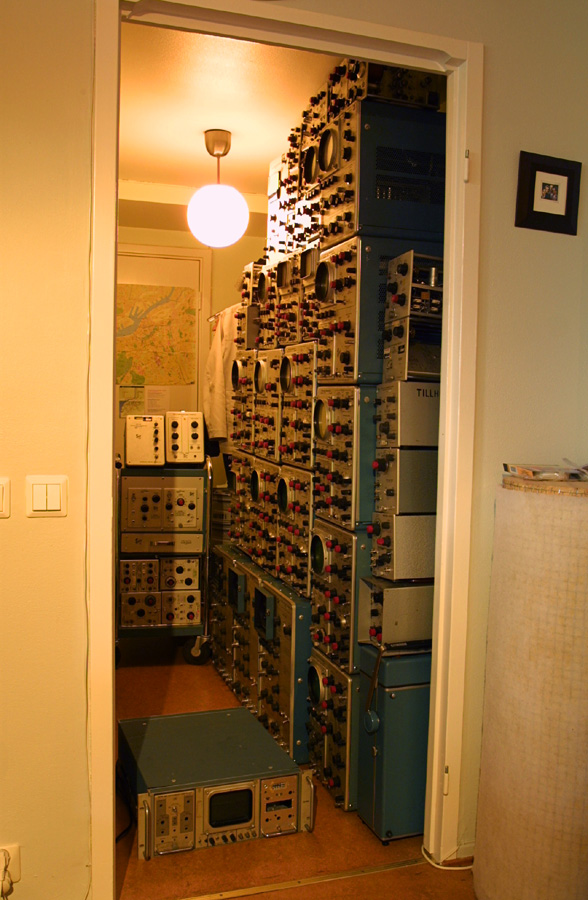
Nice Space Heater
 Another via Mattias. It's a wall of oscilloscopes. Title link takes you to a bigger shot. Also make sure to check out Mattias' site.
SynthModules.com and the PSIM-1
 Title link takes you to the SynthModules site. The PSIM-1 is currently sold out. Details on the PSIM-1: "The heart of this module is a powerful miniature computer (microcontroller) that processes 100,000 instructions per second. It is programmed with your Windows based PC in a simple and easy to learn form of BASIC. Each of the four analog outputs can be programmed to output 1V/Octave CV-OUT as a pattern sequencer and complex event generator, or simply as a gate. This is just the beginning. Use any of its four analog outputs as a programmable LFO to gate your ADSR and set up extremely complex filter sweeps. Clock your Binary Zone with complex events. Imagine what you can do with your filters! Generate CV along with extremely complex sequences that are only limited by your imagination. Unlike most typical analog sequencers, you can change the timing of the spaces between notes and/or gates. Like I said, this is all just the beginning. Additional add-on modules will follow. Unlike a one-time programmable ROM, you can change the program anytime you wish by simply plugging in a cable and downloading the changes to your module. The program remains in memory even with the power off until the next time you want to change the program. Once programmed, you can disconnect your computer and use it as you would any other module. Want random gate and CV sequences? Here you go! Change a few lines of code and you have chaos at it's finest! "
Update via the comments: "Too bad the guy that sells these doesn't actually deliver them - dozens and dozens of people paid him in full for them over 2 years ago and he still hasn't delivered. Many are considering legal action. It's a great module, but I wouldn't recommend doing business with the guy. There's currently talk on the synthmodules yahoo group about creating a better DIY version of this... "
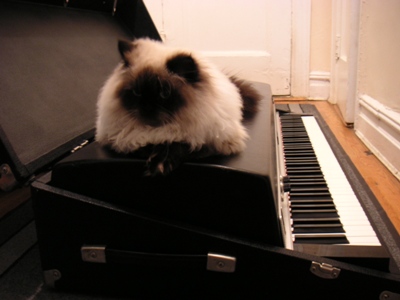
Lucky Cat - Fender Rhodes
Title link takes you to a larger shot of the below and a couple more. Via mdorfman4.

See dealers on the right for pricing and availability on gear.
LABELS/MORE: Cat, Fender, Rhodes, Synth Cats
LABELS/MORE: Cat, Fender, Rhodes, Synth Cats
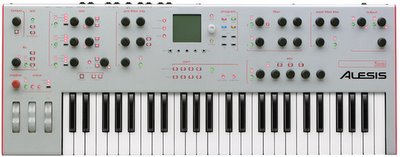
Alesis ION Filter Types
There has been some discussion on AH on the Alesis ION filter types. It's interesting that they are not listed in detail on the Alesis site. I thought I'd put up a post with the list so far. Title link takes you to a Sound on Sound review of the ION where the majority of the below came from. However, some new filters also listed below, were added since the SOS reveiw. Here's a link to the details on the OS updates to date.
'mg': a four-pole low-pass modelled on that of the most famous monophonic analogue synth ever made.
'ob': a two-pole low-pass closely resembling the one in a classic synth xpander... whoops, I mean expander module.
'ob': a two-pole band-pass.
'ob': a two-pole high-pass.
'rp': a four-pole low-pass modelled on the one in a popular semi-modular synth.
'tb': a three-pole low-pass (think 'little silver bass synth').
'jp': a four-pole low-pass (from an eight-voice synth noted for its coloured buttons amongst other things);
'Eight-pole low-pass': all the filters from here on were created for the Ion; this one gives a very steep cutoff.
'8ve dual band-pass': two two-pole band-pass filters spaced one octave apart.
'six-pole band-pass': like an exaggerated version of the 'ob' band-pass.
'phase warp': an analogue phaser effect based on eight all-pass filters in series.
'comb filter 1': multiple resonant peaks and notches which are not harmonically related.
'comb filter 2': as above, but the signal is additionally filtered to warm up the sound.
'vocal formant 1': three band-pass filters emulating 'ah' and 'oo' vowel sounds.
'vocal formant 2': as above, but 'oh' and 'ee' vowel sounds.
'vocal formant 3': a five-band formant filter.
'band limit': a two-pole high-pass filter and a two-pole low-pass filter in series, limiting the signal to everything between them; resonance adjusts bandwidth.
New Types:
'OP 4-Pole Highpass - This filter is based on our "MG" 4-pole lowpass filter model. It has a steeper cut-off and more extreme resonance than the "OB" highpass. Like the "MG", it will self-oscillate when the resonance is turned all the way up. It can thus be used as a fourth (or fifth) oscillator.
'Comb 3 - Based on a different design than Comb's 1 and 2, it has deeper notches and more pronounced resonance.
'Comb 4 - Similar to Comb3, but with negative feedback. This will oscillate and even clip when the resonance is turned up.

'mg': a four-pole low-pass modelled on that of the most famous monophonic analogue synth ever made.
'ob': a two-pole low-pass closely resembling the one in a classic synth xpander... whoops, I mean expander module.
'ob': a two-pole band-pass.
'ob': a two-pole high-pass.
'rp': a four-pole low-pass modelled on the one in a popular semi-modular synth.
'tb': a three-pole low-pass (think 'little silver bass synth').
'jp': a four-pole low-pass (from an eight-voice synth noted for its coloured buttons amongst other things);
'Eight-pole low-pass': all the filters from here on were created for the Ion; this one gives a very steep cutoff.
'8ve dual band-pass': two two-pole band-pass filters spaced one octave apart.
'six-pole band-pass': like an exaggerated version of the 'ob' band-pass.
'phase warp': an analogue phaser effect based on eight all-pass filters in series.
'comb filter 1': multiple resonant peaks and notches which are not harmonically related.
'comb filter 2': as above, but the signal is additionally filtered to warm up the sound.
'vocal formant 1': three band-pass filters emulating 'ah' and 'oo' vowel sounds.
'vocal formant 2': as above, but 'oh' and 'ee' vowel sounds.
'vocal formant 3': a five-band formant filter.
'band limit': a two-pole high-pass filter and a two-pole low-pass filter in series, limiting the signal to everything between them; resonance adjusts bandwidth.
New Types:
'OP 4-Pole Highpass - This filter is based on our "MG" 4-pole lowpass filter model. It has a steeper cut-off and more extreme resonance than the "OB" highpass. Like the "MG", it will self-oscillate when the resonance is turned all the way up. It can thus be used as a fourth (or fifth) oscillator.
'Comb 3 - Based on a different design than Comb's 1 and 2, it has deeper notches and more pronounced resonance.
'Comb 4 - Similar to Comb3, but with negative feedback. This will oscillate and even clip when the resonance is turned up.
Wednesday, March 01, 2006
Jim Aikin on Melody Over Texture
Update: Make sure to check out the comments section of this post for some good dialog going on.
Jim Aikin, former senior editor of Keyboard magazine, posted the following on the SynthSights list. It's an interesting perspective on why many people will identify more with melody over texture of sound - why musical hooks will usually get stuck in our heads more likely than synth soundscapes. I asked Jim if I could post this and he gave me the ok. Thanks Jim! Title link takes you to Jim Aikin's website.
"My suspicion is that our ability to sense and respond to pitch inflection
(i.e., melody) has evolutionary roots in our ability to understand language.
Even in languages that use pitch inflection to distinguish one word from
another, I'm sure speakers and listeners understand the difference in affect
between a sentence spoken in a high, rapid tone with exaggerated pitch
changes and the same sentence spoken in a low, hesitant monotone.
Musical perception uses the same brain mechanisms.
Textures can be instantly identifiable, even before the entrance of motivic
content, and can carry a profound emotional charge. But I doubt that a
texture stays in your head and comes back to you at odd moments the way a
melody by Mozart or Lennon & McCartney will.
Again, it's evolution at work. A melody uses syntax, so it gets "filed" by
the brain using the same ultra-sophisticated language-handling modules that
allow you to remember, word for word, what your Significant Other (or, for
that matter, a total stranger) said to you last week. Most listeners don't
have the mental equipment to handle texture and tone color in that way.
The weakness that I've observed in far too many synth-based CDs (and I used
to listen to a lot of them when I was at Keyboard) is that while the opening
texture is beautiful and stimulating, the music never goes anywhere. The
melodic and harmonic structure, if it exists at all, fails to hold my
attention.
I suppose this is ultimately an elitist position in favor of the
old-fashioned virtues taught in college-level composition courses. But the
music itself doesn't have to be elitist...
Them's mah 2 cents, and ah'm stickin' to 'em."
--Jim Aikin
Jim Aikin, former senior editor of Keyboard magazine, posted the following on the SynthSights list. It's an interesting perspective on why many people will identify more with melody over texture of sound - why musical hooks will usually get stuck in our heads more likely than synth soundscapes. I asked Jim if I could post this and he gave me the ok. Thanks Jim! Title link takes you to Jim Aikin's website.
"My suspicion is that our ability to sense and respond to pitch inflection
(i.e., melody) has evolutionary roots in our ability to understand language.
Even in languages that use pitch inflection to distinguish one word from
another, I'm sure speakers and listeners understand the difference in affect
between a sentence spoken in a high, rapid tone with exaggerated pitch
changes and the same sentence spoken in a low, hesitant monotone.
Musical perception uses the same brain mechanisms.
Textures can be instantly identifiable, even before the entrance of motivic
content, and can carry a profound emotional charge. But I doubt that a
texture stays in your head and comes back to you at odd moments the way a
melody by Mozart or Lennon & McCartney will.
Again, it's evolution at work. A melody uses syntax, so it gets "filed" by
the brain using the same ultra-sophisticated language-handling modules that
allow you to remember, word for word, what your Significant Other (or, for
that matter, a total stranger) said to you last week. Most listeners don't
have the mental equipment to handle texture and tone color in that way.
The weakness that I've observed in far too many synth-based CDs (and I used
to listen to a lot of them when I was at Keyboard) is that while the opening
texture is beautiful and stimulating, the music never goes anywhere. The
melodic and harmonic structure, if it exists at all, fails to hold my
attention.
I suppose this is ultimately an elitist position in favor of the
old-fashioned virtues taught in college-level composition courses. But the
music itself doesn't have to be elitist...
Them's mah 2 cents, and ah'm stickin' to 'em."
--Jim Aikin
The Cocolase System

Title link takes you there.
"The Cocolase has two 8 bit digital delays, but it does not just delay sounds, it recontextualizes them in different pitches, directions, all broken up or all melded together. Each delay has sensing inputs to control its speed, direction, and location. In the center of the Cocolase is a woven nest of 8 oscillators called a Sidrassi. The Sidrassi manifests many varieties of movement with which to control the delays."
Lunchbreak
New Modcan Dual Quantizer 55B Module
 Title link takes you there. Link at the very bottom left of the list when you get there. Demos online.
 Dual Quantizer module. Two discrete circuits, functionally
independent and identical.
Converts continuous signal to DC step output voltage conforming to typical musical scales.
Mode 1: Functionally equivalent to a Sample and Hold.
Voltage step will only change with a rising edge pulse or trigger applied to the CLOCK input jack.
Unique design requires no hold capacitor.
Result is zero 'droop' and infinite hold.
Ideal use of mode 1 is in conjunction with a sequencer.
The sequencer gate bus can be used to initiate the sampling
of each sequencer step.
Mode 2: No-Clock or free mode.
Voltage step output changes automatically when the input crosses the conversion threshold determined by the scale selected.
This is the mode users will be familiar with when using the MiniWave to quantize. The one difference here is that with each transition a 5ms pulse is output from the PULSE out jack. This provides the ability to trigger envelopes or logic inputs in synch with step changes.
International Musician Rhodes Chroma Review
Title link takes you to the January 1983 review reprinted on the Rhodes Chroma site.
"The Chroma is a very interesting chap, as it doesn't quite fit into the Prophet, OBXA, JP8 league, nor does it fit into the Fairlight, Synclavier, PPGs ot. It seems to be somewhere between both categories, which may or may not be a good thing, only time/sales will tell? Despite the fact that it offers far more versatility than most synthes it is a pain to edit. You have to use the manual to remember all the information, unless you've got a photostatic memory, which I definitely haven't."
Update from Jimmy in the comments: "Fun Trivia - I believe the reviewer was the same Paul Fishman who played synths for Re-Flex (The Politics of Dancing)."
"The Chroma is a very interesting chap, as it doesn't quite fit into the Prophet, OBXA, JP8 league, nor does it fit into the Fairlight, Synclavier, PPGs ot. It seems to be somewhere between both categories, which may or may not be a good thing, only time/sales will tell? Despite the fact that it offers far more versatility than most synthes it is a pain to edit. You have to use the manual to remember all the information, unless you've got a photostatic memory, which I definitely haven't."
Update from Jimmy in the comments: "Fun Trivia - I believe the reviewer was the same Paul Fishman who played synths for Re-Flex (The Politics of Dancing)."
See dealers on the right for pricing and availability on gear.
LABELS/MORE: Fairlight, Rhodes, Synclavier
LABELS/MORE: Fairlight, Rhodes, Synclavier
PREVIOUS PAGE
NEXT PAGE
HOME
© Matrixsynth - All posts are presented here for informative, historical and educative purposes as applicable within fair use.
MATRIXSYNTH is supported by affiliate links that use cookies to track clickthroughs and sales. See the privacy policy for details.
MATRIXSYNTH - EVERYTHING SYNTH
© Matrixsynth - All posts are presented here for informative, historical and educative purposes as applicable within fair use.
MATRIXSYNTH is supported by affiliate links that use cookies to track clickthroughs and sales. See the privacy policy for details.
MATRIXSYNTH - EVERYTHING SYNTH