"It is one of the most rare Moog synths-less than 1,000 were ever manufactured. (They were made in the late 1970's, maybe until 1980 or 81 at the latest.) It's an awesome sounding synth , with that unmistakabley rich warm analog sound you get from Moog oscillators and filters. This synth has 2 oscillators, and tons of routing possibilities for the modulation and ribbon controller. The ribbon is a very cool feature, as are the touch sensitive keys which allow you to vary the amount of modulation you bring in depending on how hard you depress the key. This model was loaded with a surprising amount of features for a synth this size, and some of them, such as the keyboard touch feature or the ability to morph from one waveform into another, are definitely unique to the Multimoog."
"The rumors are true. (Well, most of 'em, anyway.) Dave has emerged from his underground lair (the Dave Cave?) with a fresh take on a classic, the all new Prophet '08. It is an eight-voice synthesizer with a 100% analog audio signal path. And it will be shipping very soon. More details will be available here on the Web site in a few days. Following hot on its heels will be the Prophet '08 Special Edition, each of which will be hand-signed by Dave and which will feature lighted wheels (RED!) and exotic leopardwood end panels. And for those of you who are wondering what happened to BoomChik, stay calm. Do not panic. Development is progressing nicely. Stay tuned!
Dave Smith Instruments: Celebrating 30 Years of Great Synth Design (a little early...)"
Title link takes you to the official site. Previous posts
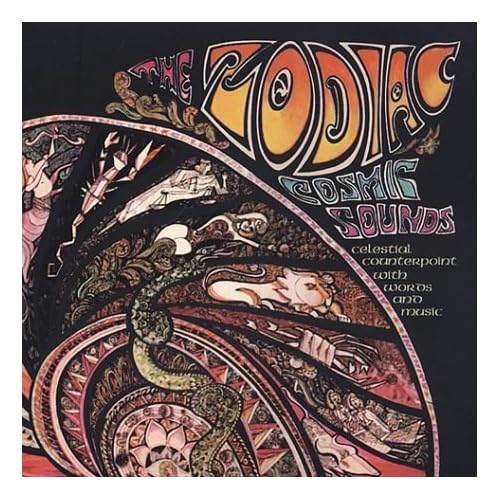
This one in via Micke on AH, posted here with permission. If you can add to the list feel free to in the comments. "Here follows a number of early recordings that feature the Moog modular synthesizer, all of them from 1967. The first commercial recording to feature a Moog Modular is afaik Cosmic Sounds by Zodiac which was recorded in the around the summer of 1967. [image source]
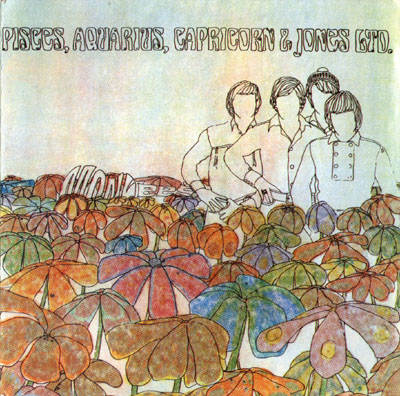
The first pop/rock album to feature a Moog modular is I believe either "Pisces, Aquarius, Capricorn, & Jones, Ltd." by The Monkees or "Strange Days" by The Doors, both of which were released in October/November 1967. [image source : also see front]
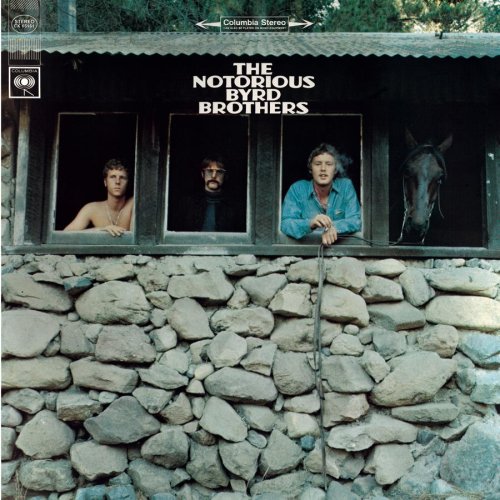
The Byrd's "The Notorious Byrd Brothers" was also recorded in the same period (i.e. fall of '67) but wasn't released until Jan '68. [image source]
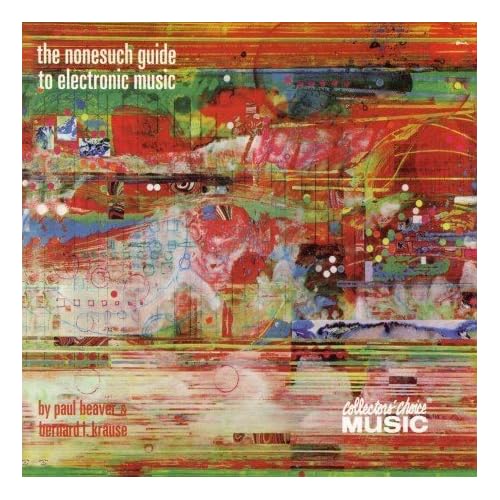
The first record to be entirely recorded with a Moog modular is most likely Beaver & Krause's "The Nonesuch Guide To Electronic Music", released at the end of 1967. [image source]
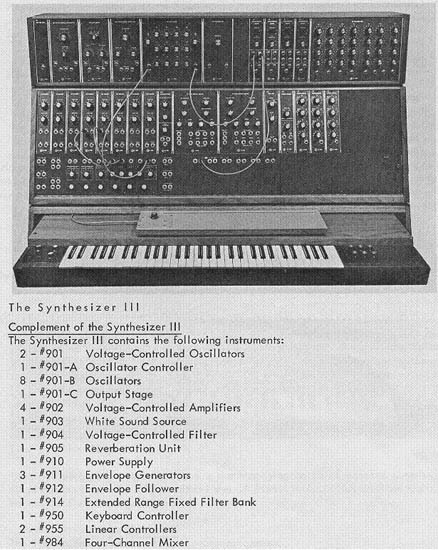
Electronic music pioneer Paul Beaver was involved in all of the above recordings, programming and (in most cases) playing the Moog, an early 1966/67 model "Synthesizer III": Moog synthesizer III (1967). This early model came with a different module configuration and was slightly wider by 4 inches than the later model IIIC. [image source]
Have I missed any other album from 1967, or earlier, that features the Moog modular? if so, feel free to add to my list."
Micke"
Note: you can probably pick these up on Amazon or maybe even Ebay. I did not include affiliate links in this post as I thought it would be disrespectful to Micke and the post, but... if you are planning to pick any of these up and you want to support this site, feel free to scroll down to the album section on the right and click on any of the links to search for these.
"1977 hangs well-being and blows the modular system handbuilt of E-mu system still from only one product. In order to generate additional incomes, Dave Rossum works as an advisor for other Synthesizer companies and develops one-off productions for different musicians as for example the volume Grateful DEAD…"
via REwire: "All the Demos feature one or two Oscs (Sine Wave mostly) into the Waveshaper or Ringmod independently and a set from the Ringmod into the Waveshaper and into the VCA for all sounds. I added a bit of reverb to the whole batch as well to give them space. I used LFO's, ENV's and a Theremin Controller to modulate mostly the Waveshaper's CV input. A few of these have audio going onto the CV of the Waveshaper or no input, creating a noise output that can be modulated by the CV input. The Ringmod has a Feedback switch that dirties it up quite a bit.
Sine to Waveshaper - LFO to WS CV input: click here Saws to Waveshaper - Theremin Control of WS CV: click here Sine to Waveshaper - Fast LFO to WS CV: click here Waveshaper Noise - Triangle to WS CV: click here Ringmod - Flip Feedback Switch: click here Ringmod Sequence - Env to Freq of Sine: click here Ringmod to Waveshaper: click here Ringmod to Waveshaper - Sync LFO to WS CV: click here Ringmod to Waveshaper - Repeating Env to WS CV: click here Ringmod to Waveshaper - Env and LFO to WS CV and OSC CV: click here Ringmod to Waveshaper - Theremin Control of WS CV: click here Ringmod to CV input of Waveshaper - Triangle to WS Audio Input: click here Ringmod to Waveshaper - Env to WS CV - Flip Feedback Switch: click here Sine to Waveshaper - WS to Ringmod - LFO to WS CV: click here" Plan B
"Yep, there it is. The view from within the technicolor dream pyramid inhabited by those rascally robots Daft Punk. The innards of the very vessel Thomas Bangalter and Guy-Manuel de Homem-Christo use to make tens of thousands of people all jump in unison and gyrate their hips in some grand, cosmic harmony. Pretty sweet, although it doesn't hold a candle to the view from the outside."
They definitely like their MOOG Voyager RMEs. via antonio. Title link takes you to the full article.
Title link takes you to an interesting perspective by Stretta on the Tenori-On. Of course this is all speculation, but it is interesting nonetheless. BTW, note the red lighted Tenori-On in this shot.
"Most of the unit is dominated by the button grid with a handful of extra buttons around the frame and an LCD. This suggests a limited opportunity to tweak the sounds or process. I suspect the LCD and associated navigation system is best suited to mundane tasks like selecting patches, loading samples from the card slot, and setting preferences - not editing. Perhaps software is included that will allow the user to more extensively edit using a computer."
YouTube via doublewah. More info on CDM and the Etiquette installation. This is pretty cool, so do check it out the post and the site. I know this isn't reactable, but I'm labeling as such so it is easier to find in the archives.
YouTube via sts9phipps. via CDM. "The diy 8x16 monome controller, built by david phipps, kit by monome.org. music is 'b-nice' (monome version), live versions with the full band sts9 available at sts9music.com."
Title link takes you to a track "rebel_droid_-_a_single_voice" by Rebel Droid. See if you can guess the synth used.
"Last night I was working on my synthesis chops with a particular synth and when I struck upon a fun little idea that is the polar opposite of the way I normally work. I make nu-skool breaks most of the time and tend to make things extremely complex and densely layered but tonight I made a complete little song using just 3 oscillators, a ring mod and a noise source from a single mono patch. It was recorded on the fly in one take with no overdubs and no multitracking and no rehearsing. There are also no effects whatsoever except for a small delay and a convolution reverb. There isn't even any eq.
It's basically me playing an arp pattern mostly with one hand while tweaking knobs with the other but don't let that fool you.. it's kind of surprising how well it turned out. It's a little unpolished of course but it is just about a complete song and, yes, it is a single mono patch! I particularly like when the first bassline comes in and how I only turned the noise source on once near the beginning for percussion and it did the rest on it's own! There's a lot of randomness and little bleeps and squeals in there that I can't fully explain. It's also interesting that if you played the patch normally without the arp and with all the oscillators it doesn't sound anything like this!
It's not an earthshattering concept by any means but it's kind of a testament to what you can do with limited resources, some strict constraints and a little creativity.
Anyway.. I deliberately left out what synth it is to see if anyone can guess or at least guess what they think it sounds like."
download here "Moody demosong made with an Oberheim Xpander only. Recorded with multitracker to show off the possibilities for doing percussive sounds, which is often said that the Xpander can`t do this. Sure used some Delay in mixing process. Note: Even the drums & percussions are made with this synth." Previous tracks by noiseprofessor
YouTube via october71. "Here I am demoing the two x0xb0xes I built, #117 (my personal one) and #329 (for a customer). This isn't intended to be a real song, just a demo of the two of them together. Equipment used: 2 x0xb0xes, Korg ER-1 Sequencing my Novation Drumstation, Alesis Ineko, Ibanez SM7 Distortion Pedal, Behringer UB1622FX-PRO Mixer." via october71: :and here's a couple of pictures: 271964814.jpg 3675255/271964799.jpg More of my electronics/circuitbending projects can be found here:
YouTube via liquidcolor. "This is a short video of the modular from 2003. There is a Tama Techstar drum brain in the top right, but I don't recall if it was wired in. Sounds like it could have been. Wiard, Blacet and DIY EFM."
"he Sequential Split 8 is Japanese produced analog synth marketed by Sequential Circuits. It is very similar in voice architecture and sound to the MultiTrak and SixTrak. All of these synths as well as the Akai AX 60 use one Curtis SENTE (CEM 3394) chip per voice. The Split 8 has eight voices where as the others mentioned above only have 6. The Split 8 seems to be designed for more use as a traditional analog poly synth like the Prophet 5 than as an analog workstation like the SixtTrak and MultiTrak. The Split 8 is capable of doing splits and layers and this is really its strength. As it has 8 voices, you can double up the oscilators and still have 4 note polyphony! By creating a split you can basically have a 4 voice synth with two oscilators per voice that can be detune really thickening up your pads. In split mode the Split 8 is also capable of Poly Mod like the Prophet 5 which uses once voice in the stack to modulate the other. Neither the SixTrak or MultiTrak have this ability. The Split 8 can also stack up all 8 voices to have one massive monosynth; great for supper thick leads and weighty basses!"
"The Cricklewood is a Velocity sensitive "Dynamic" monophonic Keyboard for use with the Synthi VCS3. Cricklewood has 1 VCO and 1 VCA, and the VCO can be used as a mod source or a second voice making the synth Duophonic. This example is really in amazing shape for almost being 40 years old! as you can see in the pictures, there are some very minor wood scuffs. Playing wise this keyboard practically feels new! absolutely no clickity clack that can be felt on keyboards of this type that have worn brushings. includes 8 way cinch-jones cable for connection to Synthi."
Remember this video? Title link takes you to the official site.
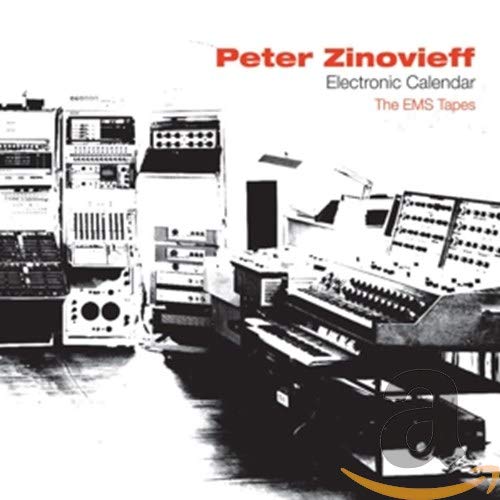
"Documentary, 27 minutes HDV and Digital Betacam 16:9 Anamorphic Widescreen Stereo and 5.1 Surround Sound
From Dr Who to the Dark Side of the Moon, the members of the Electronic Music Studios used pioneering technology and ideas to create a radical new soundscape for the 20th century."
Funny side note. I wonder if it will be the Prophet '08, Prophet 08, or Prophet 8 in the end. And... with or without a dash? It's interesting to me in that how will people search for it?
Update: Looks like the link is currently down. Some more info [below] though. Update: try this link. Not sure if it takes you to the same samples, but there you go. Thanks goes to Steven in the comments. "The P8 has some other new features, too, such as a nice arpeggiator (with latch), a loopable third envelope (try modulating envelope stages while it's looping!), much easier modulation of oscillator mix (you can set up a four way analog vector using the wheels!), and the whole "two Programs in one" thing, where each Program is really two Programs, and where the "Part B" can be stacked/layered, or split with Part A, or just used as an "alternate take" if you will (similar to the EX5 "Scenes", except Part B is a completely different Program). Hey, when stacked/layered, you have 4 analog osc, 2 filters, 2 amps, 6 env, 8 LFOs, 8 assignable mod source/destinations, 8 seq tracks, and 2 arps at your disposal! Analog bliss."
"Although this module is often missing in many modular set-ups, I think a fixed filters bank (FFB) is a really useful module and personally I could not imagine a decent set-up without one. The reference FFB is the 914 module from Moog .
The FFB makes it possible to greatly enrich the sonic palette of a modular system. It is also a key element for the recreation of "natural" and environmental sounds, or of conventional music instruments. Although it evokes the principle of a mere graphic equalizer, it has marked differences. Mainly, the filter Q is higher and the BP slopes are steeper than in a graphic EQ. Furthermore when a control is set to zero, the corresponding spectral band is completely muted. Complex/entangled rhythms can be created on the fly by multi-band filtering a simple sequence."
Update via John Levin in the comments:
"For what it's worth, this one has the Tonus logo on it, as opposed to the Arp w/ cable logo. This means it's the first cut at the grey meanie after the blue meanie."
Update via Micke in the comments:
"It appears to be a model 2600P V2.0 (in production between 1972-72).
This model differed to the 2600P V1.0** (1971-72) in that the front panel was increased in height and that the VCOs changed from 4027 to 4027-1.
** the first version after the Blue Marvin and Grey Meanie
"NOBARA(means wild rose) is extremely rare and one of the most strange japanese electronic musical instruments
it was originally made for playing japanese traditinal music and made by SUZUKI(home of omnichord,tronichord)
but this is most strange & bizzare instrument SUZUKI ever made...
no need to search NOBARA on google because there are no info on the net
first of all it's very beautifull!
built in exotic shape designed dark wine red case
with strange shape 37 key keyboard(look like key of vintage computer) and 2 string bridge and 3 assignable drum pads
it has 16 sounds(including exotic japanese traditional instruments like koto,shamisen,shakuhachi etc)
and 21 exotic percussions
plus you can access more hidden sounds by using MIDI prgramm No. from external midi keyboard(I don't know why) internal speaker,audio output,headphone output and surprisingly it has MIDI IN & OUT!
you can play NOBARA by keyboard(polyphonic) or 2 string bridge(monophonic) and 3 drum pad
this unique 2 string brdge can play by usual guitar pick
hold one key of the keyboards and play 2 string bridge by pick like guitar
2 string brdge is monophonic, it sumilate taisho koto(japanese peacock harp)
japanese harp musician often uses fast trill play so it needs 2 strings with same sounds
and there is metall mute plate to mute sound decay by finger touch
string is touch sensible with verocity and totally electronic device,
it's not just simply electrical amplified like usual electric guitar
NOBARA has MIDI so you can play another MIDI synth by this 2 string brdge!
it's very effective for guitar,bass kind of string instruments
it's like guitar synthesizer feeling
3 drum pad is also touch sensitive and can playing by your fingers
assign drum sounds to pad is very easy,just hold one key and hit the one pad in drum mode
of course drum sounds consists of many exotic japanese traditional percussions
it including some ordinary drum sounds,especially bass and snare is cool electronic sound like KRAFTWERK's drum sound of course in drum mode you can play all of them on keybord
NOBARA's sounds are hi quality,exotic and strange!,very unique original sounds
and playing by 2 string bridge wiyh pick is very funny
NOBARA has MIDI so you can play these exotic sounds from your sequencer or another MIDI device
NOBARA was very expensive and made very limited quantities those days
so i'ts very hard to find even in Japan these days
this is your first and last chance to get this bizzare exotic gem!"
Update via the comments:
smetenan + nobara + taborda (video)
Click on the DSI link right below. Note this is different than the other shots of the Prophet 8.
Update: And this one was photoshopped folks. I didn't think it could be real considering how the others looked. Seemed a bit too far from it. The original image below via: link. Via HarriL in the comments.
YouTube via stretta. "It has been a while since I posted anything 40h-related. Here is a quick video of my step sequencer Max app sending data to a Doepfer MCV24, which is controlling eight band pass filters on a Doepfer vocoder. Slew limited.
Tip of the hat to Dan Deacon, who is 100% pure awesome."
"The Dead Presidents Society is a group of friends who share a passion for the influence of technology on music, and who meet every Thursday morning at a coffee house in Berkeley, California. The group's name was born out of the fact that a number of the members were formerly presidents of electronic music product companies that died. :)" The members are... Click on the image and see if you can spot them. : )
Ok, this is pushing it as far as synth content, but there you go... If it only supported MIDI in and out.
"ZoundzTM creates a fusion of self- composed music with an accompanying light show. With it, users can create musical light shows never seen before. They can create their own riffs by placing one of Zoundz TM’ pawns on an interactive “hot spot” on the sound board. Each pawn associates with the sound it makes and by placing them on different locations and in different combinations, users can compose music all their own. The music portion can be fine tuned with the mode switch which enables users to adjust the tempo of the music, raise and lower the volume, increase or decrease an echo, or sustain and draw out specific sounds. Each interactive “hot spot” lights up when a pawn is placed on it and will groove to the tempo of your music. The color of the light also reflects what type of music the pawn produces with red indicating a sharper tone while blue reflects softer more soothing sounds."
This one in via Robert. You can find discussion and the download on this gbadev thread while it's up. If anyone has a screen shot of this, feel free to send it in. A monome for the Nintendo DS.
Details: "monome~ds v1.0 by GrizzlyAdams
Simple simulation of a monome 40h like device with some artistic license.
Channel buttons & Up/Down DPAD: select current channel
Connection light: the small light at the bottom of the screen under the divider between the 40h buttons and channel buttons shows the status of the connection. Yellow = Connecting Green = Connected Red = Disconnected/Error
By default it starts in local loopback mode, press START to connect.
There is no config menu in this version and you are stuck with the first WFC profile.
Future plans: - glowing channel buttons showing data flow (33% = data, 66% = selected, 100% = both) - actual emulation of a monome 40h / wrapper for running monome firmware - wfc selection - 2nd display-only monome
NOTE: this program is NOT from, licensed by, or supported by monome."
In case you missed the updates to this post, the new rumored synth is going to be an eight voice analog synth based on the CEM chips used in the Evolver with the sequencer, arpeggiator and memories. It will sound different than the Evolver. More details in the previous post. Comment disabled here to keep them all in one post. If anyone has more info on this including any pics or samples, please feel free to comment.
YouTube via TheRentalsDotCom. Sent my way via Sean. "a quick "how-to" on fixing a problematic key or two on the Sequential Circuits Pro-One" Note there is also a j-wire version of the Pro-One. I picked one up for $125 due to a sticky note. I popped it open, bent the j-wire back in place and it was fine.
Update via the comments: "hmmmm.that's more of a rig than a fix.... next time, use a pencil erases on the back of the membrane and on the metal contact on the PCB, it will actually "fix" it instead of introducing foreign materials like tape that will only make it work temporarily and then probably melt and gum up your control board and make things worse."
Details "Oberheim CPS-1 that have been modified especially for Keith Emerson back in the 1970's. We have no official documents that certify that but since it have really been modified for him, I'm saying it here on ebay and if someone knows him and ask him, he will remember this synthesizer because it's unique in the world. (the modification I mean)."
Update : for anyone considering this one, be sure to check out the comments of this post and of course be sure to check out all the feedback."
 Title link takes you to shots via this auction.