Title link takes you to a post by kkissinger on electro-music.com featuring a track done with the Aries Modular.
"After the EM2007 festival, I spent the next few weeks at home doing all the stuff that I had put off doing so that I could prepare for the festival. Lately, I have been heads-down to create more live-looping works and look forward to completing new works in the next few months.
Has been a while since I've posted a track here on electro-music. Many folks here enjoyed hearing my Aries synth version of the Bach Concerto in d-minor (3rd movement) and I'd like to share the 1st movement with you.
The track below is a remix from the 4-channel master tape (originally recorded in 1977). The performance of the solo part is recent -- I used the Aries synthesizer and used a touch-sensitive keyboard (I didn't have such a keyboard in 1977). Originally I used a foot pedal to control the volume of the solo.
Hope you enjoy all these vintage synth sounds, painstakingly recorded one line at a time on analog tape (ah, the memories!).
Many thanks to you, the electro-music.community, for your support and encouragement."
I did mirror it here, however do go to the post to check it out along with any discussion and updates on it.
Wednesday, July 18, 2007

Ray Edgar - Flexonica II
YouTube via rayedgar. via sequencer.de.
"Performance at the Kitchen New York. feb 1991
The sweatstick is a alternative midi controller designed and built by Ray Edgar."
GRANIPH Minimoog T
 Cool looking T-shirt posted on SoNiCbRaT.
See dealers on the right for pricing and availability on gear.
LABELS/MORE: MOOG, Synth Bling, Synth Clothes, Synth Ts
LABELS/MORE: MOOG, Synth Bling, Synth Clothes, Synth Ts
Slagsmålsklubben live @ NBC GIGA
YouTube via betamann. Sent my way via Cyril.
"Slagsmålsklubben live @ NBC GIGA (german tv show) 20.03.2006"
Roland SVC-350 Vocoder and Paraphonic 505
YouTube vai RedRoomNW.
Kevin Shields
YouTube via audiotactix.
Kevin Shields live Deathbomb Arc Showcase @ Fools Foundation Sacramento 07/15/07
The Namastitar
 Remember Ciat Lonbarde? Here's his latest piece.
"This is the prototypical model of a Namastitar, an analog/string hybrid. The brass frets, besides setting the intervals of the acoustic string tones, are also nodes of an oscillator. So by playing the fretboardyou articulate string tone as well as oscillator tone. This oscillator makes a ring-modulation circuit with the sound of the string so you have complex articulated tones formed out of plucked string, as well as smooth oscillator tones made by pressing on the bridge (like the sidrassi organ somewhat). There are four knobs: oscillator basis frequency, fretboard convolution, mix of affected and clean string sounds, and master volume. The fretboard convolution knob controls how the oscillator responds to the fret scale- going upwards or downwards or upwards-downwards."
Title link takes you to more info. Via Music Thing.
Buck Rogers Space Funk
Buck Rogers Space Funk part 1
Buck Rogers Space Funk part 2
"Futuristic Space Funk Band with Punker Riot on Buck Rogers TV Show"
via AudioLemon
Buck Rogers Space Funk part 2
"Futuristic Space Funk Band with Punker Riot on Buck Rogers TV Show"
via AudioLemon
moonbank
 Title link takes you to there MySpace page. Pretty cool stuff. It's not electronica and it's not prog rock. : )
Guess the synths
Adrian Belew's Roland PG-800
 Title link takes you to some nice shots via this auction.
"With it's 23 sliders, 16 switches, 3 knobs and 2 buttons, the Roland PG-800 is a godsend for live tweaking while you run MIDI sequences to your synth. It's great for sweeping the resonance or cutoff while a nice throbbing bassline is playing! We could not imagine programming the MKS-70 or JX synths without this unit. It makes programming these synths 1000 times faster and easier!!! We must also mention, this unit belonged to Adrian Belew, the well known guitarist (and probably the most innovative one at least) for King Crimson. It's in amazing condition, so I don't think he gigged with it. I do know the Roland JX-8P was his main synth for awhile, so I can imagine him using this programmer to get his sounds programmed."


Juno Filter Module
Update. I have removed the image and quote from AH at dj hohum's request.
via dj hohum:
"I've taken the images down from my flickr site and I plan to bring the images and description of the finished module back in the future on a different site."
Here's the link to the post on AH. Sorry folks, I try to respect people's wishes when it comes to content on this blog. Not sure why dj hohum wanted it pulled, but he did. I'm not removing the post altogether as there are comments here and of course it is interesting synth info .
via dj hohum:
"I've taken the images down from my flickr site and I plan to bring the images and description of the finished module back in the future on a different site."
Here's the link to the post on AH. Sorry folks, I try to respect people's wishes when it comes to content on this blog. Not sure why dj hohum wanted it pulled, but he did. I'm not removing the post altogether as there are comments here and of course it is interesting synth info .
AnalogLive! at the Redcat Theater - November 16th, 2007
 "We're extremely pleased to announce the confirmation of AnalogLive! - a live all-analog ensemble performance at the CalArts Redcat Theater, located in the Disney Music Hall complex in Los Angeles, on November 16th.
Bringing together some of today's leading composers, performers and designers for a real-time presentation of works centered around the revival of analog synthesis, Analoglive! is a collaborative live ensemble performance from composers Gary Chang, Alessandro Cortini of Nine Inch Nails, Richard Devine, Peter Grenader, Chas Smith, and a rare Los Angeles appearance by Thighpaulsandra of the band Spiritualized, along with Paul Tzanetopoulos - involving kinetic video sculpture, electro-acoustic music via analog synthesizers and acoustic instruments.
For more information on the show, click the link below and we hope to see you there!
http://www.ear-group.net/analoglive!.html"
Sherman as Sequencer-Trigger
YouTube via verstaerker.
"using the envelope follower of the sherman to create an envelope wich controls the Doepfer Sequencer"
Kawai K5000s
 Title link takes you to shots via this auction
 "The genesis of the K5000 was the Kawai K5 additive synthesizer. So with Advanced Additiveª synthesis, Kawai has come up with a synth, the K5000S and the workstation version, the K5000W that go the limit on creation of sophisticated additive waveforms.Rather than using pre-set waves, this synthesizer builds custom waves using up to 128 harmonics. By way of 128 Format Filters, individual envelopes for each of the harmonics, 24db/octave resonant DCF and DCA's (That's Digitally Controlled Filters and Amplifiers), the K5000 offers a large number of sound choices. These additive sounds can be also combined with internal PCM sounds.The K5000W workstation has 226 pre-set sampled sounds made up of 128 General MIDI patches and 11 drum kits. Along with the 61-note keyboard, you'll have 64-note polyphony with a 40-track/40,000 note sequencer and a built-in Standard MIDI File disk drive with 99 song and 180,000 note capacity. If you get the K5000S synth, then you'll have a multi-mode arpeggiator (yes! they are coming back), 16 preset and four assignable "macro" control knobs to change parameters during live performances.
FOR SOUND DEMOS GO HERE
Polyphony - 32 voicesOscillators - Digital Additive Synthesis plus PCM samples;
Harmonics: 64 per source; Waveforms: 689 (123 synth, 341 GM, 225 drums). Note: only K5000W features GM soundsEffects - 4 effects algorithms with 32 different effectsFilter - 128-band formant filter, 24dB/oct low-pass and high-passLFO - 2 (one for formant filter, one can be freely routed to other destinations)VCA - 1 ASDR per part, with key scale and velocitySequencer/Arpeg - Sequencer: 40 tracks, 40,000 note capacity (K5000W only)
Arpeggiator: 40 patterns, 8 user (K5000S and K5000R only)Keyboard - 61 Keys with velocity and aftertouchMemory - 200 patches, 64 performancesControl -
MIDI (K5000S, K5000R: 4-part multi-timbral; K5000W: 32-part multi-timbral)
Date Produced - 1996
Est. Value - $500 - $1,200"


Roland EF-303
 Title link takes you to shots via this auction.
Kind of a virtual Murf before the Murf plus effects, plus step sequencer. I always wanted one of these.
Tuesday, July 17, 2007
Moogfest 2006 Live DVD
 "Featuring an incredible array of the world’s leading keyboardists, Moogfest, the annual festival celebrating the groundbreaking achievements of maverick inventor Robert Moog and his namesake synthesizer, captures the spirit of the instruments that altered the course of modern music for all time and have since become an integral part of our musical culture.
The Moogfest 2006 Live DVD documents this historic musical summit.
Filmed live at New York’s famed B.B. King Blues Club in Times Square, this DVD features performances from some of electronic music's greatest practitioners including:
Keith Emerson (The Nice, ELP)
Jan Hammer (The Mahavishnu Orchestra, Jeff Beck)
Jordan Rudess (Dream Theater)
Bernie Worrell (P-Funk)
Roger O’Donnell (The Cure)
The Mahavishnu Project
DJ Logic
For more information, click here.
Price: $19.95"
Little Phatty Editor Librarian
 "Attention all Little Phatty owners, here’s a great accessory for storing, editing, mutating, morphing, and creating presets. The Little Phatty Editor Librarian now available for use on both Mac and Windows platforms.
The Little Phatty Editor Librarian is designed to be the ultimate tool for organizing and creating presets for both the Little Phatty Tribute and Stage Editions. Through a MIDI connection from the Little Phatty to a computer, this program can receive single presets or an entire bank of presets from the Little Phatty - as well as replace individual presets or an entire bank. Once the presets are transmitted to the LP Editor Librarian, all preset parameters can be displayed in a graphical user interface, including edit functions like Pot Mapping and Filter Poles.
The settings of the front panel controls can be displayed with several resolutions, including: 7 bit, 8 bit and high resolution (16-bit), to allow super-precise sound editing. The program can also be used to learn the inner details of the factory presets. Using the LP Editor Librarian, presets can be organized to create custom preset banks – a terrific feature for musicians preparing for their next gig! In addition, a Preset Genetics function is available to create new presets by morphing or mutating two presets together.
You can also play the Little Phatty remotely from the computer keyboard. A Little Phatty OS update function is incorporated, too, simplifying Little Phatty OS updates.
You can demo the Little Phatty Editor Librarian software by downloading it from the Moog Music website.
For more information and to download a demo, click here.
Price: $69.00"
And the LP OS Update:
"As part of Moog Music's philosophy of Lavish Product Support, we are pleased to announce the release of OS v1.03c for the Little Phatty Stage and Tribute Editions. OS v1.03c introduces several new features to the Little Phatty. The Master Menu order has changed to incorporate these new features in a streamlined and logical fashion.
Some of the new features and enhancements are...
PRESET STORAGE
The preset save routine has been improved. As always, to save a preset you press the ENTER/STORE button while in Panel Mode. You will see two lines on the Little Phatty display. The top line shows the location where the preset will be saved, and the name of the preset which is currently saved in that location. No more overwriting your favorite presets by mistake!
MIDI CC
The Modulation Wheel and Filter Cutoff parameters now send and receive high-resolution 14-bit Midi CC messages. This allows for finer control and more smooth-sounding changes, whether you are using the LP as a MIDI controller or controlling the LP via MIDI from your sequencer.
ADVANCED PRESET
Has a new KEYB PRIORITY setting - default is GLOB (global), which inherits the Global Keyboard Priority set on the KEYBD PRIORITY menu. You can now choose to set a different keyboard priority which is saved per patch.
MIDI SETUP
MIDI functions have been consolidated to one menu, and some tasty new features have been added.
MIDI SETUP contains the following items: ALL NOTES OFF, LOCAL CONTROL, MIDI MERGE, POLY
The new features are Midi Merge and Poly. If Midi Merge is ON, the LP will echo all MIDI received at its MIDI IN port to the MIDI OUT port, merged with any Midi data which is generated by the LP. This allows you to pass Midi data THRU the LP, which was not formerly possible.
The Poly menu is used to set up multiple Moog synths as a polyphonic synth stack. MIDI control numbers are consistent between the Voyager and Little Phatty, so any parameter changes such as pitch bend and mod wheel, filter cutoff and so on, should affect all voices simultaneously.
For more information and to download the new OS, visit the software sections of the Little Phatty Stage and Little Phatty Tribute pages on the Moog Music website."
Moog FreqBox
YouTube via chachijones.
"Watch Chachi and Alan from Robotspeak put the Moog FreqBox through its paces. First, Chachi tries it out with a Roland TB 303 Bassline synth. Then Alan runs his guitar through it. If you like what you hear, you can order yours at Robotspeak.com."
HATSKI: HOW TO ACID HOUSE WRANGLE KNOB EXPLOSION WIGGLE
Goblin Box Demo
Goblin Box Demo
"The Goblin Box is roughly based on the concept of a theremin, utilizing light sensors instead of radio waves. Two coarse tune knobs allow for a wide variety of sound, from simple tones to static chaos. This video shows it being used alone, then processed through a filter + delay."
Goblin Box Demo #2
YouTube via nevenen.
"The Goblin Box is roughly based on the concept of a theremin, utilizing light sensors instead of radio waves. Two coarse tune knobs allow for a wide variety of sound, from simple tones to static chaos. This video shows it being used alone, then processed through a filter + delay."
Goblin Box Demo #2
YouTube via nevenen.
Optigan Vocal Choir (Vox Humana Disc)
YouTube via RedRoomNW.
"Super-rare Vox Humana disc on the 1970's Matell Optigan optical organ. Features cello sounds, pipe organ and sampled real human voices. This is the same sample used on the orchestron that kraftwerk used for many famous tracks, including Radioactivity, Show Room Dummies, etc..."
Decibel Festival 2007
 "The 4th Annual Decibel International Festival of Electronic Music Performance, Visual Art and New Media will be happening September 20th through the 23rd in Seattle. This year's program will be featuring artists from 9 countries in 14 showcases across 7 venues, each of which will be outfitted with custom sound and video. In keeping with the tradition of the festival, you can expect to experience a broad range of cutting-edge electronic music based performances, featuring international talent of the highest caliber."
Title link takes you there.

Xpander Shootout - USA vs. Japan
 Via Matt
"I had an xpander here for service last week, a Japanese version like mine. At the same time, a friend brought over his US made version, and for no other reason than nerdy synth-geek gratification, we racked the three up together as in the photos. While we had them all together we thought we would test the Japan made models vs the US made model. There has been much speculation in recent times as to the comparitive quality of the different units.
So the test was a very simple one, we loaded Kid Nepro preset banks on each machine via sysex, daisy chained midi through them and A/Bd the output from each unit.. The result was immediately very obvious.. no difference in sound whatsover. We tested various patches.. pads, percussive sounds, bass sounds, fx etc.. there was no difference in envelope times, tone, brightness, thickness or fatness, resonance or anything else. We were rather surprised how identical the units sounded considering the board layouts are quite different. I expected some difference in the sound between the units, but there was none, to our ears anyway. So there you go. It could of course be said that other units may sound different to the three we had racked up.. We didnt do any recording or any scientific testing.
Some other xpander trivia, aside from what I have read before.. the US version has nicer wood sides, the jacks on the rear of the US version are black as opposed to silver in the Japan versions. The rotary encoders on the US version click louder and do not roll as smoothly/softly as the Japan version encoders.
Lastly it is written in Xpander folklore that the Japanese power supply is of poor quality and made from cheese. After very careful scrutiny I can say that the Japanese power supplies were not of poor quality, but I can confirm however that the power supply in the Japanese version is indeed made from cheese.. very tasty.. "

Roar Studio
 via catsynth.com.
Forat
 No new news here, I just realized that although I've put posts up featuring Forat gear, I've never put one up on the site itself. For those of you not familiar with Forat, from the history page on the site: "Since 1982, Bruce and Ben Forat have provided the entertainment community with first-class music electronics. Since 1986 they have provided service, parts, and modifications to all Linn Electronics products. They revamped the original line including the LinnDrum, LM-1, and LinnSequencer and introduced the world to the F-9000." Title link takes you there.

DIY M NES CONTROL
YouTube via donaconfuse.
"Mister DIY M NES CONTROL is cool. by Anagram. asquelo(at)yahoo(dot)fr"
via Axel
"the DIY M nes CONTROL is my creation
PAD NINTENDO NES WITH MIDI IMPLANTATION"
YAMAHA DX7 II CENTENNIAL
 via this auction.
"1988) CELEBRATION OF HUNDRED YEARS HISTORY OF YAMAHA
- Programmable 6-operator x 2 (A & B) 32-algorithm digital FM tone generator (improvements include enhanced MIDI support, stereo panning, 6 envelope generators and enhanced 16-bit circuitry)
- Independent 8-parameter envelope generator for each operator
- 64-voice internal RAM memory and 64-performance memory
- Split and Layer mode
- Microtonality
- Random patch shift allowing slight pitch changes
- Fractal scaling
- Cartridge slot for ROM and RAM cartridges - different type than the original DX-7 (64 voices capacity)
- 76-key velocity and after-touch sensitive keyboard
- 40 character two line backlit display
- 32-note polyphonic stereo output (2 x 16 voices)
- Sustain footswitch, portamento footswitch, volume and modulation controllers and breath controller inputs.
- Additional slider controller
- MIDI IN/OUT/THRU terminals
- A real rarity made for collectors - limited edition(100 ), all pieces were signed and numbered.
- The instrument has steel gray colour. Wheels, buttons and sliders are gold paint. The keys glow in the dark .
- Original price was $4.000, recent price is around $6.000"
Sent my way via Mr IWC
Virtual Aelita
 Title link takes you to a free soft synth version of the Aelita. There is a sample comparison against the real thing. via the comments of this post.
 Note you can also fine samples of the real thing here.
MOOG 901 Voltage Controlled Oscillator
 Title link takes you to shots via this auction.
"This is a Vintage Moog voltage controller oscillator 901 for a model 10/11? Moog synth. Date is difficult to see in picture but it appears to be Jul 22, 1969."

 Note the Trumansburg sticker. This is where it all began.
Moog 921a Oscillator Driver
 Title link takes you to shots via this auction.
"This is a Vintage Moog Oscillator Driver 921A for a model 10/11? Moog synth."
MOOG White Noise Source
 Title link takes you to shots via this auction.
"This is a Vintage Moog White Sound Source (white noise generator?) for a model 10/11? Moog synth. Date is difficult to see in picture but it appears to be Jul 22, 1969."
yamaha cs30
YouTube via vaskuryandex.
Radical technologies spectralis synthesizer
YouTube via vaskuryandex.
"The Spectralis is the first "GrooveBox", which combines the LIVE usability of the latest digital technology with the best elements of proven analog technology. We also have thrown in some other cool features which give the synthesizer much more flexibility than anything seen before. While traditional Sequencers are limited to playing back rhythm patterns and tone sequences, the step Sequencer of the SPECTRALIS makes possible highly complex sound creations which opens up completely new worlds of sound when used in connection with the programmable FIXED FILTER BANK. In addition to its outstanding analog sound possibilities the SPECTRALIS also provides DSP based sound creation, which takes care of all the ancillary needs for drumsounds and polyphonic voices. This sound creation is 48 voice and offers killer drum sounds, creamy pads and a lot of other goodies"
See dealers on the right for pricing and availability on gear.
LABELS/MORE: Radikal Technologies, Video
LABELS/MORE: Radikal Technologies, Video
The Hartmann Hohner Adam

via sequencer.de. You can find more info on this synth on the Hohner ADAM page on sequencer.de. BTW, Moogulator recently added a number of items to the synth db on sequencer.de. You can see the full list here.
Update via swissdoc via the comments:
"More details here. Stefan Stenzel from Waldorf wrote the software for the ADAM."
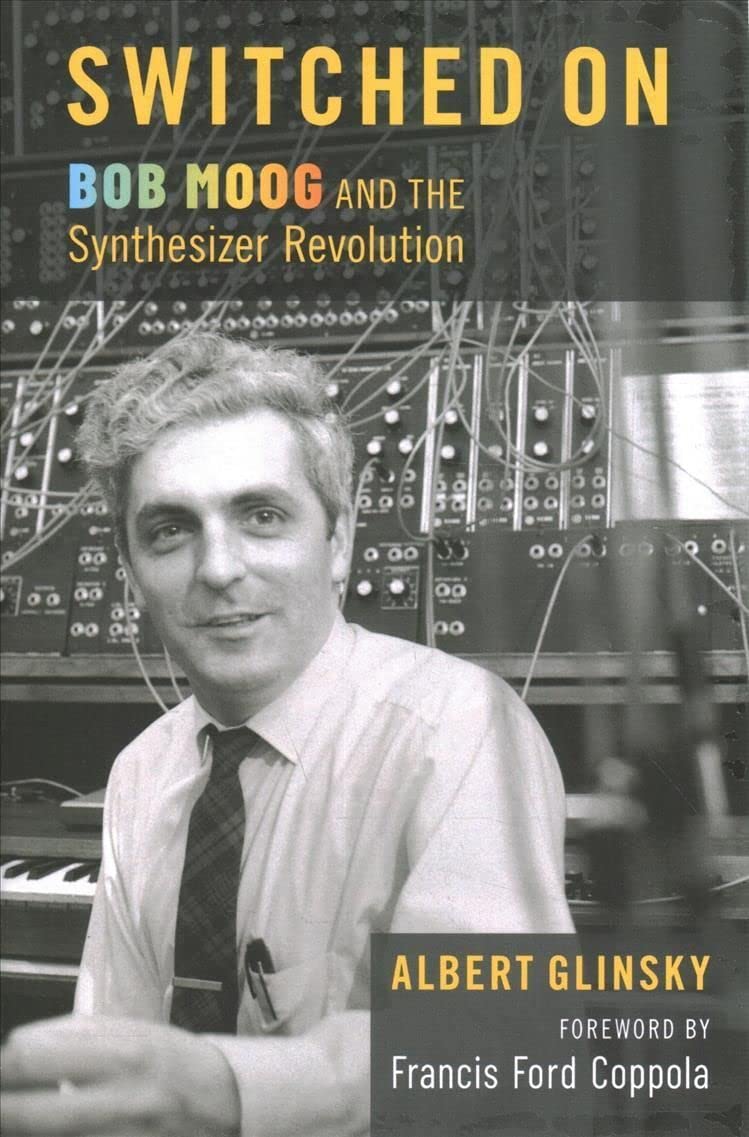
Moog synthesizer collaborator Herbert Deutsch at IMAC
"One of the most radical shifts in music began in 1961 with a hobbyist magazine article on how to build a theremin and a jazz musician from Baldwin named Herbert Deutsch.
The theremin, an electronic device that generates sound using radio frequencies, had been around for a while, but Deutsch found the Electronics World article interesting enough to pick up the issue and follow the instructions. When he couldn't get his gizmo to work, he phoned the article's author, an engineer, who gladly mailed out an easy-to-assemble kit for $49.95.
Two years later, Deutsch spotted the engineer selling his kits at a music trade show upstate in Rochester, and the two fell into conversation. They discussed a relatively recent invention called the Mark II synthesizer, which made music by sucking up rolls of key-punched paper and etching the results with a lathe onto a shellac record. It was intriguing, but you couldn't exactly 'play' the thing like a piano or guitar, or even a theremin.
'Wouldn't it be exciting,' Deutsch told the engineer, if there were smaller synthesizers 'that a performer could own, or a composer could own? Something you could have in your home?'"
The engineer? Bob Moog of course. Title link takes you to the full article.
The theremin, an electronic device that generates sound using radio frequencies, had been around for a while, but Deutsch found the Electronics World article interesting enough to pick up the issue and follow the instructions. When he couldn't get his gizmo to work, he phoned the article's author, an engineer, who gladly mailed out an easy-to-assemble kit for $49.95.
Two years later, Deutsch spotted the engineer selling his kits at a music trade show upstate in Rochester, and the two fell into conversation. They discussed a relatively recent invention called the Mark II synthesizer, which made music by sucking up rolls of key-punched paper and etching the results with a lathe onto a shellac record. It was intriguing, but you couldn't exactly 'play' the thing like a piano or guitar, or even a theremin.
'Wouldn't it be exciting,' Deutsch told the engineer, if there were smaller synthesizers 'that a performer could own, or a composer could own? Something you could have in your home?'"
The engineer? Bob Moog of course. Title link takes you to the full article.
Monday, July 16, 2007
Serge Modular
 Three panels up for auction. Panel links below take you to the corresponding auctions.
Panel 2
"8X2 sequencer, the quantizer (TKB), analog shift register, dual transient generator, /N comp, and 5 preamp modules."
Panel 1
"touch activated keyboard sequencer."

Panel 3
"The rack case is new from sound transform systems. this third panel has the wave multiplier, 2 precision VCOs, and one NTO new timbral oscillator and the very rare gentle electric pitch and envelope follower!"
Formula Filter Array 24 Update
In case you missed the update to this post, apparently the filter was actually made by Bob Moog for Patrick Gleeson and it was the only one made. Comments in this post disabled to keep them with the previous post.


Solid State Musical Tesla Coil
YouTube via thegeekgroup.
"Joe DiPrima and Duck demonstrate the Solid State Musical Tesla Coil"
Don't miss the ending after the credits. Also check out these Tesla Coil posts for more.
AELITA
 Click here for shots via this auction.
 "Synth was made in 80's years in USSR. Aelita is rare synthesizer actually much more rare than well known polyvox soviet synth. Aelita's sound can be very organic, mellow and very fat, agressive also. Synthesizer has very original "transformer" design with removing main operation panel. It is the soviet version of famous minimoog synth. It is big and fat sounding synth. One of the best analog mashines prodused by soviet music industry.
Aelita has three oscillators with square, pulse and saw waveforms.There is LFO with triangle,square,saw and ramp waveforms.Every oscillator can be independently detuned in one octave range. We have possibilities in any chord playing here.You can switch oscillators from 32' to 2' registers.Every oscillator has it's own level slider in mixer section.Oscillator's pitch can be modulated by LFO and first oscillator can be modulated by third oscillator.Than we have nice sounding moog type 24db lowpass filter with screaming resonanse and fat low end.Filter has it's own ADS envelope, keyboard tracking and can be modulated by LFO.VCA has it's own ADS envelope with release switch.There is unussual unison mode when you can get signal of all oscillators in 4 registers in one time. Dimensions: 310x350x920 mm. Weight: 18 kg."
Formula Filter Array 24
 Update: be sure to check out the comments for more. This was actually made by Bob Moog.
Title link takes you to shots, including some of the inside, via this auction.
"This auction is for one vintage Formula Sound Multiple Resonance Filter Array. This is a USA-made fixed filterbank / string filter from the 1970s that was (according to the engraved faceplate) custom made for San Francisco musician and producer Patrick Gleeson. Gleeson made some excellent albums on his own, but was better known as a session musician and producer/engineer who worked with artists as diverse and influential as Herbie Hancock and Devo. Though this model was advertised by Formula Sound in some magazines back in the 70s (see picture), this is the only actual unit I have ever seen or heard of. Since the faceplate says it was custom made for Gleeson, I believe it is the only one in existence. In theory it is similar to Moog String Filter but with greatly expanded and more tweakable facilities, but generally it excels at allowing you to electronically simulate the natural resonances of an acoustic chamber (like a violin or other stringed instrument).
This is also presumably somewhat of an inspiration for the Moog MURF pedal, as they
 seem to have taken the name from this unit (MURF stands for MUltiple Resonance Filter). Unit runs on 110V voltage and comes with a standard IEC power cord.
This piece is generally in very good cosmetic and functional condition, but has a few warts that I will be more explicit about in the following paragraph. All of the functions should be fairly self-explanatory... a mono signal goes to the input of the unit and is fed through 24 steep bandpass filters at various fixed frequencies, each of which can be assigned to one or both of the output channels via bus switches on the front panel. When all the sliders are down the unit is fully attenuated (silent).... as various frequency sliders are raised, that frequency becomes audible. There is a resonance shift rotary switch that allows you to change the overall harmonic tone of the selected frequencies and a drive knob which seems to have a compressor circuit built-in and sounds more like a tone control than a harmonic clipper.
In addition, there is a rotary switch that selects the overall mode---bypass (dry signal only), direct (unit engaged, frequencies sent directly to selected output bus), x-fade and x-pan (both similar in theory but different sounding). There are also 1/4" jacks for CV (control voltage) access so that you can integrate it into your modular system... one is a VCA input jack and the other is a modulation output jack that allows you to send the internal modulation LFO out to external equipment for coordinating sweep times. This is a very full featured unit that allows you to radically alter a sound, though it sounds very different and in a lot of ways a lot less radical than a standard lowpass filter.
 Everything generally works as expected with a few exceptions, so I'll be pretty explicit here about everything that isn't quite perfect.
---The Drive pot is very scratchy.
---The Resonance Shift rotary switch is very loud and emits a loud thump through the outputs when switching, though this seems to be more by design than by a defective switch.
---The output Bus Selector switch for the 372 Hz frequency is wobbly and doesn't click into place like the others but it selects the output bus just fine.
---In Direct mode, in which is acts as a standard fixed filter bank, the B output bus is noticably quieter (about 15 db or so) than the A output when all frequencies are assigned to both buses. The overall volume difference, however, seems to depend on the drive level, input level and resonance shift amount. At certain settings the output levels are much closer to each other, though. I overcame this by running the 2 outputs into different hard-panned mono channels on my mixer and using the input gain pot to make up the difference.
---In X-fade mode it is the same as Direct mode---one channel is louder than the other. This is very noticable when using the 2 hard-panned mixer channel trick that is described above.
---In X-pan mode the output channels are pretty much equal volume and this mode sounds very similar to the X-fade mode, so I just used this mode instead.
---The front panels is very clean but there are numerous scratches and wear on the top, bottom and sides of the unit. There are some small paint marks that someone added to the selector switches and on one of the frequency slider caps.
This thing is built like a tank. All of the frequency sliders have very attractive machined aluminum tips. It does have some wear, but looks very good both inside and out, especially for a 30-plus year old unit. I've owned it for close to 10 years and I just had it serviced by analog guru Phil Cirocco in fall 2006 to fix a dead output channel. Though I don't have any schematics for the unit, any competent tech should be able to service it as the filter cards are modular (12, with 2 frequencies per channel) and all of the other stuff (VCAs, etc) are on breadboards and the circuits are clear and easily traceable. As you can see by the high quality parts and tons of circuitry, building something like this at today's prices would cost many, many thousands of dollars."
Marshall Time Modulator and the Marshall Tape Eliminator
"To my friends at Whatever Works:
I'm very pleased to announce that I've signed an agreement with the wife of the late Steven St. Croix to sell and service the Marshall Time Modulator and the Marshall Tape Eliminator.
Lots of engineers know these remarkable units, and I'll bet that some here bought their MTM decades ago. It certainly was a beloved piece of gear! Here's a brief history, and for those who don't know it, description of what the MTM does.
The MTM is an analog effects unit that Steve developed in the late 70's. It doesn't truly modulate time; you can't go back and buy Apple stock for $15. It does modulate and manipulate audio delay time, producing many unique and amazing effects. The input signal passes through two analog delay lines. The delay time is adjusted by manual control, a wide range LFO circuit, or (for most effects) a combination of the two. Dry and delayed signal are combined, with feedback added to taste.
This simplified description may sound quite dull, but the sounds produced by the MTM are utterly amazing. Effects include vibrato, positive flange, negative flange, cardboard tube echo, automatic double (and triple) tracking with pitch and delay dithering, resonant flange, circus vibrato, arpeggio, pitch quantizing, and many more. The MTM was used to create Darth Vader's voice in Star Wars, and was used on many hit records.
My understanding is that Steve developed the very first prototype in 1975, to win a bet. He brought it into a studio to try it out in session, and everyone was blown away. The AES Convention happened to be a few days away, and everyone encouraged Steve to produce a finished demo model and show it, which he did. His booth was mobbed at the AES and the Time Modulator instantly got lots of great press. Initial prototype runs were produced, with early batches going to Stevie Wonder and Sound 80 Studios in Minneapolis. Wrestling with improvements and tweaks, it was another two years or so to before Steve went into production. But when the 5002 Time Modulator was finally released, it scored rave reviews in Studio Sound, REP, and Modern Recording, and sales took off.
The 5002 was followed by the 5402, which featured a new control set and greatly extended delay times. Steve also developed the AR-300 Tape Eliminator, which simulated delay at various tape "speeds". It included a tape-like EQ curve and natural sounding tape compression -- just like the boxes released today. Of course, he beat all the new guys to it, by 20 years or so!
It's worth repeating that these were analog boxes, totally free of quantization noise and other digital artifacts. The MTM had a signal to noise ratio of 95 db! This was an amazing and unheard of feat, that most modern gear still can't equal. Steve was a real perfectionist. Plug in a Time Modulator, turn the monitors all the way up and you hear...nothing. No background noise.
Mr. St. Croix also authored the Fast Lane column in Mix Magazine for 18 years. I understand that a book featuring some of the best columns is in the works. He proposed a device to make legible the "erased" Nixon tapes after Watergate, and later founded Intelligent Devices. I.D. produces hardware and software for forensic audio and law enforcement applications. The company has been very successful and is still active.
Steve was truly a renaissance man, surely a genius. This brief description barely scratches the surface of his accomplishments. I've copied over a thousand pages of original documentation, and will be adding extensive historical info about the man and these products to my site.
Steve's tech room contained a large number of Time Modulators and other products. We will be servicing and completing these units, offering both repaired units and brand new ones for sale. We intend to stock all the parts used in these models, and will be glad to service and calibrate these Marshall products to their original specs.
Steve created a 15 minute Time Modulator demo record, which was pressed on Evatone Sound Sheets. Last year I created an MP3 of this recording. Here's the link.
There's much more that I'd like to say about Mr. St. Croix and the amazing Time Modulators, but I wanted to keep this initial post on the short side. I'll do my best to answer any technical or historical questions. I'm very grateful to Steve's wife -- a very cool lady who is utterly dedicated to doing Steve's memory right -- for allowing me to help carry on the legacy for these amazing products."
Filing this one under effects. via the PSW Recording Forums where you will find more discussion.
I'm very pleased to announce that I've signed an agreement with the wife of the late Steven St. Croix to sell and service the Marshall Time Modulator and the Marshall Tape Eliminator.
Lots of engineers know these remarkable units, and I'll bet that some here bought their MTM decades ago. It certainly was a beloved piece of gear! Here's a brief history, and for those who don't know it, description of what the MTM does.
The MTM is an analog effects unit that Steve developed in the late 70's. It doesn't truly modulate time; you can't go back and buy Apple stock for $15. It does modulate and manipulate audio delay time, producing many unique and amazing effects. The input signal passes through two analog delay lines. The delay time is adjusted by manual control, a wide range LFO circuit, or (for most effects) a combination of the two. Dry and delayed signal are combined, with feedback added to taste.
This simplified description may sound quite dull, but the sounds produced by the MTM are utterly amazing. Effects include vibrato, positive flange, negative flange, cardboard tube echo, automatic double (and triple) tracking with pitch and delay dithering, resonant flange, circus vibrato, arpeggio, pitch quantizing, and many more. The MTM was used to create Darth Vader's voice in Star Wars, and was used on many hit records.
My understanding is that Steve developed the very first prototype in 1975, to win a bet. He brought it into a studio to try it out in session, and everyone was blown away. The AES Convention happened to be a few days away, and everyone encouraged Steve to produce a finished demo model and show it, which he did. His booth was mobbed at the AES and the Time Modulator instantly got lots of great press. Initial prototype runs were produced, with early batches going to Stevie Wonder and Sound 80 Studios in Minneapolis. Wrestling with improvements and tweaks, it was another two years or so to before Steve went into production. But when the 5002 Time Modulator was finally released, it scored rave reviews in Studio Sound, REP, and Modern Recording, and sales took off.
The 5002 was followed by the 5402, which featured a new control set and greatly extended delay times. Steve also developed the AR-300 Tape Eliminator, which simulated delay at various tape "speeds". It included a tape-like EQ curve and natural sounding tape compression -- just like the boxes released today. Of course, he beat all the new guys to it, by 20 years or so!
It's worth repeating that these were analog boxes, totally free of quantization noise and other digital artifacts. The MTM had a signal to noise ratio of 95 db! This was an amazing and unheard of feat, that most modern gear still can't equal. Steve was a real perfectionist. Plug in a Time Modulator, turn the monitors all the way up and you hear...nothing. No background noise.
Mr. St. Croix also authored the Fast Lane column in Mix Magazine for 18 years. I understand that a book featuring some of the best columns is in the works. He proposed a device to make legible the "erased" Nixon tapes after Watergate, and later founded Intelligent Devices. I.D. produces hardware and software for forensic audio and law enforcement applications. The company has been very successful and is still active.
Steve was truly a renaissance man, surely a genius. This brief description barely scratches the surface of his accomplishments. I've copied over a thousand pages of original documentation, and will be adding extensive historical info about the man and these products to my site.
Steve's tech room contained a large number of Time Modulators and other products. We will be servicing and completing these units, offering both repaired units and brand new ones for sale. We intend to stock all the parts used in these models, and will be glad to service and calibrate these Marshall products to their original specs.
Steve created a 15 minute Time Modulator demo record, which was pressed on Evatone Sound Sheets. Last year I created an MP3 of this recording. Here's the link.
There's much more that I'd like to say about Mr. St. Croix and the amazing Time Modulators, but I wanted to keep this initial post on the short side. I'll do my best to answer any technical or historical questions. I'm very grateful to Steve's wife -- a very cool lady who is utterly dedicated to doing Steve's memory right -- for allowing me to help carry on the legacy for these amazing products."
Filing this one under effects. via the PSW Recording Forums where you will find more discussion.
'Fat Bastard'
 Title link takes you to a couple more shots sent my way via Rt.Hon.Beermaster.
"Thought I'd send you a couple pics - I'm finally getting my modular dream to come true and getting 'Fat Bastard' built. The first stage has been clearing out the room so new electrics can be added and new carpets etc - the result was that some of my gear had to be moved to the spare bedroom - the pics attached are small part of the modules that will be 'Fat Bastard' - A duvet of modules ! ha ha"
An interesting side note is my first flickr set ever was a set of pics sent in via Beermaster. You can see that set here which was posted on Matrixsynth back on Aug 3, 2005. You can see all my sets since then here.
PREVIOUS PAGE
NEXT PAGE
HOME
© Matrixsynth - All posts are presented here for informative, historical and educative purposes as applicable within fair use.
MATRIXSYNTH is supported by affiliate links that use cookies to track clickthroughs and sales. See the privacy policy for details.
MATRIXSYNTH - EVERYTHING SYNTH
© Matrixsynth - All posts are presented here for informative, historical and educative purposes as applicable within fair use.
MATRIXSYNTH is supported by affiliate links that use cookies to track clickthroughs and sales. See the privacy policy for details.
MATRIXSYNTH - EVERYTHING SYNTH