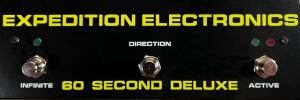
click here for the flickr set by janvanvolt.
Update via Qwave in the comments:
"See here for more inside pictures"
 click here for the flickr set by janvanvolt.

 via cebec:
 click here for the scans on flickr by Neil Vance. If you click on the All Sizes link you can read the article. While there be sure to check out the rest of the synth scans by Neil. He is definitely on a roll with new scans going up pretty much daily at this point.
 Click here for more scans on flickr by Neil Vance.
 images via this auction
 via this auction
 Update: per the comments, turns out it's actually an input jack on the top right. Note there already is an input jack in the back.
 flickr by Neil Vance
 images via this auction
 via manuel:
 You can find more images including some nice modular shots on trash_audio.
 EK stands for Electro Kartell. EK Lounge appears to be a repeat small gathering of friends who get together to play synths. You can find more images on Aliens Project.
 click here for the full flickr set by noizez. These are great shots, but unfortunately they are a bit small.
 Great shot via André
 "Moog 15, 360 Systems Frequency Shifter, 2 Oberheim Mini-Sequencers and SEM, Mini-Moog, not sure about the 2 white boxes or switch matrix to the right (might be DIY stuff), Oberheim Digital Sequencer (with LED "2" showing), Paia Phlanger and Stringz n Thingz, and original Rev 1 Prophet 5."
 "Yamaha came out with the DX7 in 1983, which used a new type of synthesis technology at the time called "FM synthesis". It was the first widely used FM synthesizer and it turned out to be the best selling professional synthesizer of all time. These synthesizers featured six sine wave operators that could be routed in 32 different arrangements, which are called algorithms. They produced a few different models using this synthesis engine, including the DX1, DX5 and TX7. They also produced a line of four operator synthesizers, like the DX9, DX100, DX27, and DX21. These were less expensive and a little more limited than the six operator synths, since the operators also produced only sine waves. But in 1986 they introduced the four operator TX81Z, which was the first FM synth that could use different operator waveforms. The TX81Z's operators can each be configured to use one of eight different waveforms and this is what gives the TX81Z the ability to make sounds that the six operator synths aren't capable of making (although the converse is also true)."
 click here for the Dr. Bohm Digital Drums soundset audio on Keyboardmuseum/ Audio Playground.

 flickr by Neil Vance