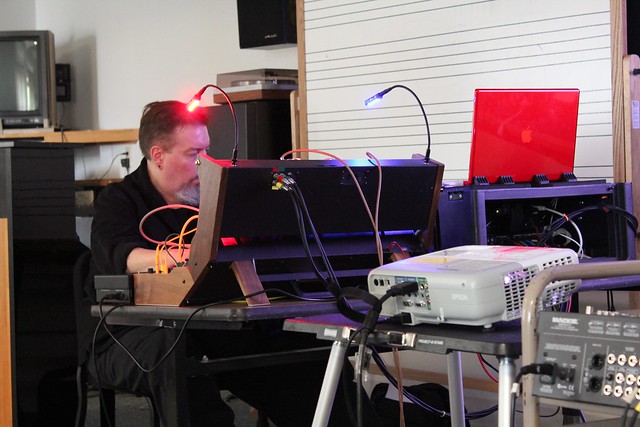
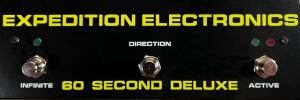
These are my first "ten minutes" (okay, the video turned out a few minutes longer 😉) with the Modern Sounds Pluto semimodular synthesizer. 🎧Headphones recommended for the full sonic experience.
In this small setup Pluto is accompanied by three pedals, the Strymon El Capistan v1, the Chase Bliss/Goodhertz Lossy and the Eventide Space in ModEchoVerb algorithm, all in stereo. Pluto, this tiny little box, is such a fascinating and inspiring instrument. You can get a million and more of sounds out of it. I love how the filter of Lossy changes the overall mood of the sounds.
All sounds and video footage by The Pedalboard Orchestra.
(Disclaimer: This is a non sponsored video. All equipment is self-purchased.)
It's Independence Week and while I had intended for this to go out on the 4th itself, I put a bit more work into something special for you which delayed it a few days. I hope that's okay with you.
I wanted to give everyone a status update on how things were going over here and also offer a couple of specials to celebrate. Out of respect for the dozen or so people who have been patient and trusting of me I'm going to let you know how things are going and then share a few cool deals.
"We're excited to share something we've been working on: Nodes, a modular FX plugin that just launched in early access.
Here's what makes it different: instead of being locked into a single effect chain, you get 55 nodes and counting—24 modulation sources and 29 effects—that you can wire together however you want. Sound design on steroids. We've also baked in our Eurorack LFO Lowstepper and mutable instruments modules, so the creative possibilities are basically endless.
The best part? It's a one-time purchase ($50 right now, down from $100). No subscriptions, no hidden costs. The price holds until version 1.0, when we're adding Linux support and more.
We built this for sound designers and producers who love tweaking, but the macro system makes it live-performance-friendly too. And because we're an active developer team that actually listens to community feedback, this thing is only going to get better.
It's CPU-efficient, works on Mac and PC now (Linux coming at 1.0), and honestly—you can build anything with it.
Grab it here: https://okaysynthesizer.com/nodes"
Slideshow of Richard Lainhart's lecture at the Bellingham Electronic Arts Festival (BEAF), Friday, May 6, 2:PM PST, 2011 (mentioned in this post). Below is a video of the Buchla and Haken Continuum portion of the lecture followed by a performance of Olivier Messiaen's Oraison written for the ondes Martenot at the 48:00 mark (see this post for the original version and this post for another performance by Richard). You will notice Richard makes references to earlier parts of the lecture. These included his training on the CEMS modular synthesizer system and the ondes Martenot (don't miss this post and this post on the CEMS). See the labels at the bottom of this post for more info on each. I will upload those videos at a later date. They were background to Richard's experience with early modular synthesizers and controllers that eventually lead him to the Buchla and Haken Continuum. It was a great lecture and I hope you enjoy it. Be sure to bookmark this one. I also want to thank Richard Lainhart for doing lectures like these. They are a rare treat.
YouTube Uploaded by matrixsynth on May 19, 2011
The following is a full transcript. BTW, if anyone is interested in transcription services, let me know.
"RICHARD LAINHART: BUCHLA AND HAKEN CONTINUUM LECTURE
Speaker: Richard Lainhart
Lecture Date: May 6, 2011
Lecture Time: 2:00 p.m. PST
Location: Western Washington University
Event: Bellingham Electronic Arts Festival 2011 (BEAF)
Length: Digital AVI recording; 57 minutes 32 seconds
[Beginning of recorded material]
Richard Lainhart: Okay. What I want to do now is actually talk a little bit about the system itself here and about the design of the system and explain what's actually happening here and why it's designed this way, and again, my focus on, on expression. So this is, as I mentioned, this is the Buchla 200E. This is a current electronic music instrument that is still being made now by Buchla. Don Buchla again was a contemporary, or is a contemporary of Bob Moog, and he took a very different path than Moog did. And one of the reasons I think that Moog's instruments became so popular, of course the Mini Moog was like the first real break-out electronic music synthesizer, was that Moog's instruments had keyboards on them. They had black and white keyboards. And you could use them to play, you could use them to play rock and roll with them basically because you could plug them into a really loud amplifier and it could be louder than a guitar. And it could be a bass, you know, it could be louder than a bass and all that sort of stuff. And of course a lot of, you know, a lot of wonderful music was made with that instrument.
Monophonic, analog, square-wave synthesizer with 2 octaves of keys and octave divider
Monophonic:
Only one note at a time can be played. This is opposed to “polyphonic,” where multiple simultaneous notes can be played.
Analog:
There are no computers, microcontrollers, sound samplers, or anything digital involved. The sound you hear is the sound of a speaker being abused by discrete electronic components like capacitors and resistors and logic chips.
Square-wave:
When its output is viewed on an oscilloscope, its wave resembles a square. It’s a “hard” sounding wave type, great for bass lines, and commonly associated with chiptune music and old video games.
This is the OKAY 2 Synth DIY Kit, and it's just like the original OKAY Synth but now features two octaves of keys and a 1/4" audio out jack. Assembly required. Includes the PCBs, electronics components, and assembly guide.
If you have your own 3D printer, you can print the enclosure, keys, and all the other non-electronic parts yourself. 3D model STL files are available on Thingiverse.
If you want 3D-printed parts included, please note that they will be printed on demand. These orders typically ship within one business week.
Under the hood, it’s powered by an LM555 timer (astable mutlivabratory), CD4040 ripple-carry binary counter/divider (frequency divider), and an LM386 power amplifier. All are the standard circuits you'll see diagrammed in their datasheets.
Monophonic with high note priority
Six selectable octaves and one octave of keys
Satisfying "clicky" tactile switches
Built-in amplifier and speaker
9v battery required, not included"
The image to the left is Uli Behringer's first synthesizer, the UB-1, previously posted here and here.
It looks like the new Behringer synth rumors are back, and this time it appears it could actually happen.
The following is from a German interview with Uli Behringer on Amazona.de (translation from sonicstate).
"Several interesting facts came out:
1. Behringer have been working on reproducing a number of classic analog circuits
Uli- We have not been idle in recent years and have invested a lot of time in the analysis legendary synthesizers from Roland, Korg, Moog, Sequential Circuits, ARP and PPG etc.The Curtis and SSM then used semiconductors are today virtually no longer available and we have therefore used a lot of time, to replicate these with modern and high quality VCA and OTAs. And now us is that finally succeeded. These circuits will now form the basis for our synthesizer.
2. It's a polysynth
My personal passion is to bring the original and analog synthesizer back to life, but to provide them with modern digital control. To anticipate, we will also focus on first polyphonic sound generation, as the market requires this.
Our goal is, as usual, to reward customers with extremely good quality and very good prices for your loyalty to our company. I am of the clear opinion that today's analog synthesizers are simply too expensive and that we are trying to change.
3. It's going to be developed in the UK
For a project of this magnitude, we are integrating our best developers. We will make it in England, in Manchester, directly at MIDAS. A member of the team John Price is the among the best analog designers in the world and can have over 40 years experience.
4. Okay, awesome - when can we buy it?
Uli goes on to say that this is a pretty massive project and as such will not be rushed,
Even though we are all now very euphoric, I would like to slow down expectations a bit and ask all readers to be patient. We have spent quite some time in the research and development of semiconductors, will take at least another year until we have completed the first prototype, we are operating basic research and also invite well-known scientists and musicians to collaborate on this project , We also do not plan A synthesizer, but gradually a whole family of different types."
YouTube via AnalogAudio1 "The Korg Poly-800 came out 1984 and is a interesting analog synthesizer with good, interesting sounds. It has MIDI, runs even with batteries, and can be used as a remote keyboard. It was cheap, almost every musician could afford one.
It has digital controlled oscillators (DCO's). Not digital oscillators - they are just controlled digitally. Actually, it has just square waveforms. Combining different footages of squares you'll obtain the usual saw, pulse and square waveforms - and some more. In the WHOLE mode it's 8-voice polyphonic. In DOUBLE MODE you have 2 DCO's per voice, this sounds best. This however, reduces the polyphony to 4 voices. It has a VCF - a real resonant analog filter. It also has 3 complex envelopes and a noise generator. It also has a switchable CHORUS, CHORD MEMORY and a polyphonic STEP SEQUENCER. A shame that it doesn't have something like RING MOD or OSC SYNC. It also lacks portamento and PWM. But okay, it was a small budget synth.
The Korg EX-800 is the desktop version of the Poly-800. It has the same features and sound but CHORD MEMORY is missing. And it doesn't run with batteries.
In this movie I show you some of my own sounds - without any effects or equalizing. Really, it CAN sound excellent, if you program your own sounds in a right way. Some of the factory presets are ok, but the most of them are rather funny than great (do you remember the Poly-800-Flute preset? ;-) )...
The Poly-800 is great for analog pads, sequencer sounds and leads. It's not a killer bass machine - the envelopes are a bit lame. However, some basses are okay.
Jean-Michel Jarre had one! There is a picture, which shows Jarre with a reversed-key Poly-800 in his studio. But I don't believe he used it on any recordings...
THE SOUND PROGRAMS IN THIS MOVIE:
Do you have a Poly-800 and want to enjoy the sounds you are hearing here? Send me 10 Euros through PayPal and I will send you a MP3 with patch data (64 sounds). You feed your Poly-800 with this MP3 through the tape interface input. It will also work with the EX-800, but NOT with the POLY-800 II, as it has a different data format.
I programmed these great sounds carefully by myself - These sounds are not available elsewhere! There are thick Prophet-style pads, basses, sequencer sounds and funky leads. On some leads, you need the CHORD MEMORY function to program an interval, like seen in the video. The sounds are mainly suited for electronica styles and classic electronic music (Jarre, Vangelis, etc..).
If you are interested in these sounds, please drop me a mail."
Published on Dec 26, 2018 The Tuesday Night Machines
"Okay, people. Here’s another Apple Pencil 2 painting time-lapse video, this time of a kitschy fish, with a new ambient music synth jam as audio track. Take a break and relax to this experience ;) This video was created entirely on the iPad Pro. MORE INFO BELOW!
Gear used:
- iPad Pro 11“ 2018 with Apple Pencil 2 and a bunch of Apps:
Procreate (drawing and timelapse)
LumaFusion (video editing and export)
AUM (audio routing, recording, mixing and lots more)
Volt (expressive synthesizer)
Tardigrain (granular synth)
DM1 (drum machine)
Axon 2 (drum machine)
various audio FX Apps
YouTube (video uploading and sharing)
This was a test if I could create a music video entirely on the iPad Pro without a “computer” involved, and it worked out incredibly well. As you might know, I’m a big fan of AUM for the whole audio and synth thing, so that wasn’t anything new to me. Video editing however was something I have never done before on the tablet and using LumaFusion for it was amazing. It’s no Final Cut X of course (my NLE of choice, since I decided to drop Premiere Pro), but it does offer a lot of features and controls that are good to work with. Unfortunately it doesn’t allow HDR mastering, but that’s a pretty special request for any software still ;) I have the feeling that I could do anything I need on mobile devices now and I will explore this workflow further with a little bit of new gear too, because I obviously want to continue to create videos with real-life footage of my synthesizer jamming. Drawing is fun though, even if that Apple Pencil 2 still behaves a bit weird ... I figured out that the magnetic edge on the iPad and/or Pencil 2 doesn’t always realize that the stylus is attached and won’t charge it then. This was actually the reason for the problem I wrote about in my previous speedpainting video.
Questions or comments? Go ahead and post them below! :) Thanks for watching! Check out my channel for more Synthesizer Music.
"SKIP TO 1:41 TO HEAR THE OKAY 2. Interested in synthesizers or 3D printing? Let's look at a project that combines them both, the Oskitone OKAY 2 3D printed synth! MORE BELOW -------↡↡↡↡
"The CS-01 is an interesting synth. It came out around a time when analog monosynths were mostly being phased out for DCO based polysynths and digital synthesizers. After a little under a decade of compact synthesizers for musicians being available from japanese companies an analog monophonic synthesizer was cheaper to produce for a novice level musician at the time. Synths like the CS-01 and SH-101 from roland as well as the M-500sp from korg were all offerings that basically were these companies slapping tried and true designs into plastic boxes for affordable prices. These days all synths from this time are equally as pricey but the CS01 is still fairly affordable and has some good tones to offer. Its actually not really a VCO synth but a digital oscillator with analog filters and low resolution envelopes. This was the trend of the early 80s budget synths. The Saw and Square waves are pretty standard stuff but sound very good and the the weird 12db filter with switchable high and low resonance while groaned about online by losers is perfectly functional as i demonstrate here. The ADSR is very sensitive and okay? Its my least favorite part of this synth. The real special part of this synth is its PWM. Its FAT, set to a low footing and its insanely deep and set higher and it does soaring singing leads very well. These things seem to have largely been passed up by the reverb scalpers and the youtube influencer reddit effect. I see some going for $400+ which is hilarious. You should try to snag one as if you wait any longer there might not be any vintage analog synthesizers left you can buy under $800+. Also this little thing while looking like a toy actually is a wonderful instrument! Excuse the sloppy noodling i was not myself while recording this one. I try to show a variety of tones! They were apart of a producer series that yamaha offered with a drum machine, mixer, 4 track cassette recorder and some other items intended to get a musician off to the races! I own the drum machine of that series and will make a follow up video on it soon. A mkii version was made with a 24db filter with the resonance switch changed for a slider in 1984 but i havent had a chance to try one.
flickr by Mark Cochrane via bunker on the forum: "Here are some images of my poorly Godwin digital Synth. Its currently built into an SC600 organ but I intend to build it into its own case. I ve never seen one before let alone found any info on the net. It seems to be a hybrid with a digital oscillator and patch storage combined with VCF, non VC HPF, VCA, 2x ADSR, aftertouch, good modulation options and some SSM chips. Problem is no waveform and poorly trigger and gate signals. The microprocessor is an 8035 and I think the problem lies here. I've got some on order at the moment so we shall see. From what I can gather the same micro was also used in the Jupiter 4 amongst other synths, as well as the Donkey Kong arcade game!. If anyone needs one of these chips let me know. they are brand new unused and not pulled from something else." some additional info from bunker on electro-music.com: "I have a Godwin Digital Synthesizer built into my Godwin SC600 organ. The day after I took delivery the synth died or more precisely the oscillator died. At first I was expecting the synth to be built around the m110 chip that was used in other Italian synths of the time such as the Jen SX1000 and Siel Mono/Cruise. However on closer inspection the synth is made up of 9 seperate PC boards that slot into a motherboard. The basic features are Square/Sawtooth waveforms, LFO controlling vibrato, tremolo and filter, A Low Pass VCF, a High Pass filter (not VC), ADSR's for both VCA and VCF, repeat function, manual control of PWM, spring reverb and a crude form of aftertouch called sensitivity control which affects pitch and VCF. The only digital part seems to be the 8035 microprocessor which controls keyboard scanning, preset control and gate and trigger signals.
Ive poked around and when the board with the 8035 on is removed I get the frequencies that the schematic tells me I should be getting from the oscillator output on the Master Generator board. The oscillator looks to be built around 74132 logic chip and 4558 op amp which, I guess makes it a digital oscillator? With no 8035 however I have no gate or trigger hence no sound. When I replace the board the osc. freq. drops from the 200 odd kHz in the schematic down to About 1kHz. there is a wave form generator that is fed from the osc and this must divide the freq down to normal audio. The gate seems to be "stuck" but with no sound. The filter will self oscillate and the mod controls affect it as does the repeat function so im guessing its the 8035. There is A UV EPROM on the same board but my guess is that this is for storage of the preset patch controls and as all these seem to be okay, albeit with no sound, I dont think this is the problem.
I am still learning my was around repairing and building synths so please be gentle! I want to rehouse the synth in a custom case and modify it with maybe a VCO or two along side the 8035 osc. there are SSM 2020 and 2040 chips on the VCA/VCF/HPF board and there looks to be some scope to really mod this synth or maybe turn it into a fully analog instrument.
If anyone has any ideas or has even seen/played one of these before please let me know. I can see this baby in a cherry or oak case sat on stage being played!" This is only the second Godwin synth posted on MATRIXSYNTH as of this post. Click on the label below for Godwin 849 String Concert.
"Block diagram of the synth [Supersonic] functions "
YouTube via MusicMiK "After my studio collected dust for the last months, i took the opportunity during the 2nd Annual International Day of the Synthesizer Freak event on Facebook to fire it up and play around a bit with the machines.
In fact, not much synthesizer fiddling happened, but i created a little track, and as i used my first DIY synth for the brass lead, i made this video showing all the photos taken during development of this synth.
It's a nice slideshow where you can see the changes in the development equipment and the studio during the development and build of the MiK-one. And i hope you like the music also a bit :)
The nature sounds (thunder, rain, crickets) were sampled with the voice recorder of the iPhone with the built-in microphone. Those samples don't have any EQing or so, so you hear the original sound quality of this device. Quite okay for a mobile phone."
YouTube via AnalogAudio1 "The Korg Poly-800 came out 1984 and is a interesting analog synthesizer with good, interesting sounds. It has MIDI, runs even with batteries, and can be used as a remote keyboard. It was cheap, almost every musician could afford one.
It has DCO's and a VCF - a real analog filter. It also has 3 envelopes and a noise generator. A shame that it doesn't have something like RING MOD. or OSC SYNC. But okay, it was small and cheap.
In this movie I show you some of my own sounds - without any added effects or equalizing. Really, it CAN sound excellent, if you program your own sounds. Some of the factory presets are ok, but not always that great...
The Poly-800 is great for analog pads, sequencer sounds and leads."
"This synthesizer came to us in “okay” condition and is now offered in 100% restored condition.
The keybed has been rebuilt with new bushings and excellent note contacts
Most 4000 series chips have been replaced with high grade Texas Instruments chips
Power supply modified with higher rated rectification to ensure longevity
All tuning components (op amps, capacitors, precision resistors) have been replaced with high grade compoennts where applicable
Completely calibrated
All ECO's performed"
"Korg Trident Mark I... The Synthesizer section totally works. The brass section totally works, flanger works, but the strings section has a distorted sound and one note drop-out, which is strange to me because all 8 of the synth's voices are working. The "write" function I was not able to successfully execute, and there is a black wire which has come loose inside near the strings VCF and "preset" board (and also near the "write enable" switch on the rear panel. It is definately a ground wire grounded to/from(?) the Strings VCF/preset board. Since I am not certain where it should go, I have left it alone. Most of the 16 presets are still stored and memory/battery itself must be okay. All keys work, all switches work if not finicky, (except the afore-mentioned write switch), all LEDs are working, etc. Internally sound, with no apparent "work" being done, but could use a cleaning. The Trident is a very warm sounding synth and is capable of many textures and soundscapes when individual outputs are sent to a mixer and panned, etc. The SSM filters inside sound great and with the Korg oscillators, have a similar "woody" quality to a rev.2 prophet-5."
"The 5th annual Pacific Northwest Synthesizer Meeting will be:
September 29th 10:00 AM to 3:00 PM
Renton Technical College Building C, The Technology Resource Center Room 111 3000 NE 4th St Renton, WA 98056
Late breaking news: The Mattson Mini Modular will be unveiled at this meeting. Yes, the happily married Jim Patchell will be present.
More information about the meeting is available at www.sound-photo.com. Unfortunately I have not updated the site from last year. Lazy or busy. The room has changed 111 which is the larger room next door.
I know that someone wants to carpool from Vancouver Island. It is probably okay to make one solicitation on these lists. In the past people have carpooled from Portland.
Note: This will be the first public appearance of the Mattson Mini Modular, so if you want to see it and you are in the area, please come. If you have a synth to bring, feel free to bring it as well.
"Sol is a uniquely customizable USB MIDI to CV/Gate module. It's designed to be useful right out of the box but flexible enough to accommodate a ton of different CV/Gate generation needs. It is an unusual module, though- Sol is the first Eurorack module that can be re-programmed using CircuitPython. It's designed from the ground up to be customized by you. You are not limited by what we’ve programmed the module to do and you don't have to become an embedded developer to impart your own magic into this module.
"It is a lovely day in the studio and you have captured a horrible goose and put it into your synthesizer.
Big Honking Button is, well, a big button that honks. Okay- okay, before you run away- it’s actually a simple sampler in a very silly package. It has pitch CV, gate in, gate out, and you can store up to 4mb of samples on it.
Note: links to listings are affiliate links for which the site may be compensated.
video upload by Mears
"A deep dive on this rare, and synthesizer almost 50 years old. I've spent countless hours restoring it, and am very pleased with the results. It can produce a wide range of sounds, thick and beefy baselines, pillowy ambient textures, fat analog drums and so much more! This video covers the features of the synth, detailed shots and explanations of the restoration and internal components as well as a ton of high quality audio recordings of the various sounds this synth can produce.
"Really neat vintage synth, in great working condition. I restored it electronically 3 years ago, and have only used it in my home studio. I'm the second owner, and acquired it directly from the original owner whom purchased it in the 1970's, I believe it's from 1976. I have a bunch of paperwork for the synth somewhere, if I can find it(I'll try, it's buried in boxes somewhere!) I'll include it as well. It's worth noting that during the restoration, I preferred to keep the synth as original as possible, but electronically stable, and to make a 50 year old synth as reliable as possible. It includes and uses the original "pin" cables, so neat & rare. That being said, it's still a very old synth, from the early days of modular synths, when slight changes in mains voltage and temperature variations manifested themselves in "interesting" ways. I'd assume that the purchaser of this synth understands that and doesn't expect the oscillator tracking and tuning stability to be similar to modern synths. Please watch the Youtube video I created for this synth, which goes into great detail about the synths condition, and should answer any questions you have, and give you a clear idea of what to expect if purchasing.
One last thing, this will have to be sent in 2 boxes, and the synth is fairly heavy(each piece is 11kg on it's own). The shipping rate on the listing is not representative of what the actual shipping cost will be, so please if purchasing, expect that the shipping rate will be higher than indicated on the listing. The calculated shipping on Ebay doesn't accommodate multi-box shipments unfortunately. Feel free to contact me for a shipping quote, and if you purchase, please wait for me to provide you with a quote before sending payment. I'll do everything I can to keep the shipping cost as low as possible, but also make sure it arrives safely.
Pictured to the left is Professor William Hoskins (via). What you see there is not the mystery Moog, but his Moog modular system. This post is about another Moog synth, one most likely based on the Sonic VI. If you have any information on what this synth might be after reading this, please feel free to leave a comment or contact me directly. My contact info is on the bottom right of the site. I have already contacted Michelle Moog-Koussa and Brian Kehew author of Kaleidoscope Eyes A Day in the Life of Sgt. Pepper, as well as Trevor Pinch, author of Analog Days [Amazon hardcover & paperback, preview on Google books], and featured in this exclusive post. I also contacted James Husted of Synthwerks, George Mattson of Mattson Mini Modular, Steven Jones of Synthwood, and Carbon111, all of whom know their synth history. None were familiar with what the synth might be.
The story: I was recently contacted by a Paul Rego with the following:
"I've been searching the Internet for over a year now and have not been able find a specific synth. Since you seem to know and work with every type of synth known, I thought I'd ask you...
Around 1973 - 1974, I took private synthesizer lessons at Jacksonville University (Florida). The instructor was Professor William Hoskins and the synth was a custom Studio Moog assembled by Professor Hoskins.
One day, Professor Hoskins showed me his personal, portable synthesizer. He brought out what looked like a brown suitcase. When he opened it, I saw a Moog Sonic VI.
This is nothing new. I've seen lots of images of this synth on the Internet. The one aspect of this particular synth, that I cannot find anywhere, is that it had a touch-sensitive keyboard. The keyboard was made of plastic and had a gray / brown color. Outlining the keys (showing the location of the 'white' and 'black' keys) was an almost medium blue color (about an eighth-inch thick). (He and I tinkered with this synth for about a half-hour to an hour.)
Professor Hoskins passed away several years ago, so I can't ask him about it. I did contact his family but they don't remember anything about this synth.
I do remember Professor Hoskins telling me that he and Bob Moog had 'gone to school together'. I think he was referring to electronics school but I never asked him more about it. I thought I had read somewhere that Professor Hoskins and Bob Moog had briefly worked together on a Sonic VI prototype but I don't know if that's true. (Even if what I saw was a prototype, someone has to own it now and should be proud enough of it to post some photos somewhere.)
I thought the background story might help in your own research on this.
Basically, I'd just like to know if this synth ever existed or am I just not remembering it correctly.
Thank you for your time and attention."
My first obvious guess considering the blue was the Buchla Music Easel or separate Buchla touchplate keyboard modded into the case of a Sonic VI. I sent Paul a couple of links to various images.
Paul replied: "the synth I saw didn't look like the Buchla Easel. Good call though.
The 'blue', which outlined the keys on the Sonic VI I saw was a bit lighter in color than the blue in your photos and maybe had a bit of green in it (closer to turquoise). There was no red or other color on the keyboard (that I can remember) and the entire keyboard seemed to be one piece of plastic with only the blue / green outlines separating the 'keys'.
I also read a story recently about the time when Musonics bought Moog and had a synth ('Sonic V'?) of their own, at that time, but I haven't research this too much yet. One thought I had was the synth I saw was something from Musonics but was never officially released (until it had the 'Moog' name placed on it). I'm pretty sure the synth I saw had the 'Moog' logo and the word 'Sonic VI'. (Not 100% sure but it seems clear in my memory.)"
I also sent Paul images of the EMS Synthi AKS. Paul replied it was the closest, but definitely not it.
I contacted Michelle Moog-Koussa and Brian Kehew to see if they knew of anything. Michelle replied: "...I can tell you that we have several of William Hoskins reel-to-reel tapes in the archives, so there was obviously a significant professional relationship between he and Bob.
I don't ever remember reading anything about the Sonic VI, but maybe Brian does. One thing I can tell you for sure is that Dad began working with John Eaton in 1970 on the Multi-Touch Sensitive keyboard [left via]. The main component of the MTS was the touch-sensitive keyboard, of course. It's not out of the realm of possibility that Dad would have used his work with John to push boundaries on another project."
Brian replied: "Bob didn't design or build the original Sonic V (from Musonics before they bought Moog) that was Gene Zumchak: The Sonic V did have a brown wood style. It's even unlikely Bob did much on the Sonic Six as it was the same thing with a new outer case.
The Sonic VI was the version Moog made in 1972 and later, in a plastic suitcase version. Many of these were made vs the very few Sonic V's. So one might think they saw a Sonic VI when it was the V (same front panel and features). But the brown suitcase and colored keys and touch sensitive thing are ALL unusual. I know a little about Prof Hoskins from the paperwork of the past, but no mention of this synth. Definitely unusual to have keys like that anywhere, anytime!" Followed by: "And there IS touch (velocity) sensitivity on Wendy Carlos' synth by 1971 for Clockwork Orange, but it's used under the normal keyboard. THIS velocity was very possible, but would not make the keys look different. Again - maybe a Sonic V was retrofitted with a cooler keyboard later in the 80s, but why not do so on a BETTER synth!?" :)
On a separate thread, Trevor Pinch got back to me with the following: "Bill Hoskins was important in that he was one of the first people David VanKouvering approached about minimoog reiail sales etc. I have a good album of his somewhere! I think he may have been Bob's favorite composer for a while.
I have no idea about the touch key board but I'm in touch with Gene Zumchak the guy who designed the Sonic Six, so I'll ask him. (I guess you know the joke that the Sonic Six was known by Moog engineers as the Chronic Sick!)
Actually its story might be kinda interesting - Zummy (as he is known) told me that it was made with 741 op amps and in many ways was more advanced than the minimoog.
Maybe it has had an unfair press. I never heard one or saw one for real."
James Husted sent me the image of Professor Hoskins at the top of this post. I sent it to Paul to see if maybe it brought back any memories that might help.
He replied: "The custom Moog modular in that photo is the same one I took lessons on. However, this is an early photo and when I saw that Moog modular, Professor Hoskins had already added a top layer to that cabinet — which included a Moog sequencer. (I have a photo of it, that I took around 1990, but the top part of the photo, showing the upper section, is cut off.)
The reason you didn't see Professor Hoskins' 'Sonic VI' is... I'm guessing that he didn't bring it to the university very often. When I saw it, I was at his home. He had invited me over one Saturday afternoon to see HIS custom Moog modular. It was in his garage, which he had made-over into a nice studio. It also had a two-manual organ, at least two reel-to-reel tape decks and LOTS of recording tape. Later, during that same session, he said 'There's something else I want to show you. Come inside.' We went into the living room and I sat on the couch. He said 'I'll be right back.' After about a minute, he came back carrying a brown 'suitcase'. He set it on the coffee table in front of me and sat down on the couch. He opened it up and... Whoa! I had never seen one of these and it was the first time I had seen a Ring Modulator!
---
I remember seeing Professor Hoskins play his Sonic VI during a live performance of his album 'Galactic Fantasy / Eastern Reflections'. The Jacksonville University orchestra played most of his composition but at one point his Sonic VI was brought out and he played it while at center stage. I could see it clearly from my seat but, of course, I could only see the back of it, which simply looked like the back of a brown suitcase.
---
Sorry it took so long to get back to you. Since I think this is important, I thought I'd try to recreate the 'Sonic VI' I think I saw. I 'Photoshopped' a production Sonic VI and attached it to this message. It's the best image of what I think I saw.
Modifying the image forced my memory to go into more detail. Here's what I'm fairly certain of:
• The outer color of the "suitcase" was almost dark brown.
• The outer shape was more square than the production Sonic VI.
• The thickness of the top and bottom sections was thicker than the production Sonic VI model.
• The keyboard was made of slightly textured plastic, otherwise completely flat, was brown / gray in color and had a vibrant blue outline between the keys. (I'm not 100% sure if the "black" keys were outlined or solid blue.)
• The background color of the back panel and the area surrounding the keyboard was almost dark brown. It looked like it was made out of either pressed cardboard or thin wood. It really reminded me more of the thin 'wood' used in old, tube televisions and radios (during the 1960s).
What I'm not 'fairly sure' of:
• I can't remember if it had a Mod Wheel.
• I think there was more space between the modules.
• I think it had two speakers (placed on the left and right side of the back panel). Each might have been the size of the center speaker-grill in my photo.
• I can't remember if there were any connectors, switches or knobs on the keyboard section."
Update: via Aaron aka theglyph in the comments: "Holy shit! That's the guy from JU. There was an electronics repair/pawn shop here in Jacksonville called Active Electronics that had a bunch of synths back in 90's. The owner had a sign in the store explicitly stating that the synths were not for sale and that customers were not allowed to walk up and look at them or touch them. I walked in day and walked close enough to notice that the MiniMoogs had very low serial #'s. It wasn't until I read Analog Days that I found out that the earliest Mini were sold here in Jacksonville. There so much more to this story that I don't know where to begin but I can say that I did an obscure Moog at the store that I've never seen photographed since and I simply thought I was loosing my mind recollecting it. WOW!
Cheers,
theglyph"
Update: Above, Brian originally mentioned Bill Hemsath as the person that designed the Sonic V. He meant to say Gene Zumchak. This has been updated.
Updates: via Dorothy in the comments:
"HI, as a Hoskins kid, I watched Dad perform on the synthesizer and I know we had the Sonic but I thought it was a "V". Dad had several custom modules built for him by Bob Moog. They were friends but didn't go to school together -- Dad went to Trumansburg NY to work with Bob on the synthesizer that they got for Jacksonville University (in 1969, I think). I will have to go digging in the Will Hoskins letters that I have. Those of you who knew Dad know that he was very meticulous about writing up the components that he bought and what they were for.
Late in Dad's life, when he was basically letting go of most composing effort except for revising existing scores, Bob helped Dad find a collector (in Germany, as I recall), who bought all of Dad's big home synthesizer. I think some of the smaller units were in the hands of Steve Smith, who was Dad's right-hand man at the JU studio for some years. Whatever happened to them, I don't think Dad would have cared as long as someone was using them to create music. He wouldn't have collected synthesizers as museum pieces, he actively used everything he got from Moog until he was ready to let it go."
Followed by: "BTW, that last time I spoke to Bob Moog was after Dad died, when Bob came to Rochester NY http://www.esm.rochester.edu/news/?id=132 which is near where I live now. Bob spoke very fondly of working with Dad, because Dad cared as much about the science of music synthesis as any composer Bob knew. Dad did some work with him on modulators and other components for JU and the Hoskins home studio."
Followed by: "Hoskins synth photo --not a Sonic -- in news article 1970 [link]"
Update 6/6/2010:
Some more interesting bits of Moog history:
Trevor Pinch checked with Gene Zumchak who had the following to say:
"I am not aware of a touch sensitive keyboard on the Sonic V or 6. It did have a two-note keyboard and the highest key pressed and lowest pressed could be routed to Osc 1 and Osc 2.
They removed the keyswitch bus and superimposed a highpitch (100KHz?) tone on the voltage string. This might have been the source of a whine that some users complained about that wasn't present in the Sonic V."
via Josh Brandt: 'Okay, I did hear back from David Mash [VP of IT at Berklee and friend of Bob Moog], who says that the story he was telling me several years ago was about a keyboard Bob was building for John Eaton. I asked about the story he'd told me and if the pictures you posted could be of the instrument he'd been talking about, and he said:
"The story I was no doubt telling was definitely about the keyboard Bob built for John Eaton [middle pic above]. Bob was going to show us the completed instrument (which my friends Jeff Tripp and Paul Derocco helped complete), but we never got to see it due to the way the conversation turned over dinner. I did see the instrument several times during the design/build stages and again later after it was complete.
The keyboard was simply a controller and not a synth, so definitely not the portable synth the blog is referring to. I know Brian, and was involved briefly with him and a bit more with Michelle Moog on the NAMM Museum exhibit, and they used a couple of my photos for the exhibit. They're great people and working hard to preserve Bob's legacy.'"
Update via WmJHeart in the comments:
"Thanks Matrix, for hosting this page. I own a copy of Will's Galactic Fantasy & Eastern Reflections (my personal favorite) recording on vinyl. But I also discovered and listened to the entire album on YouTube recently! Here:"
Galactic Fantasy - Eastern Reflections (1979)[Full Album]
Published on Jul 12, 2017 TheHomecoming
"Rare electronic/synth/moog private pressing LP
TITLE 'Galactic Fantasy - Eastern Reflections'
William Hoskins, "Galactic Fantasy, Eastern Reflections" [CP-158]
TRACK 01 AUDIO TITLE "Overture : Stars Are Suns" PERFORMER "William Hoskins" INDEX 01 00:00
TRACK 02 AUDIO TITLE "Intermezzo : Interplanetary Communique" PERFORMER "William Hoskins" INDEX 01 06:39
TRACK 03 AUDIO TITLE "Star Nocturne" PERFORMER "William Hoskins" INDEX 01 08:11
TRACK 04 AUDIO TITLE "Scherzo : Comets" PERFORMER "William Hoskins" INDEX 01 16:35
TRACK 05 AUDIO TITLE "Beyond Beyond" PERFORMER "William Hoskins" INDEX 01 18:54
TRACK 06 AUDIO TITLE "Prolog : Theme and Variation" PERFORMER "William Hoskins" INDEX 01 23:40
TRACK 07 AUDIO TITLE "Lower Heterophonie" PERFORMER "William Hoskins" INDEX 01 27:55
TRACK 08 AUDIO TITLE "Song : Open Skies" PERFORMER "William Hoskins" INDEX 01 31:22
TRACK 09 AUDIO TITLE "Drum Chime" PERFORMER "William Hoskins" INDEX 01 35:28
TRACK 10 AUDIO TITLE "Upper Heterophonie" PERFORMER "William Hoskins" INDEX 01 39:41
TRACK 11 AUDIO TITLE "Epilog : Processional" PERFORMER "William Hoskins" INDEX 01 41:30
A1
Overture: Stars Are Suns
A2
Intermezzo: Interplanetary Communique
A3
Star Nocturne
A4
Scherzo: Comets
A5
Beyond Beyond: An Entropy Study
A6
Eastern Reflections
Eastern Reflections
B1
Prolog: Theme and Variation
B2
Lower Heterophonie
B3
Song: Open Skies
B4
Drum Chime
B5
Upper Heterophonie
B6
Epilog: Processional
Criminally under-rated set of Early American Moog Modular Synthesizer Music - the sole release by composer William Hoskins, the 'Director of Electronic Music and Composer-in-Residence at Jacksonville University in Florida.' Issued in 1979 by the Harriman, NY-based Spectrum - a 'Division of UNI-PRO Recordings, Inc.' the LP consists of a pair of discrete pieces, with each taking up a side of its own."
Update via Kimberly S Beasley in the comments:
"Hello, everyone. I am the current chair of the Department of Music at Jacksonville University and I have the original Sonic VI manuals and one of Hoskin's Moogs....happy to share photos tomorrow."
Kimberly sent in the images with the following:
"This has been in the possession of our Professor Emeritus Dr. William Schirmer as it was given to him by Hoskins. Hoskins' granddaughter Dorothy is also aware of the instrument. We also have a large collection of manuscripts of Hoskins.
There is also a mini-Moog we just refurbished in our recording studio."
You can see WM. Hoskins written on the top right of the manual. Note "Home Copy" on the blue cover. It's kind of neat to think of him perusing through the manual in the comfort of his home.