Monday, October 23, 2006
PNW06: Jeff Sandys Demos the Paia Gnome
See dealers on the right for pricing and availability on gear.
LABELS/MORE: PAiA, PNW Synth Gathering, pnw2006, Video
LABELS/MORE: PAiA, PNW Synth Gathering, pnw2006, Video

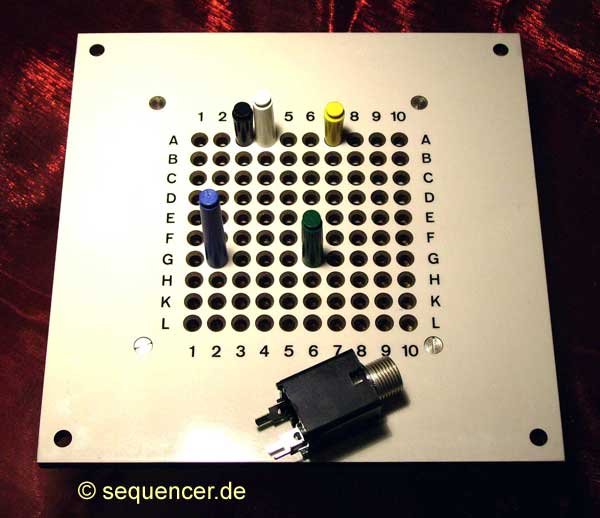
Swiss Jam Session
 Title link takes you to videos and audio of this years Swiss synth gathering on sequencer.de.
Looks like NASAs control room.
Correction via Moogulator in the comments: "it's actually the ESA ;)" Too funny! : )
Access Matrix 1000 Programmer
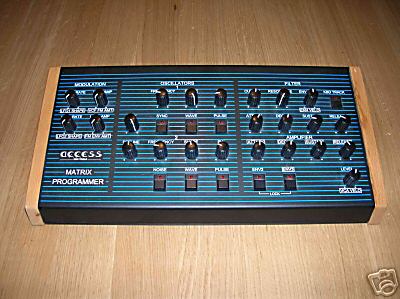
If anyone gets this thing, post back in the comments with how it works as a real time controller.
via brian comnes.
Update via Till "Qwave" Kopper in the comments:
"The Matrix Controller did also work for the Matrix 6 and the Matrix 6 rack version. I used to own a Matrix 6 and this controller. It was working as fine as editing is possible on non rotary encoders. So be prepared for some parameter jumps when moving a knob.
I remember the filter cutoff knob was transmitted somehow by SysEx. And it took a while for the synth to act to it. So it was impossible to use the controller for real time filter sweeps.
I can't remember what you had to do to tell the Programmer if you are working on a Matrix 6 (keyb. or rack version) or a Matrix 1000. There was a certain bottom combination needed.
You could lock the knobs in order not to change (=jump) a sound into nirvana while playing. This lock modus was also the default when turing the unit on.
I own now the MicroWave version for my MicroWave plus WaveSlave. Works fine !
But it is not better then good new controller boxes. But it does look way better then those plastic ones of today."
"The modulation matrix is not handled at all.
Back in time the company was named Access Midi Tools, they even showed a prototype at Frankfurt of the PG-X in 1996, a universal hardware programmer, at the TSI/Waldorf booth. This never made it into production, to much units to support, look what happened to Polyframe/SoundDiver.
Have a look here for more info (German only).
There is a Review at SOS about both Programmers:
I have them both, just for the cool look ;-) There are some little issues with the Matrix one (not just on mine, it is a generic issue) on the sustain of the filter envelope, I allways planned to check if the programmer is sending stupid data or if the M1000 is causing the fault.
As Till pointed out, there is some steppyness with the Matrix, but this is just the slow reception in the synth.
It is quite fine with the MicroWave, which is able to eat lots of SysEx without any problem.
Georg."
Update via cornutt in the comments:
"I am the author of M1000X, the Matrix 6/6R/1000 patch editor for OSX. So I'm pretty familiar with the MIDI implementations of these boxes. Here's what I have found out about them:
The Matrix-6/6R MIDI implementation was only about half finished, and it has a critical bug. The two biggest problems with it are:
1. Some of the parameters allow both positive and negative numbers, but the M6 won't accept a negative value in a MIDI single parameter message. So, if any paraemter needs to be set to a negative value, the entire patch has to be sent to the box. And the M6 doesn't allow the patch-load message to write to the edit buffer; it has to be written directly to the patch memory. Not only is this slow, but it also means that the edit can't be undone (unless the external editor remembers it).
2. The M6 has no MIDI mesages for updating the routing matrix. As in the case above, the only way to do it is to write the entire patch to patch memory.
They fixed a lot of the MIDI problems on the Matrix-1000. It supports all legal values in MIDI single parameter messages. There is no reason why an M1000 can't do a real-time filter sweep if the external editor handles it properly. The only thing that was botched on the M1000 is that it does not remember patch names. That was probably done because the M1000 itself can't display them, but IHMO it still should have stored them in order to support external editors, and also patch interchange with the M6.
The other thing that strikes me abou the Access box is that it doesn't appear to have nearly enough controls to edit all of the parameters that a Matrix-6 or 1000 patch supports, even leaving out the routing matrix. Where, for example, are the knobs for adjusting the tracking generator break points, or the buttons for setting the zillions of possible envelope modes? Anyway, thanks for publishing this; it was an interesting look back into history. And I hope my comments were helpful."
PNW06: David Skinner Demo's his Synthesizers.com Modular
Ok, here's the first of a few videos I will be putting up on this year's Pacific Northwest Synth Meeting since my first post. I will preface the title of the posts with PNW06 so you know these are from the event. These two are of David Skinner showing his Synthesizers.com modular. P.S. That's not me asking the questions. : ) I'm just filming.
Note (4/19/2011): the following was originally on Google Video. I couldn't find the post here on MATRIXYSNTH, so I am adding it to this pot. See the pnw2006 label for more.
See dealers on the right for pricing and availability on gear.
LABELS/MORE: PNW Synth Gathering, pnw2006, synthesizers.com, Video
LABELS/MORE: PNW Synth Gathering, pnw2006, synthesizers.com, Video
Double Exposure
 flickr by davetron5000.
Update: Great story via mikeford in the comments:
"a number of years ago my power supply went out on my etherwave theremin, so I called the big briar company to see about ordering a new one. usually, two really nice ladys answer the phone. However that morning I call up and a mans voice answeres. I proceed to inquire about my replacement and paused.."are the ladies out today?"
No the oldermans voice answers, "they are running alittle late." a silence of about 6 seconds on my end and I realise I am talking to Dr. MOOG HIMSELF! I an trying to think of somthing to ask, and the realistic moog comes up in my mind and the good doc tells me the whole history of the modle, especially the story about the felt around the sliders that turns to goop after so manny years and how to cleen it up. He "says" look, if you have any problems with that, just ship it to me and i will take care of cleaning it upit, no charge." WOW!!May god rest his soul! "
Sunday, October 22, 2006
Dual Sequential Circuits Multi-Trak
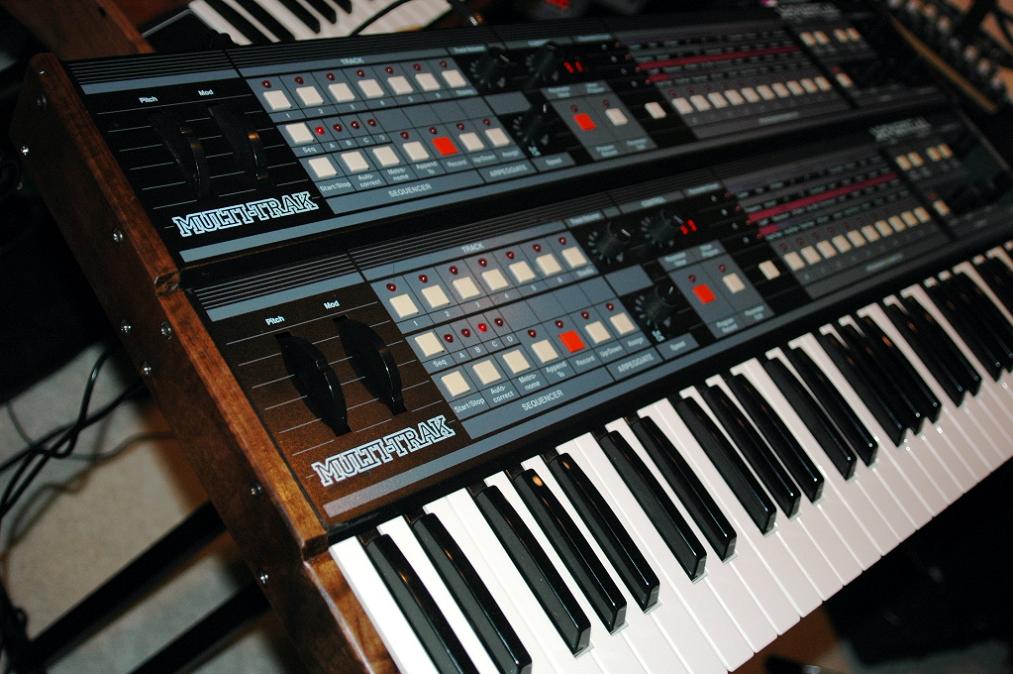 "To do this, two Multi-Traks were used, one with a bad keyboard. The aluminum case was cut on one of the cases and its top was piggy backed on to the multi-trak with a good keyboard. The master controls the slave via midi which includes sequencer control. Still has 16 individual voice outputs and four 'mixed' outputs. A custom cable was made to join outputs into a single mono or stereo output for both synthesizers."
Title link takes you to more shots on Synthwood.
Synthwoodspecializes in:
Synthesizer Woodworking
Specializing in replacement wood parts for Classic Analogue Synthesizers
Custom design for modular synth cabinets, cases, side or end bells and conversions and modifications
Beautiful and exotic woods: Koa, Mahogany, Black Walnut, English Chestnut, Maple and more
Tasteful finishes (French polish, Linseed Oiling and blends)
Tapered black stainless finishing screws included
See dealers on the right for pricing and availability on gear.
LABELS/MORE: Sequential Circuits, synthwood
LABELS/MORE: Sequential Circuits, synthwood
Synthwood Custom Prophet T8
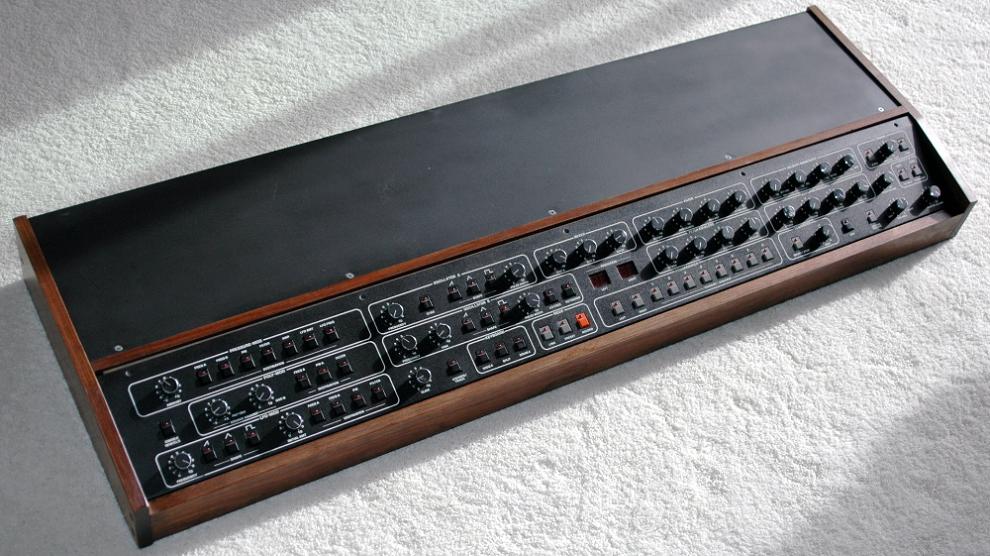 "A little history: This was the last Prophet T8 made by Sequential Circuits. There was no wooden keyboard made for it and it was either given or sold to an SCI employee.
Later the case was taken to a machine shop where the front end was rip sawed off and the wheels were placed inside of the case. It was necessary to keep the wheels plugged in so that the modulation section would work properly. If you have a T8 with a keyboard that is far beyond repair, this can be done for you."
Title link takes you to more shots on Synthwood. Reminds me a bit of the Rhodes Chroma Expander.
Synthwood specializes in:
Synthesizer Woodworking
Specializing in replacement wood parts for Classic Analogue Synthesizers
Custom design for modular synth cabinets, cases, side or end bells and conversions and modifications
Beautiful and exotic woods: Koa, Mahogany, Black Walnut, English Chestnut, Maple and more
Tasteful finishes (French polish, Linseed Oiling and blends)
Tapered black stainless finishing screws included
Update via Stephen in the comments:
"I've got an update for this. John Bowen confirmed that my T-8 was used on the bench at Sequential and that Stanley Jungleib ended up with it during the Yamaha liquidation. Stanley sold it to person in the Bay Area who then sold it to a friend of mine in 1989. I had known about the 'keyboardless T-8' since 1992 and eventually coaxed my friend into selling it to me just last year. My father finished the case earlier this spring and I updated the ROMs to rev 3.8 (they were 3.7)."
See dealers on the right for pricing and availability on gear.
LABELS/MORE: Rhodes, Sequential Circuits, synthwood, Yamaha
LABELS/MORE: Rhodes, Sequential Circuits, synthwood, Yamaha
Red Martian
 One of the people I met at this year's PNW meeting was Stephen Jones. You might recognize the name from this post on the custom wood case for the Sequential Circuts Pro One. You can find more info on the case and other custom work on Synthwood. I actually need to put a couple of posts on the custom T8 and Multi-traks there.
 For this post, however, I want to focus on Stephen's band Red Martian. If you like Severed Heads, you will like Red Martian. I asked Stephen what his music was like and what bands influenced him. Not only is he influenced by Severed Heads, but one of their tracks was actually remixed by them. Pretty cool. BTW, you know my policy on only posting music if it showcases a given synth. Well the track "Behind the Mask" features a Prophet 5. Details:
"On behind the mask casey recorded his drums with live bass and keyboard. I then went back and tapped out a gate track along with his human tempo and used that to trigger the backing sequence. All of the synthesizer sounds were done on the Prophet 5. I got the mono lead sounds by killing voices and playing it it unison. "no moogs here". The vocals were done with a SVC-350 vocoder along with the Prophet 5."
Check out their MySpace page to get to the track directly and check out their main site for more. This is good stuff.
PNW06 via David Skinner
 Title link takes you to shots of this year's Pacific Northwest Synth Meeting via David Skinner.
Rev1 Prophet 5, Rev3.3 Prophet 5, and Creamware ASB Pro-12 pictured.

Zeit Desktop Sequencer

Remember the Zeit Sequencer? Here's another tabletop version via sequencer.de. Infection Music are the makers of the Zeit.

Moog Taurus Demos
The Korg 900PS Preset Monosynth

Via Benjamin Ward of Korganalog.net:
"The 900PS is a quite basic but interesting monosynth that came out around 1976. I took some photos the summer before last when I was thinking of flogging it (but I later changed my mind - I am a hoarder too which doesn't help!)
It does contain some nice early Korg quirkiness, such as the harmonics controls (I suppose Korg were going for the organ market with this one), go travelling with the Traveler (cut off frequency slider) and of course the metal modulation bar that runs the length of the keyboard and can be used to control vibrato, pitch bend, loudness, repeat effects and portamento (all at the same time if you wish!) As far as CV/gate is concerned I would have thought that its easy to mod but you would have to ask a boffin."


PNW Synth Meeting 2006 Images and Video
Uploaded on Oct 22, 2006 matrixsynth
This year's Pacific Northwest Synth Meeting was a blast. I want to thank John Marshall of Sound-Photo for organizing the event and for the pizza. Good stuff! I really enjoyed the pace of the event this year. It was pretty laid back, and I met a lot of great people. Even some that read Matrixsynth! : ) The meeting started at 10:00 AM. I was about half an hour late. When I got there people were just hanging out, talking and playing synths. Once everyone was settled in, we did a show and tell where each person talked a little about themselves and what they brought. Halfway through we stopped for pizza and after pizza, we continued on. All of the talks were great. There were a few funny moments and surprises including some Sequential Circuits history from John Bowen. This year I took a ton of video and unfortunately neglected the camera a bit. The title link of this post will take you to the shots I did take. As for the video, I took over 3 gigs worth, so they will go up over time. This first video is a pan of everyone at the event. You can hear the synths talking to each other in the background. : ) BTW, I want to say thank you to everyone I met. All great people in my book. As for those of you that want the synth content, the vids are coming. I'll be posting all of them over the next few days, and I'll make sure to call out they are from PNW 2006. There is one caveat though: the max file size for YouTube is currently 100M, so some of the larger videos will have to wait. Note that not long ago the limit was 50M, so hopefully it won't be too long.
See dealers on the right for pricing and availability on gear.
LABELS/MORE: events, Matrixsynth, PNW Synth Gathering, pnw2006, Roland, Sequential Circuits, Synth Books, Video
LABELS/MORE: events, Matrixsynth, PNW Synth Gathering, pnw2006, Roland, Sequential Circuits, Synth Books, Video
Plan B Model 24 Samples
 Via Peter Grenader on the Plan B list:
"All this talk, so where's the bacon? I've posted some sound samples of the M24 doing it's thing. Go here and scroll to Sound Samples. the Model 24 will be shipping in two weeks.
enjoy.
- P"
Update via Peter in the comments:
"For the record:
1) The M24 IS NOT BASED ON BUCHLA'S DESIGNS other than their function. It's microprocessor based.It's not based on anyone's design, the circuit is completely unique inside. Have a look at the block diagram on the M24 page of the EAR site, you'll see what I'm talking bout.
2) The M12 iis NOT a clone of anything. Buchla's filter is state variable, but a completely different architecture. Mine has four modes, Don's has one...they both use Vactrols, as does Dieter's Stweiner Filter. If you feel you must credit me for 'borrowing', then credit Don Lancaster - because the M12 came from reading his filter cookbook that I borrowed from Mike Brown. That's the only borrowing that went into that one.
3) The M13 is close to the Buchla 292 - but there are some significant changes in play there, namely an added opamp feedback which greatly improved it's functionality for non-Buchla signal levels."
"On 'clones'
Adaptations are nothing new. The point has been made about the many many Moog Ladder clones, but let's not overlook the Wiard Wogglebug and the Buchla 266 as well as the Wiard Borg and the Buchla 292, Banalogue's full product line, the Livewire and Cynthia Steiner filters, The Cynthia and Doepfer Wasp, The Livewire Bissell Gen, the list goes on and on.
And while the Model 13 is the only circuit adaptation in our line, so is the Cynthia Lowpass Gate (I know because I designed that circuit) and the Wiard Borg, although I don't see comments about either of these.
Add to the mix that well over 60% of the new analog instruments being released today are based on circuits published in Electronotes. The only function in the entire Plan B line that can be found in Electronotes is the sine shaper in the Model 15, but that was only an Electronotes reprint of a circuit originally published in an article Electronics Magazine in the mid-sixties and was done so as an appnote - meaning they intended for people to use it, that's why it was there.
More on this, the M24 is functionally similar to the Buchla 266 as it produces a stepped and smooth random state (and a bunch of toehr stuff).Well, so does the Wogglebug, the Doepfer A149-1(half of the 266 anyway), The Doepfer A-118 (the other half), the Serge Random Voltage Gen...but we all went about it differently and we all included unique features not in the original. Clearly a 'how would I make something that has this function among others' as opposed to 'how to I make a 266 clone' approach on all counts.
For the record however, I personally asked Buchla and Associates if they would have a problem with this and their reply was no, 'everyone needs a wiggley voltage'."
Die 16 Bestn Aus Den Hitparaden '77!
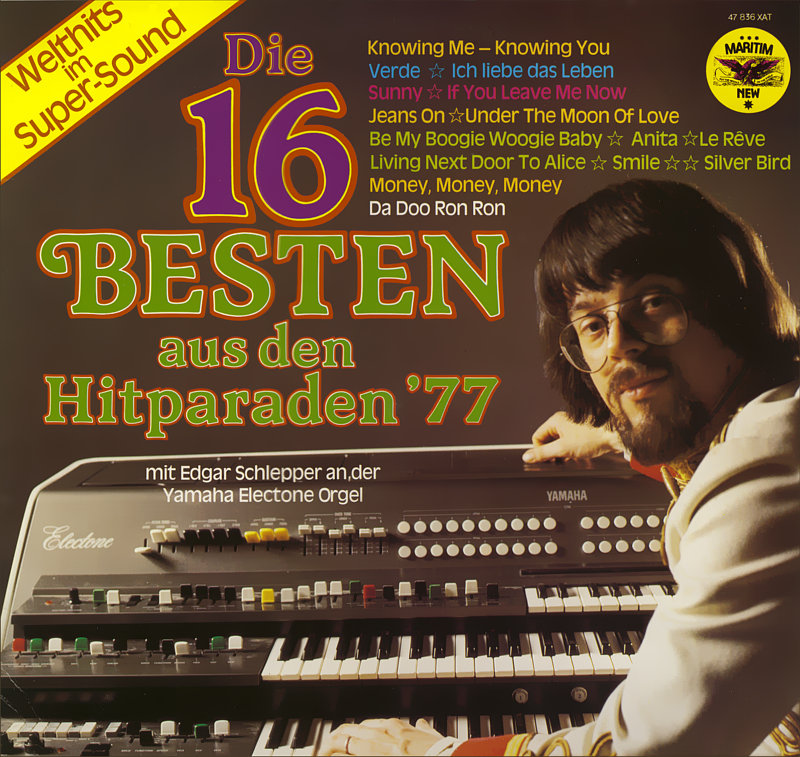
This one is in via André:
"Perhaps I can top the "Yamaha Superstar" cover. It's from a german lp and a guy called Edgar Schlepper. The record itself is really poor, but he used both the GX-1 and EX-1."
Click here for an mp3 of this most awesome recording. A little ABBA. A little Chicago. All done on a Yamaha GX1 and EX1. Who could ask for more. Enjoy. : )
Make sure to check out Anre's site for more.
Moog T at Urban Outfittes
 Uban Outfitters is a chain like The Gap. There was one on Capitol Hill in Seattle. Note the 1934-2005. The synth pictures is a Memorymoog btw, not the Minimoog. Anyone know more about this T? Who's producing it? Why the Memorymoog was chosen?
 Update: And another.
Oberheim Four Voice System

Tokyo Heartbeatn
 Ok, I'm stretching it with this one as I like my posts to be specifically about synths, but I thought some of you might find this interesting. I found it very interesting. Filing this one under samples. More on the Roland R-09.
Via Cyril:
"Two weeks ago i was in Tokyo, i have recorded street sound with my brand new
Edirol R-09. On my blog you will find a compilation called "Tokyo Heartbeat -
September 2006". Raw recording : just me walking in Tokyo with R-09 in one
hand, a fade in&out by track and that's all. Tracks recorded with R-09 stereo
mic at 24bit/44khz, and converted to MP3-192 kbps."
Tracklist :
01) Yamanote Line - 05:30
02) Akihabara - 02:24
03) Sega Club Arcade Center - 08:38
04) From Akihabara to Asakusabashi - 11:30
05) Pachislot - 6:56
06) A bar - 5:06
07) Kita Akabane by night - 01:40
08) A train to Tokyo Game Show - 11:16
09) Ukimafunado Tower - 28:37
10) At the Karaoke (Featuring Tanguy) - 1:43
History of Electronic Sound Manipulation - Harold Bode
Title link takes you to a 2.2M pdf of History of Electronic Sound Manipulation by Harold Bode, mirrored here.
"The history of electronic sound modification is as old as the history of electronic musical instruments and electronic sound transmission, recording, and reproduction. Means for modifying electrically generated sound have been known. since the late 19th century, when Thaddeus Cahill created his Telharmonium. With the advent of the electronic age, spurred first by the invention of the electron tube, and the more recent development of solid-state devices, an astounding variety of sound modifiers have been created for filtering, distorting, equalizing, amplitude and frequency modulating, Doppler effect and ring modulating, compressing, reverberating, repeating, flanging, phasing, pitch changing, chorusing, frequency shifting, analyzing, and resynthesizing natural and artificial sound. In this paper some highlights of historical development are reviewed, covering the time from 1896 to the present ."
"The history of electronic sound modification is as old as the history of electronic musical instruments and electronic sound transmission, recording, and reproduction. Means for modifying electrically generated sound have been known. since the late 19th century, when Thaddeus Cahill created his Telharmonium. With the advent of the electronic age, spurred first by the invention of the electron tube, and the more recent development of solid-state devices, an astounding variety of sound modifiers have been created for filtering, distorting, equalizing, amplitude and frequency modulating, Doppler effect and ring modulating, compressing, reverberating, repeating, flanging, phasing, pitch changing, chorusing, frequency shifting, analyzing, and resynthesizing natural and artificial sound. In this paper some highlights of historical development are reviewed, covering the time from 1896 to the present ."
Saturday, October 21, 2006
EPU - Electronic Percussion Unit
 Via jesper in the comments of this post:
"I guess this is the most famous piece I have in my studio as well as the piece that's been on the road the most. The knüttel EPU was originally designed in 1976 by Franz Knüttel who made this and other electronic instruments and controllers for legendary german band Tangerine Dream. There is only one EPU around and this used to belong to Chris Franke. I bought it as non-working on Ebay but to my big surprise it did work still after almost 30 years! I switched an IC and with the help from a friend I converted it to accept +5 volts trig and not just the +15 it wanted originally."
"Here's a sound link of how the EPU can sound. In time the EPU takes it's way through an Accessit Great British Spring (100 cm spring reverb). I made this for the mailing list SAS to show what the two units sounded like and could accomplish. I thought it fit this discussion well too..."
Title link takes you you jesper's page on the EPU with more info, images and samples.
Y2K International Loop Festival
 Via brian comnes:
"This has been a busy week with the NoiseFest Saturday and Loop Festival Thursday.
Attached are some pics from the Y2K6 Live Looping Festival. Rainer Straschill's rig has the Korg Wavestation (gratuitous synth porn) He's from Germany see www.straschill.de for more) and I threw in some cool shots of him in action. Rick Walker (festival organizer and looper par excellence) is the guy in the white suit. - love that chain and cymbal stuff
The Thursday night event was their "experimental" night so the sounds had some common DNA with the noise folks. The big difference of course was the musicality and nuance, much more of that with the loopers than the noise crowd. I know you focus on synths in your blog, but in effect what these looper folks are doing is capturing waveforms on the fly and then sustaining and layering them with the looper gear, then modulating the results and keeping it all interesting in real time. Is that really fundamentally different than drifting through a sequence of waveforms driven by a Korg Wavestation?? This year the computers were way more prominent than Echoplexes compared to last years presentation. The coolest instrument there by far was the Zaxophone which is basically a fiberglass or bamboo stick (pinned to a piezo much like a one note kalimba) played with a bow and modulated by a block of wood. This thing was almost human sounding, ranging from kids chatttering to orgasmic moans. There's a picture of that too. Unfortunately the artist from Japan was not on the official program so I am sorry he is anonymous. (maybe rick can supply the name)"
Title link takes you to more shots. Previous post on the festival.
Reloop (SL)
"A how-to/promo video of Reloop, a groovebox-ish sample player in Second Life. Mind the volume, Fraps isn't on good terms with my soundcard. Music by me, etc etc"
YouTube via stellatre. BTW, check out this excellent Music Thing post for more on Second Life.

My Girlfriend
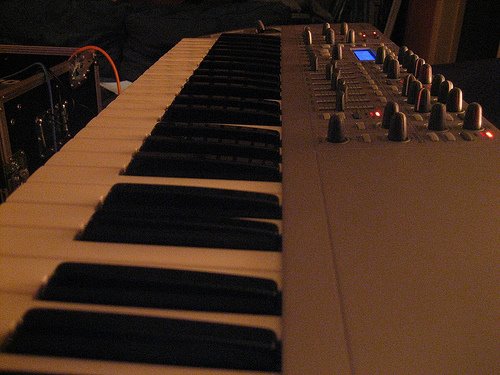 flickr by tark.
 It sometimes feels that way doesn't it? P.S., there's a cat after the hop.
The Youngest Synth Collector in the World
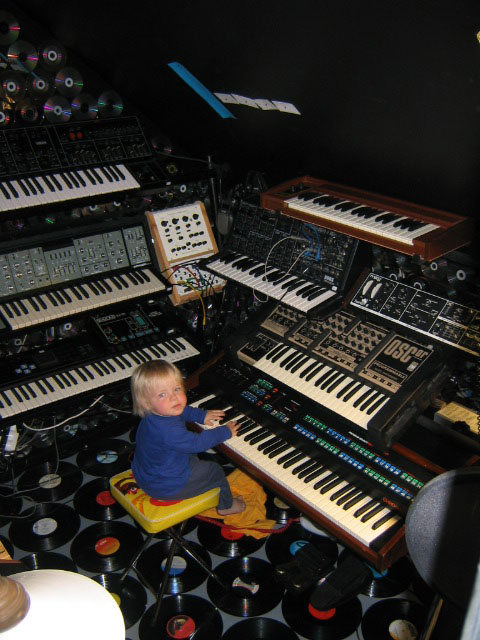 You are looking at the youngest synth collector in the world. Click image for a bigger shot. Title link takes you to her studio page.
via jesper.
Friday, October 20, 2006
MacBeth XFactor
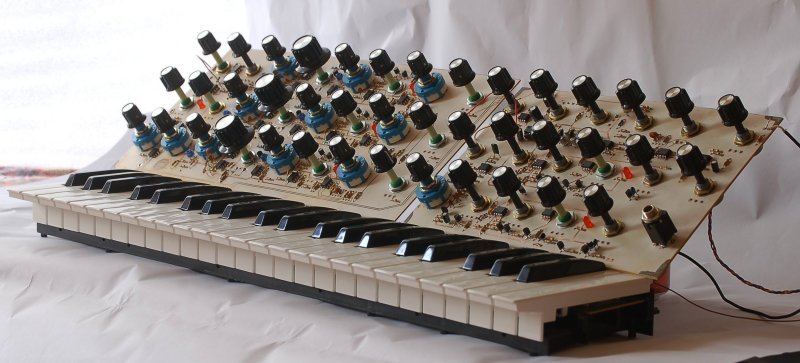

Microscopics GAS 0095
 Title link takes you to Microscopics, a new electronic label. Their first album is GAS 0095. You will find more info and some free downloads on site.
Gas 0095 equipment list...
Moog Rogue
Roland Jupiter 6 x2
Roland SH101
Roland RSS 3d Sound Space
Sequencial Circuits Pro One
Oberheim Matrix 6
Cheetah MS6
Korg MonoPoly
EMU Emax II x2
Atari 1040ST
Roland Alpha Juno2
Korg Poly800II
Blanc plays Stylophone 350s
Two very short videos that give you the basic idea. YouTube via RothHandle. Sent my way via Sameli.
ЭЛЕКТРОНИКА (Russian Stylophone)
 Cool little stylophone.
flickr via fibra. Sent my way via sameli.
See dealers on the right for pricing and availability on gear.
LABELS/MORE: Russian, SOVIET, Stylophone
LABELS/MORE: Russian, SOVIET, Stylophone
JunkBox (work in progress)
 flickr by fibra. Title link takes you to the shot with mouse overs. via sameli.
More Organ Shots
No title link. More shots via Sameli.

The Standard, flickr shot via ROLAPOID. More flickr shots of this one: 1, 2, 3, 4, 5, 6.
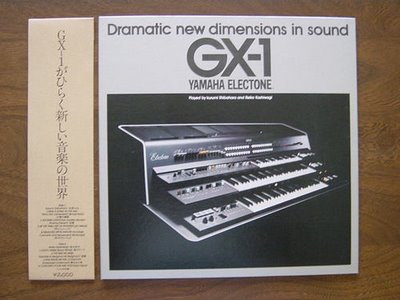
Yamaha Electone GX-1, flickr shot via sukarabe.

Yamaha EX-42, flickr shot via Latekate.

Old Yamaha Keyboard, flickr shot via Sbocaj (click for more).
Yamaha Electone GX-1, flickr shot via sukarabe.
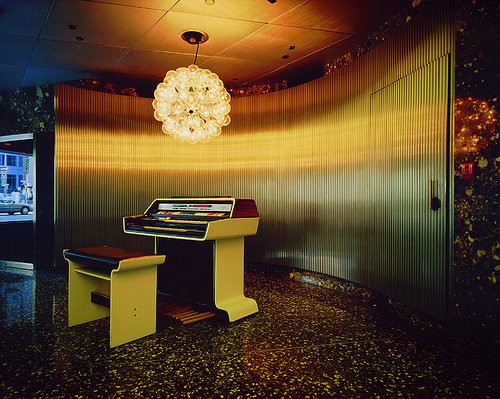
The Standard, flickr shot via ROLAPOID. More flickr shots of this one: 1, 2, 3, 4, 5, 6.

Yamaha Electone GX-1, flickr shot via sukarabe.

Yamaha EX-42, flickr shot via Latekate.

Old Yamaha Keyboard, flickr shot via Sbocaj (click for more).
Yamaha Electone GX-1, flickr shot via sukarabe.
Analog To Digital's Lush and Supersaw Plus
 Update: make sure to read the comments. I would contact them before purchasing.
Lush is a four oscillator synth (one of which is a stereo sample) with a focus on modulation for creating gorgeous pad sounds.
 Supersaw Plus is a 10 voice polyphonic stereo synth based on the classic Roland JP 8000 / 8080.
Rockets
 Via fmasseti:
"this pic is from a concert of a french group called Rockets ... very famous in france and italy during the late 70s ealry 80s i love that Korg PS ion the back ground .. "
Title link takes you to the Rockets Fan Club where this image is from. Click on the image for a much larger shot.
Update via the comments: "They were not an entirely french group. Later incarnations of the group was italian and during a period Sal Solo (ex. Classix Nouveaux) was the lead singer. Their early albums are however true classics and are highly recommended for anyone interested in early synthesizer based pop music."
Update: Check out their video here.

Modular Show and Tell

Modular via amos_joseph on this electro-music.com thread.
Here are the modules I used:
4 MFOS VCOs
2 MFOS LP Filters
2 MFOS Variable Filters
2 MFOS Dual VCAs
2 MFOS VC LFOs
2 MFOS Sample & Hold
2 MFOS Noise Cornucopia
2 MFOS ADSRs
2 CGS Mixers
1 CGS Psycho LFO
1 Paia MIDI to CV
2 Custom Mult modules
1 Custom Glide module
1 Custom 1/4” to banana module
"I used paia frac racks to mount everything and designed all the panel layouts myself. They’re based roughly on Blacet layouts because I think Blacet really knows how to pack a lot of control and I/O into the smaller euro form factor. I used a photo-sensitive aluminum called ID Mark to do all the panel art, which gives it a very “professional” look.
As you’ve probably noticed, I really like Ray Wilson’s designs and I doubt I would have even attempted this beast of a project without his site. His modules sound great, his VCOs track beautifully (all four will stay in tune for at least 5 octaves), and his documentation is just about the best I’ve ever come across….and you can’t beat his prices, either."
Soundgin
 "The Soundgin is Serially controlled Sound Synthesizer in a PIC. It produces complex sound effects, synthesizer style music and English speech with an unlimited vocabulary. For use in manufactured electronics and home projects."
 Available in an 18-Pin DIP or SOIC package.
2.0 to 5.0 Volts Operation
16Khz Sample Output Rate
2400 or 9600 Baud Serial Connection
6 Independently Controlled Voices
Amp, Freq, Ring Modulation
Hard Sync.
ADSR Envelopes
Musical Notes
English Phonemes
Sound Morphing
Title link takes you to more info, including samples. Via M. Altemark in the comments of this post.
PNW Synth Meeting This Saturday
Just a reminder that the PNW Synth Meeting is this Saturday. Title link takes you the previous post with some pics.
Pacific Northwest Synthesizer Meeting
Saturday, October 21, 2006
10:00 AM to 3:00 PM
Renton Technical College
Building C, Room 110
3000 NE 4th St
Renton, WA 98056
No charge. (Contribute for the Pizza) Free.
There will be several more first time visitors this year. Please bring
synths that you have brought in the past. Don't forget power cords, patch
cords, adapters. I am planning on having a small Mackie mixer and powered
speaker for your use.
Performances are welcome.
Talks are welcome.
Lookers are welcome.
Good Lookers are welcome.
Jim Patchell will not be coming this year. A pending marriage takes
priority.
More information at www.sound-photo.com
Take care,
John
www.sound-photo.com
www.antenna-farm.com
Pacific Northwest Synthesizer Meeting
Saturday, October 21, 2006
10:00 AM to 3:00 PM
Renton Technical College
Building C, Room 110
3000 NE 4th St
Renton, WA 98056
No charge. (Contribute for the Pizza) Free.
There will be several more first time visitors this year. Please bring
synths that you have brought in the past. Don't forget power cords, patch
cords, adapters. I am planning on having a small Mackie mixer and powered
speaker for your use.
Performances are welcome.
Talks are welcome.
Lookers are welcome.
Good Lookers are welcome.
Jim Patchell will not be coming this year. A pending marriage takes
priority.
More information at www.sound-photo.com
Take care,
John
www.sound-photo.com
www.antenna-farm.com
See dealers on the right for pricing and availability on gear.
LABELS/MORE: events, Patchell, PNW Synth Gathering, pnw2006
LABELS/MORE: events, Patchell, PNW Synth Gathering, pnw2006
Buchla 200e
 Another shot from this HC thread. Click image for the full effect. Yeah, I think I could get lost in that.
www.syntezatory.prv.pl - roland jx3p bare pg200
Optimus Upravlator
 You might have seen images of the Optimus computer keyboard before. In short it's keyboard with the ability to display custom graphics for it's keys. I didn't put up a post, because directly it's not synth related, however... With soft synths and DAWs, I realize I can swing it as a custom "MIDI" controller. : ) Regardless, I want one. The Upravlator is the latest incarnation. Title link takes you to more shots and info.
Harmony Central Synth P*rn Thread
 Title link takes you to a thread on Harmony Central with a ton of synth shots and more. I'm linking to the last page (page 54) in the thread for reference. If you look at the thread you will recognize a ton of pictures pulled from various sites. Anyone know more about this particular modular?
 Update: Nevermind, found it. Thought I saw it before. ; )
Via sequencer.de.
Yamaha Superstar!
 via googoofish:
"Saw your great bit on the FX1 and I thought I recognised it from the cover of an old record I had, It turned out to be a yamaha EX42 but I thought you might find it intresting anyway. You can never have too many covers of Light my fire."
Indeed. Title link takes you to the mp3. Thanks googoofish!
Update via Andre:
"I've found a download link for the "Yamaha Superstar" record (Koichi Oki)"
Thursday, October 19, 2006
Jimmy and the Yamaha FX1
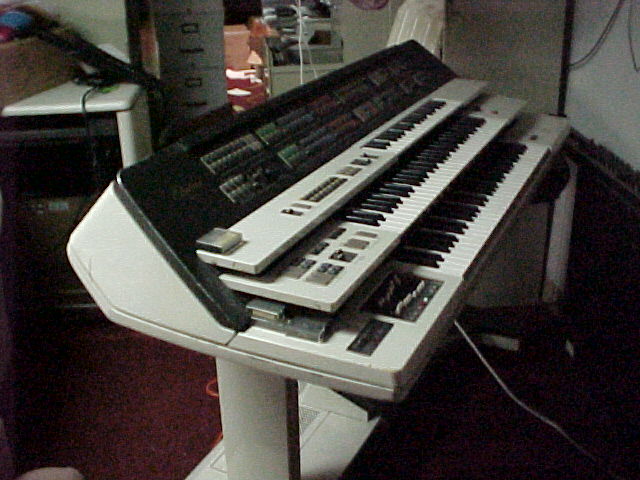

Well.... Jimmy managed to run accross my site and informed me that he actually has one. To give you an idea of how rare the FX1 is, according to this Sound on Sound article there is only one in existence in the UK. The SOS article does not have an image of one. Think about that. This is about as rare as it gets folks. From the SOS article: "Lest you think that (other than the DX1) all FM synthesizers were small, neat affairs, let me tell you about the FX1. This was a huge three-manual beast very much in the mould of the GX1, but based entirely on FM synthesis. If you've never heard of it, I'm not surprised. Costing £36,000 in 1986, there's only one working example in the UK, and not many more elsewhere." Well, we now know there is at least one more working sample out there. Title link takes you to more shots sent my way via Jimmy. I need to stress how thankful I am that Jimmy took the time out to take pictures and share some of his story with me (during our conversations he stated that he would takes some shots and send them to when he had time. To my surprise that ended up being much sooner than later). I decided to include a bit of his story as well, as I found it fascinating. It also gives you a bit of this particular synthesizers' history and gives it context.
The following are excerpts from an email exchange I had with Jimmy:
"I do a single - organ, piano, sing, comedy, etc. One of the last night club entertainers left, I guess. I've been doing essentially the same type of show for the last forty-five years. I'm 65, but I'm going on 30. I definitely don't act my age, on or off stage. I still play a B-3 Hammond with two Leslie speakers. The B-3 I'm playing is the one I started playing in 1960, when I started in the night club business. I only play three nights a week. I really don't want to work more than that. I'm married and have raised two sons. I've met most of the musical stars through the years and have maintained a friendship with most of them."
"Back to the FX1, I tried to get it fixed one time (I spilled a coke into a small section to the left of the lower keyboard). Yamaha company said that they could replace the boards if I sent them to them one at a time. I really didn't know what was wrong with the organ at the time, so I sent one circuit board at a time and Yamaha replaced them, one at a time. Yamaha didn't even have a prototype of the FX1 in their repair facility so that they could compare the one I had with one in their shop. Sending parts to them really didn't solve the problem, because they didn't have a prototype in which to insert my parts to note a problem. I hadn't realized that the spilled drink was the problem. I brought the organ here from Florida and within a week, the repairman had diagnosed the problem and repaired it like new. It really is a workhorse piece of equipment. It will probably be around long after I'm gone."
"I wonder how many of these FX1s are left. I was told that there weren't too many of them to begin with. I'm not sure, but I had been told that there were twelve of them in the USA. I was told that Stevie Wonder owned one when they first came out. He has to have used it in studio. There was a train wreck (I believe) where all but a couple of them were destroyed. It was going from California to New York. Mine was one which survived the wreck. There is a corner of the keyboard where the edge is slightly bent. This supposedly happened in the accident. I don't know if this is true, Matrix, but that is what I was told (after I bought the organ!)"
"You asked how the FX1 plays, etc. It is a wild piece of history. It is the most powerful sound because of the huge external speakers. The speakers can be turned up so loud, that the sound can be deafening. I never really turned it up to max, but it is scary. The speakers are on wheels and they match the organ, which is an off-white. The organ as well as the speakers and the bench are extremely heavy - extremely. I thought that the B-3 Hammond was heavy. The organ itself weighs probably 300 pounds. The bench, alone, has to weigh 80 pounds. In order to get to the guts of the organ, you have to unscrew aload of screws and the whole front lifts up in two sections. The inside looks like the most complicated thing you've ever seen. It has six (I think) large circuit boards which pop out. It was way ahead of its time! When you change registrations, all of the sliders automatically move to the desired preset settings. It is quite amazing."
"You [Matrix] are a pretty crazy person [indeed ; )]. Very interesting that you have that site! I am really a collector of everything, so I guess I just never got rid of keyboards when I used them through the years. I also have a mini-moog that I've had for twenty five years. I'm not a great synthesizer player - I used the mini-moog for effects in my show. I should really use it for effects today. I'm trying to get informed enough to sample it down to my Kurzweil sampler. You see, on the job, there isn't a lot of time to play synthesizers, changing stops to be interesting, plus keep everyone's interest as a singer and comic. I'm a very busy guy on the stage. It's a very little one-man show that relies on personality as well as technical ability. I'm sort of the entertainer's entertainer. Andy Williams, Ray Stevens, Pet Clark, and the like, come out and watch me after their shows. Not much use for them with the type of shows here. They are playing pretty straight stuff. The town used to be known for country, but it is changing by the year. There are Beatles shows and good old Rock and Roll shows. Synthesizers are quite scarce in the shows. A bunch of my friends are into them, though, and have them at home. I am from the school of Earl Grant, Shay Torrent, Buddy Cole, Lenny Dee, Ethel Smith, Jimmy Smith, and the like. Most of them were personal friends. Petula Clark came in to see me on Saturday night. She sat in with me and sang a couple of old standards. It's a gas, because, I'm sort of a retro act. Although I have had some of these keyboards throughout the years, I am really not proficient in using them with any great knowledge of wave lengths, etc. I've been friends with a lot of the great players, and they think I'm a monster in my own way, but I've always been crazed with the way they play. I probably have thirty old keyboards - none of them are the ones mentioned in your blog - they are simple, usable keyboards that I've picked up in pawn shops, etc. I don't know if you knew who they were, but years ago, Joe Mooney, Del Statton, and Jocko Pastorius (and his dad, Jack) were good friends. Jocko was a mega monster on keyboards, as well as the bass. We were friends from the time he was 13. His dad was a good buddy. Jocko was the freak of all freaks. He would sit, as a kid, and watch me kick footpedals, without even looking up at the keyboards. I'm rattling on. I just wanted to fill you in."
Rattle on. : ) Again, I want to thank Jimmy immensely for taking the time out to share this with us. Folks, if you have any questions for Jimmy please feel free to post a comment and I'll make sure he gets it. Thank you more than words can say Jimmy. Wow!
Update: link to the manuals via hugo:
FX1E_1.pdf
FX1E_2.pdf
FX1E_3.pdf
FX1E_4.pdf
FX1E_5.pdf
Update via Jimmy in the comments: "The FX1 I have has a mini-disc recorder/playback unit attached to the underside near the right knee which can replay as though it were live. I think you can see it in the picture. Not bad for the time! I also have a second recorder. - J"
Update via the comments: More shots and info here
Update: be sure to check out the comments for more. The following via Jason:
"Add another FX1 to the list of found. This one was purchased new to be, of all things, a church organ! My father was a Yamaha dealer at the time and he was offered the chance to "test" a new model of the Electone series. It was actually purchased in 1982 (yep, before it was released). The serial number on it was "XXX" and there was nothing on the organ indicating it was an FX1. I always thought it was kind of strange Yamaha would send something like this to such a small town to be tested. Anyway, the organ is now gone after being struck by lightning in 1989. It sat out in an alley exposed to the elements for 7 years before it was finally hauled off to the dump. I tried to stop that, but I was only 15 when it was drug off, so I didn't have a choice.
I'll always remember that organ as being the "Star Trek" organ. The kids of the church would just sit at it and change the settings to make the sliders move on their own. Anyone else think it looked like a console out of Star Trek TNG? haha
btw, here's a link to an MP3 file of a demonstration of the organ playing."
Update via Andrew in the comments: "Yamaha made a promotional album for the FX-1 in 1983, you can grab it here"
Update via Rockstardave in the comments: "I did a write up on my FS-500, very similar to the FX-1, with some pictures and such:
http://freeorgansusa.blogspot.com/2010/03/yamaha-electone-fs-500.html
Come have a look at my "new" baby."
FLAME

This link will take you to FLAME, home to a number of esoteric MIDI and audio projects. You can find the Google translated site here . Pictured is the FLAME-MIDI-SPEAKJET. Make sure to check out the samples (mirrored here) and videos when there.
Details on the FLAME-MIDI-SPEAKJET (Google translated from German):
"With the current project it concerns a small MIDI controllable sound module on basis of the similar language chip “SpeakJet” (TM) of the American company “Magnevation LLC”. Originally for simple artificially generated acoustic output (American discussion) conceived, it lay close one, an 8-bit 8-bit-artiges sound module with pseudo language to develop. The possibilities are quite due to the structure of the chip (complex Soundsynthesizer, Presetsounds, serial interface etc.) impressing. Are implemented 72 elements of speech (Allophone), 43 Soundeffecte and 12 DTM Touch of clay/tone. An 8-bit input and/or a serial input serve for control of the functions. Now possible a sound module is to be developed with an external CONTROLLER and the appropriate software, which the internal possibilities use depending upon need. It went simulating primarily not therefore language, but in music applicable sounds, Pattern, producing sequences in the 8-bit style of the 80iger among other things years. It is of advantage among other things that the sound elements are be correctable and tonally can be used. In the current project two SpeakJet chips are used, in order to produce larger more complex sound variety. The equipment is still in the development stage and vorraussichtlich at the end of of 2006 finished will become. With the development board of produced test sounds and sequences can be down belonged by MP3-Download."
Swing Out Sister PPG and Minimoog
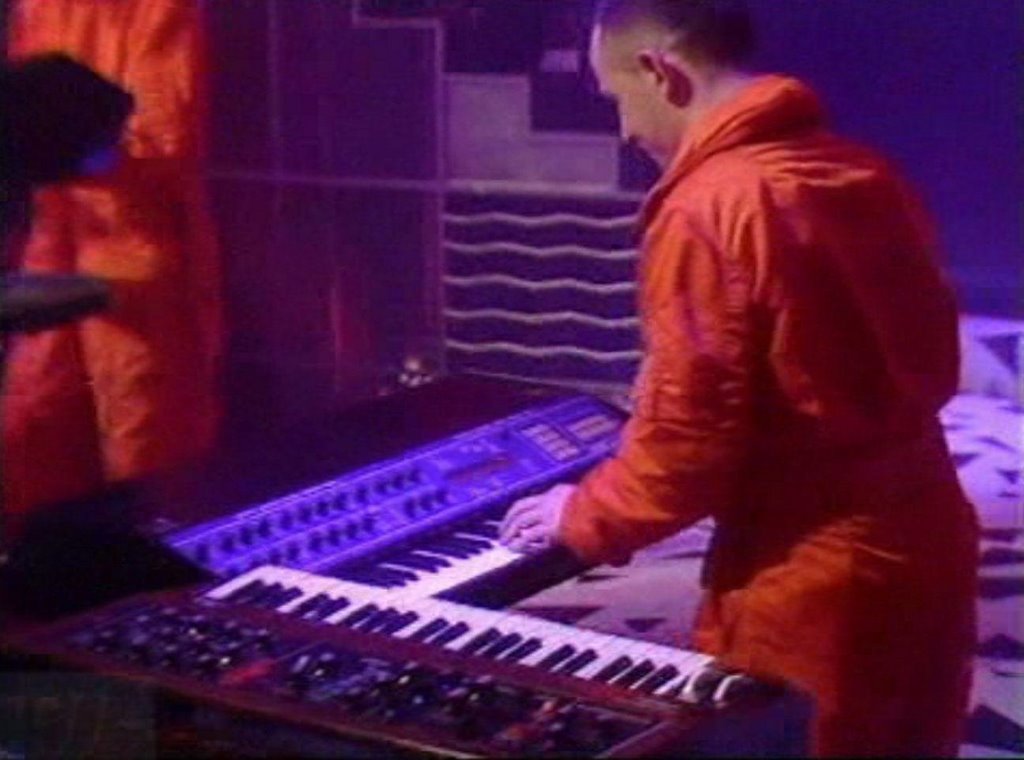 No title link. Just a shot of Swing Out Sister with a PPG and Minimoog.
PREVIOUS PAGE
NEXT PAGE
HOME
© Matrixsynth - All posts are presented here for informative, historical and educative purposes as applicable within fair use.
MATRIXSYNTH is supported by affiliate links that use cookies to track clickthroughs and sales. See the privacy policy for details.
MATRIXSYNTH - EVERYTHING SYNTH
© Matrixsynth - All posts are presented here for informative, historical and educative purposes as applicable within fair use.
MATRIXSYNTH is supported by affiliate links that use cookies to track clickthroughs and sales. See the privacy policy for details.
MATRIXSYNTH - EVERYTHING SYNTH