MATRIXSYNTH

Wednesday, January 09, 2008

49 - How to Play the Synth (Large)

flickr by Adamo W .Jr. II

full size

Update via Adam in the comments:
"This is a completely genuine book cover, which I found in Bangalore, India. I thought it was hysterical, until I opened it and saw what they write inside. Maybe I should scan a few more pages later, because the stuff they write there is just unreal.
I decided to invest $2 in buying it and I haven't regretted it since."

Harvestman Polivoks VCF Demo via Navs

via Navs:

"I've added a demo of the Harvestman Polivoks VCF to the Patch of the Day thread at the Canecutters' forum.

Two minutes of manual frequency FM with the Polivoks being modulated by a Plan B Model 15 VCO. Very Metal.

Expect a full review in the Modular Lab soon.

Cheers,
Navs
--
LINKS:
MadVlad (Polivoks VCF demo)
Patch of the Day
Modular Lab"

Jazzmutant Lemur Vids via bonomius

hip hop glitch

"demo of an ableton live template for jazzmutant lemur i'm working on..."

electro samba

YouTube via bonomius
"improvising with ableton live + sequentix p3 and jazzmutant lemur"

Space Probe Project - DSI Evolver Drones

click here for drones from the DSI Evolver. Note the sounds are not actually coming from space. It is all the Evolver.

happening upon osaka synthesizer festa 2007


YouTube via billytwo.
"a small part of only one of the exhibition rooms"

Moog Minimoog + EHX Small Stone + Roland JD-800


YouTube via retrosound72

"synth demo by RetroSound

bassline: Lintronics Minimoog with Midi through EHX Small Stone phase shifter and triggered by the MFB Step64 step sequencer
fx sounds and glass voices: Roland JD-800
drums: Roland TR-707"

Koshi Miharu TATHIIRIKINSHI


YouTube via yaoyasan. "Japan Thecho-pop Girl"
Synth action comes in at 1:37. Yamaha CS-15D
Update: one more video here.

Genoqs Octopus Basic Demonstration 7


YouTube via DayflightTrok. "Page Chains and Page Repeat."
You can see all episodes here.

Space Magic Fly Cover


YouTube via fischek.
"Space Magic Fly Cover on Korg TR 61 and Nord Lead 2X"

Vako Orchestron Optical Disc Playback Sampler


YouTube via peahix. Sent my way via Pea.
"Here's a demo of all 8 discs that were made for the Vako Orchestron. This keyboard, which is adapted from the Mattel Optigan, was introduced in 1975 by Dave VanKoevering. It was intended to be a competitor to the Mellotron, but it never really took off. Kraftwerk was a very early adopter of this instrument. I've included little examples of some of the well-known parts Kraftwerk used their Orchestron for back in the day.

My Orchestron is in fairly average working condition. You'll note that I had a bit of trouble with one of the high F keys. Also, note the substantial level of radio interference, which I've muted during disc changes.

Anyone interested in more information about the Orchestron and related instruments can find lots of stuff at my website, www.optigan.com."

Synthesized by Elhardt

Synthesized ACOUSTIC INSTRUMETNS #1 - Stereo


Brain Computer Music Interface


YouTube via anarchistcinema. Sent my way via Adam.
"A demo of my brain computer interface for controlling a synth. This video is an 'overflow' for the one on my website as I don't have the bandwidth at the moment. More info here"

MOOG

flickr by MAN BEAR PIG

"Omg I just came in my pants"

full size

Isao Tomita

isaotomita.net


website via Benjamin Ward. sent my way via LDT

Korg PS-3010 Polyphonic Keyboard for PS-3200 PS-3300

images via
this auction

"This is an impossible-to-find keyboard controller for the Korg PS-3200 and PS-3300 synths. It is a 48 key fully polyphonic controller, with X/Y joystick and various trigger selection settings. There is some good info on it on Bluesynths here.
You will need to register to read the page, or read it from google cache."

via Matt

Real vs Synthesized Symphony Orchestra


YouTube via Elhardt

"This is one in a series of videos of me demonstrating advanced sound synthesis using analog or virtual analog synthesizers and subtractive synthesis. Each video lists what synthesizer was used. In addition, some standard outboard effects were used such as EQ, reverb, digital delays, and/or chorus.

Be sure to check out other related videos in my series, and check back now and then as I will be posting more in the near future."

"Once Upon a Time in the West" with DOEPFER R2M


YouTube via gattobus
"I'm just practicing with my new toy, Doepfer ribbon controller R2M connected to the Moog Little Phatty..."

Vintage Casio 403 Circuit Bent


YouTube via xd515
"I bent this for a friend, if you want your gear 'modded' drop me a mail at the address in the clip! Oceanus"

Sherman Filterbank 2 demo in Hi-Fi


YouTube via shaft9000
"a simple patch from a Supernova synth is processed using various modules in the Sherman Filterbank signal processor."

Roland Juno-60 + EHX Small Stone + TR-606 + SCI Pro-One


YouTube via retrosound72

"synth demo track by RetroSound

pads: Roland Juno-60 through EHX Small Stone phase shifter
bassline: SCI Pro-One, triggered by the TR-606
drums: Roland TR-606


hand played, no software sequencer used"

Sound Thrasher 3.0

via
this auction
"Here’s an original piece of functional art, created by New York outsider artist, Bent-It. This particular work of art is part of his Sound Thrasher series. The piece shown in the pictures is the one you will receive.

With this piece, Bent-It combines visual, audible, and physical stimulation, fostering a truly unique, thought-provoking, interactive work of art. The artist’s fundamental concept of “art creating art” is made evident, as the owner of this piece may physically control and manipulate the audio/ sound/ noise/ music/ art output.

The guts of this functional art piece include three oscillators which play with each other, causing its ¼” output to spit out droning, spaced-out, ring modish, 80’s video game-ish, psychedelic analog noises. The on/off switch can also be flipped rhythmically, allowing for some wicked bleeping/blooping noises. But, to experience, what you could call, the full potential of this piece, go ahead and hook it up to an audio effect pedal, board, rack, or even your Mac or PC, and explore the infinite world of soundscapes that you can create. The Sound Thrasher has a ¼” input for anything with a strong enough signal to effect the piece. For example the audio clips made with a roland tr-505 drum machine where the Sound Thrasher more than lives up to its name – thrashing and destroying any incoming sound waves and mutating them into sounds of vulgarity or beauty, depending upon your style and taste of audio/sound/noise/music/art.

A standard boss-style 9-volt DC wallwart adapter will bring this functional art piece to life. It is not included."

click here for audio
You can see the Sound Thrasher 2.0 featuring Bela Lugosi here.

Emulator II

images via
this auction

MOOG The Source


images and videos via
this auction
"The Moog Source is a monophonic microprocessor-controlled analog synthesizer manufactured by Moog Music from 1981 to 1985. The Source was Moog's first synthesizer to offer patch memory storage. The design was also the first (and only) Moog synthesizer to feature a flat-panel membrane keyboard to replace the standard buttons, knobs and sliders.

In addition to the memory capable of holding 16 presets, the Source features a 37-note keyboard, and two VCOs that can be selected between three waveforms and three octaves. Programmed presets can be saved to a cassette interface to free up the onboard memory for additional new patches. The 24dB/octave VCF has parameters for keyboard tracking, cutoff frequency, resonance, and envelope amount. There are two ADSR envelope generators that can be set in single or multi trigger modes, one for the VCF and one for the VCA. For modulation, the Source features LFO and sample and hold.

Features:
* 2-VCO
* Micro-processor-controlled
* Programmable monophonic synthesizer
* 16 memory locations
* 3-octave, 37-note (C-C) keyboard
* Arpeggiator and a digital sequencer with memory for two seqences of up to 64 notes
* First to use digital parameter access for programming, a method now commonly found in today's synthesizers, using membrane switches, a two-digit LED display and a single data knob
* VCOs have three available waveforms (sawtooth, triangle, and pulse; with pulse width modulation) and three available octaves (32', 16', and 8'). VCO2 can be detuned at fixed intervals and it can be also synced to VCO1
* Mixer section features levels for VCO1, VCO2 and Noise
* VCF (24dB/octave) has parameters for keyboard tracking (off, 1/2, and full), cutoff frequency, resonance, and contour (Moog's word for envelope) amount
* Two ADSR envelope generators, one for the VCF and one for the VCA
* Envelopes can be set in single or multi trigger modes
* LFO (triangle and square waveforms) can be routed to the VCOs and the VCF
* Sample-and-hold can be routed to the VCF
* To the left of the keyboard is the pitch bend and the modulation wheel, along with two octave-switching buttons
* These and a volume knob are the only dedicated controls.
* Back panel includes audio out, cassette interface, a recessed pitch knob (for fine tuning), and CV and S-trigger inputs and outputs
* 16 factory pre-sets are: Lead 1, Lead 2, Horn, Flute, Clav Bass, Vibes, String Bass, Harpsichord, Organ, Trill Voice, Taurus, Synthevox, Sax, Wind, Snare Drum, and Lead 1 (duplicated here so that if you wanted to, you could use this extra slot to move patches around).
* Programs are saved and loaded via a cassette interface.
* Moog's Source was their first to offer patch memory storage as well as some other new features.
* It boasted 16 memory locations so you could finally save and recall your synth patches.
* A cassette-tape jack was also implemented to transfer your patches to and from an external tape and free up the on-board memory for additional new patches.
* In an effort to modernize with the eighties, the Moog had replaced all buttons, knobs and sliders with flat-panel membrane buttons and a single data-wheel assignment format.
* Parameters are edited not with hands-on sliders and knobs but by assigning a selected parameter to the dedicated data wheel.
* Those famous monophonic Moog sounds are still inside this synth which has two fat analog oscillators and the legendary 24 dB Moog filter."

PAiA Stringz n Thingz


via via this auction

You can find more info on the Stringz & Thingz here.

ARP Quadra

images via
this auction

Note the Odyssey in the background is listed here.

Oberheim OB-X

images via this auction
"The OB-X was released in 1979 and was the first programmable polyphone synth from Oberheim. It's the direct successor to the famous SEM-based four/eight voice. The main point is, that the OB-X has the same discrete filter design as the SEM-modules - there are no curtis filter ICs as the followers OBXa and OB-8 got. But the filter is not as flexible as the SEM-one (which were multi mode) - it has a fix 12dB lowpass setting. When you open the belt, you will see boards with tons of electronics. Every voice has got it's own circuit board - they can be removed separately. A maximum of eight voice boards can be installed - mine has got six. For stereo use, every board's output is assigned to a pan pot. Every voice board has two VCOs with saw and pulse. The VCOs can be synced and crossmodulated (you won't find crossmodulation in the followers OBXa and OB-8) - so there can be generated strange and metallic waves. There's a great polyphonic portamento section, an autotune function and a hold button (which can be used as a chord memory as I found out!). Then we got the described filter section and two ADSRs for filter and amp. The sections can be modulated with the Oberheim-typical modulation matrix. An LFO with quare, triangle and S/H can modulate the LFO pitch, the filter cutoff and the pulse width (separate for VCO1 and 2). There are 32 memory locations to save your sounds. Of course you can edit programs any time - just push the edit button and turn the knobs as you like. There's a casette interface to load and save memory banks. On the backside you find some goodies: a CV/Gate interface to control voice 1 and a filter control jack, where I've connected an external potentiometer to modulate the filter cutoff without any stages - which sounds absolutely great. This direct and precise cutoff control you will never ever experience with a software synth. You can really navigate to a particular partial tone and hear it growing louder until you got it exactly! What I learned to appreciate furthermore are the Oberheim-typical levers. They allow you to bend the tones of the Oberheim like you bend a guitar string - the levers are very responsive. It's easy to bend up a note and modulate it at the same time. I admit freely: I'm not a fan of wheels - I like better the korg joystick. Unfortunately, the Oberheim-concept has been abandoned."

Maestro OB-2

via this auction

"Maestro Octave Pedal, made ca. 1974.

This is a classic octave pedal great on guitar, keyboards, even voice.
Extremely smooth tracking, it always yields a nice smooth analog bass tone. When your note decays the box will track the next loudest harmonic, sometimes 3rd, or 5th giving a cool harmony when mixed with dry signal.

The controls on the pedal are: Octave On/Off, Guitar Vol., Octave Vol, Sensitivity, Mode (Perc./Sust.)."

I'm guessing the Maestro Octave Box was designed by Tom Oberheim along with the Filter Sample/Hold FSH-1.

Synhouse DIY CV/Gate and Audio Inputs for the MOOG Prodigy

"Most Moog Prodigy synthesizers have no interface whatsoever. Only the very few last Prodigies made had CV, gate, and audio input jacks. The following plans describe a method of installing the jacks yourself, if you have a little experience with electronic repair and the soldering of wires and circuit boards. If not, these plans will allow a professional repair shop to add the analog interface jacks for you. It is best to download these diagrams and print them out on paper to look at while working on the instrument and make notes and check off the steps as you go. All repairs and modifications made to your instruments will be done at your own risk and Synhouse Multimedia Corporation assumes no liability for personal injury caused or damage to equipment or loss of use caused directly or indirectly by the use of these plans. If in doubt, don't do it!" click here for more info on Synhouse.

Tuesday, January 08, 2008

WTF Chicken!?


YouTube via deadmau5.

via Dj Aero.

"In the Studio with Tommy Lee , DeadMau5 and Steve Duda. Chicken is the name of the track which will be released soon."

via an anonymous reader:
"That's at Tommy Lee's studio...with Doepfer, Harvestman and other Eurorack modular gear. More tracks at http://www.myspace.com/wtfisthisstuff"

Metasonix Puzzle

Sighup has been taking the daily Metasonix teaser images going up on umop and piecing them together. Click here to see the full image so far.

Bloog: The RSS Mod-Synth

via Andrew Haarsager (click through for more info and some examples):

"Here is the finished project of what I wrote about here - a machine that scrambles the words and sentences of real-time blog posts, based on the look of a 1960’s Moog synthesizer. It pulls in any RSS feed (for demonstration I used Technorati to create one that fetches all new net-wide blog posts about ‘music,’ har har). The knobs and sliders scroll through the text and add or subtract words from the screen, creating new ideas from the existing sentences."

B2007.004.28

flickr by okto

full size

Alesis Micron

Click the tattoo link below for more.

BTW if you have or know of a synth tattoo that I have not posted, feel free to send it in.

Jean Michel Jarre - In Oxygene estudio


YouTube via cosmicsound. JMJ is playing the Yamaha CS80.

Monowave


images via this auction

"This is a TRULY UNIQUE synth in keyboard history... perhaps THE only rackmounted version of the famous PPG Wave 2.2, only 50 of these were made by Paul Maddox, one of the leading experts on PPG in the UK. Feel free to read more here. This synth was a limited custom (built to order) and only 50 were ever made, this is #16."
Update: you can find more info on the monowave on the Elby-Designs Monowave page as well as via the Monowave label below.

Workshop Analoge Klangsynthese mit Alesis Andromeda

Workshop Analoge Klangsynthese mit Alesis Andromeda 1/2


Workshop Analoge Klangsynthese mit Alesis Andromeda 2/2

YouTube via mag4musicians. Sent my way via Mr. Array.

"Workshop Analoge Klangsynthese mit Alesis A6 Andromeda. Armin Küster zeigt im ersten Teil des Workshops, welche klanglichen Möglichkeiten schon in der Oszillatorsektion stecken. Überabreitete Version"

Encoding an image to sound

"Encoding the Image
The first pass of my program disregarded the color data and only produced a frequency for the Y axis if the color intensity was less that half the sum of all colors. Below is an example. Note: I converted the WAV to an MP3 to conserve bandwidth, at 320kbps not much data is lost.

Audio File: ohmpie.mp3

I was really shocked to fist see the image! The only tweaking I needed to do was to use a linear scale for the frequency. Also if I selected too high an amplitude for the sin wave, clipping occurred in areas with too much black. For image above I used an amplitude of about 1000 on a scale of 0 to 32768."

You can find the full article including more examples and the code here. via Mr. Array.

I'll help! (Roland JP-8080)

via catsynth.com.

Commodore 64 with built in Cynthcart!


YouTube via human202. via C64Music!

"Modified Commodore 64 with Cynthcart built in"

"Here is a list of all the mods:
- Custom black paint
- New decals
- Filter knob (changes values on the SID audio chip filter)
- RCA audio/video jacks on the back for easy connectivity
- Audio out (dual mono)
- Audio in (process external sources)
- Video out (easily connects to any modern T.V.)
- 14 segment LED screen ( displays greeting message and filter values)
- Relocated and replaced power light with blue l.e.d.
- Built in Cynthcart(internal mod)
- Choose between Cynthcart or normal boot up with a toggle switch
- Cynthcart,Basic prompt indicators"

roland jupiter 4 and CR8000 jam.!


YouTube via mopipi2.
"roland jupiter 4 and roland cr8000 jam.!"

Access Virus TI

images via this auction

Ludwig Phase II Guitar Synthesizer
images via this auction

serial #1239

Kind Words on MATRIXSYNTH

"-the best synth site on the web,always updated,always interesting"
-Tom (The Chemical Brothers)

"You do a great job maintaining that blog. It has become essential daily viewing for myself and lots of other people I know. Your efforts are greatly appreciated."
-Thighpaulsandra (Coil, Spiritualized, Julian Cope, etc.)

"Congrats on the site...It's become an addiction, especially now that i am on tour..."
-Alessandro Cortini (NIN, Modwheelmood)

"Isnt Matrixsynth better than a big cuppa cocoa & a Christmas cookie on a cold cold Southern California morning?"
Tara Busch & Analog Suicide

"I think that the matrixsynth blog is great and keeps people well in touch with everything synth- I visit everyday to see what's going on!"
Ken MacBeth

"I know I said it before... but good job with the blog... I don't know how you do it! always something new & interesting to be seen there... but I have to stop myself from looking sometimes... because I'd never get any work done! ;)"
Mike Brown of Livewire

""I just wanted to let you know that I love your blog, and read it throughout the day. There is always something new and interesting to read about. Its also very informative, and provides a wonderful community for all synthesizer lovers like myself." =)"
Richard Devine of Devsnd

"a huge thanks to Matrix of MatrixSynth (matrixsynth.blogspot.com) for all his years of ongoing support to the synth community. This one's for you...from Bacon and I."
Shagghie

"Matrixsynth really helps to showcase all the wonderful little synth & sound setups operating today -- your blog is a large part in helping such things thrive. Absolutely - hats off!"
Tom Bugs of BugBrand

"Thanks again for a great site Matrix,

- Laurie Spiegel"

"The best synth site www.matrixsynth.com" - AtomoSynth


The Packrat by Dave

MATRIXSYNTH Swag & Hall of Fame


MATRIXSYNTH THANKS from 2007.

Yamaha CS15

images via this auction

"So cool to use two filters at once and having dual oscillators makes it so much better than the CS-5 and CS-10. What is so cool is the bandpass/hipass/lowpass filters. It can be played duophonically with another CV controller.

Roland Jupiter-4 and CSQ-100 Sequencer

images via this auction

KORG Lambda ES-50

images via this auction

"- It has "Percussive" and "Ensemble" sections, with individual volume sliders. If the "Chorus Phase" butons for both are off, the go out the left and right channels separately. Putting on Chorus Phase "stereoizes" the sound, each can be set separately. There is also a mono mix out and a stereo headphone out.

- There are 2 tuneable oscillators, each can be tuned separately over quite a wide range so you can get nice phasing happening there, from subtle to pretty intense. Total tune varies both at the same time up or down.

- The accent section is straight forward, you can add key-click to the electric piano sound, and the brass "fC" is like variable treble filter to the brass sound. The tone section is simple brightness adjustments for the Ensemble and Percussive sections.

- There is also an octave switch, self-explanatory. I will also mention the joystick, left-and right are a spring-loaded pitch-bend control, and up and down mess with the chorus phase width.

- The Percussive section has a sustain switch, and toggles for Electric Piano, Clavi, Piano, and Harmonics (additional tonal sound many octaves higher). All sounds can be played individually or combined for thick, rich layering. The decay dial affects the 4 sounds, while the tremolo dial works on the sounds when the Tremolo switch is also on.

- The Ensemble section has Brass and Organ sounds, and Chorus (a little like a vocal choir), Strings 1, Strings 2 (an octave higher), and an Attack/Release switch and knobs, which affect the Chorus and Strings sounds only. All sounds layerable. For example if you play the Brass and Chorus with A/R set, the brass will have its usual A/R envelope while the Chorus one will be different, as you set it so it sounds like two keyboards.

Has some kind of natural sounding reverb after you let up the keys, not sure how they did that but it sounds good. Gets turned off when the Attack/Release toggle is on.

I tried putting all 9 sounds on at once, it's really wild, rich, deep and stereo. Lots of possibilities! The last thing I did with it was a 30 minute long jam to try out everything, glad I recorded it

------------------

Here's a guy who really likes his Lambda ES50 synth, has nice description, pics and audio mp3 samples.

SonicState has a good overview, and the user reviews are mostly 5 out of 5"

Workspace and Environment: Richard Lainhart

click here for the full post on trash_audio.

"Favorite Hardware
Right now, it's the Buchla 200e, although I'd really have to include the Haken Continuum as a part of the whole system. The 200e is an extraordinary instrument in its own right, but I think it's the addition of the Continuum that really takes it to an entirely new level of expression and control. So I'd have to say both are my current favorites, in equal parts."

Plan B Heisenberg Generator

flickr by thumbuki

full size

Monday, January 07, 2008

More Stuff

Fighting P3 - Live sequencing in studio


"all the sequences modifications were done on the fly). Everything was recorded directly into Live 7 in MIDI format."


# Oberheim Xpander - lead
# Oberheim Xpander - bass 1
# Waldorf MicroWave XT - bass 2
# EXS24 samples - pads
# EXS24 samples - drums

via and more info on Hielo Patagonia Sounds

bizzy


"DSI Evolver, Korg ER1, Kjaerhus Spectra softsynth , OB3 , sequenced in Live 7"
via Baghead
PREVIOUS PAGE NEXT PAGE HOME


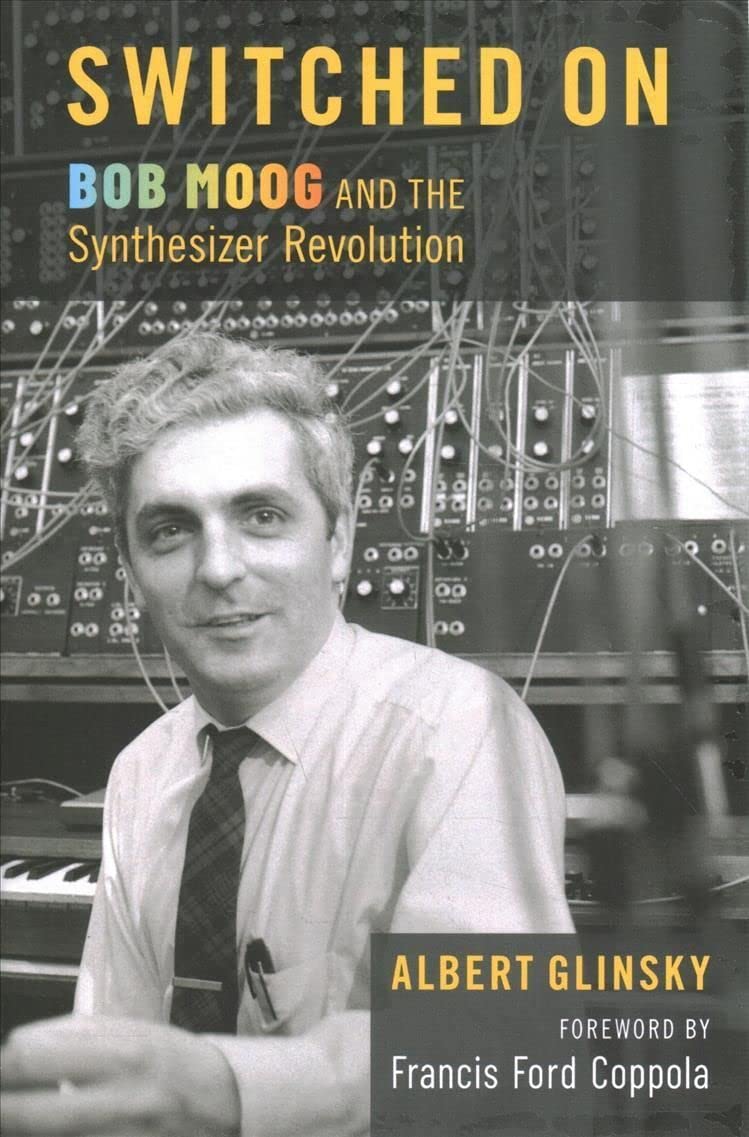
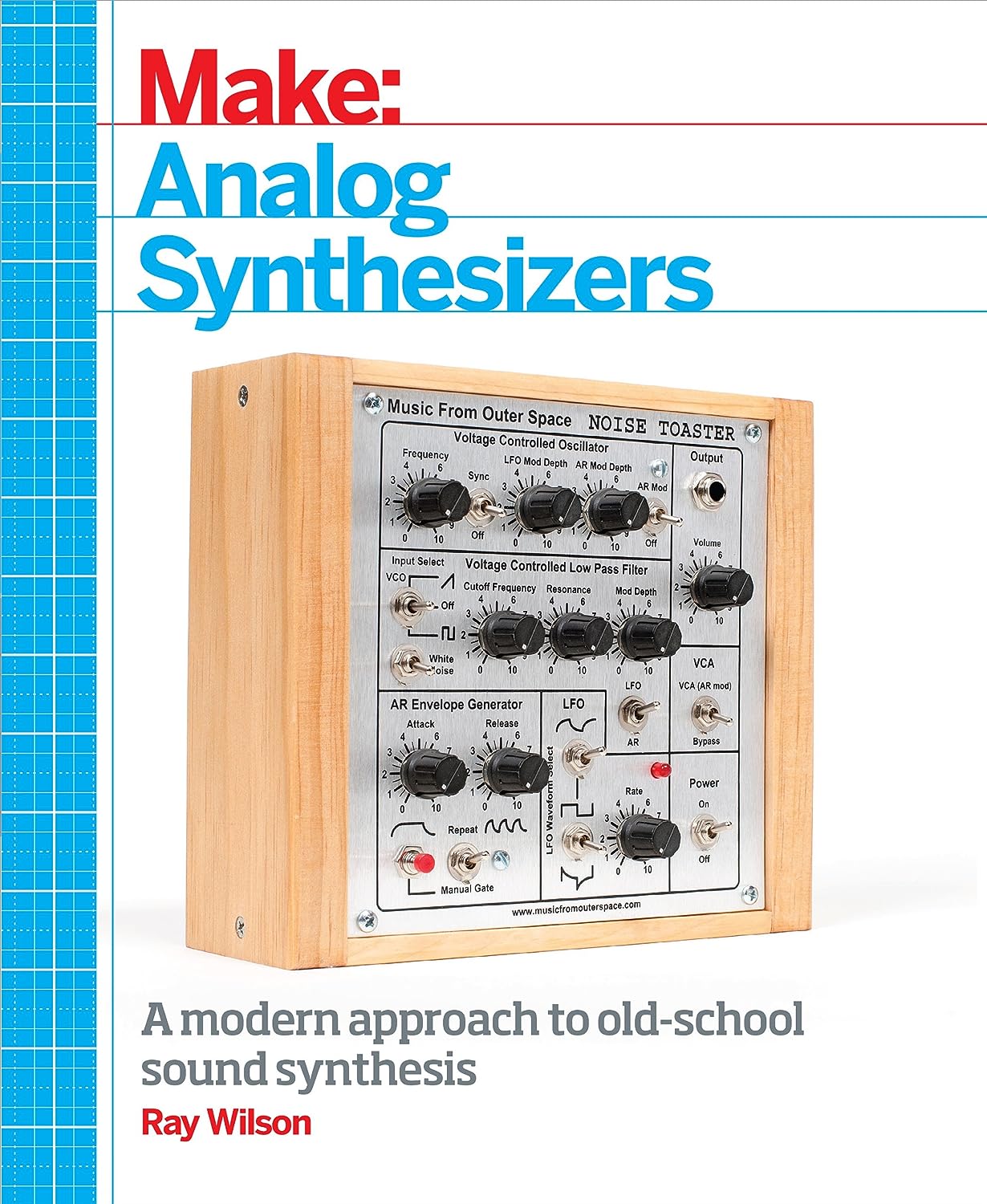
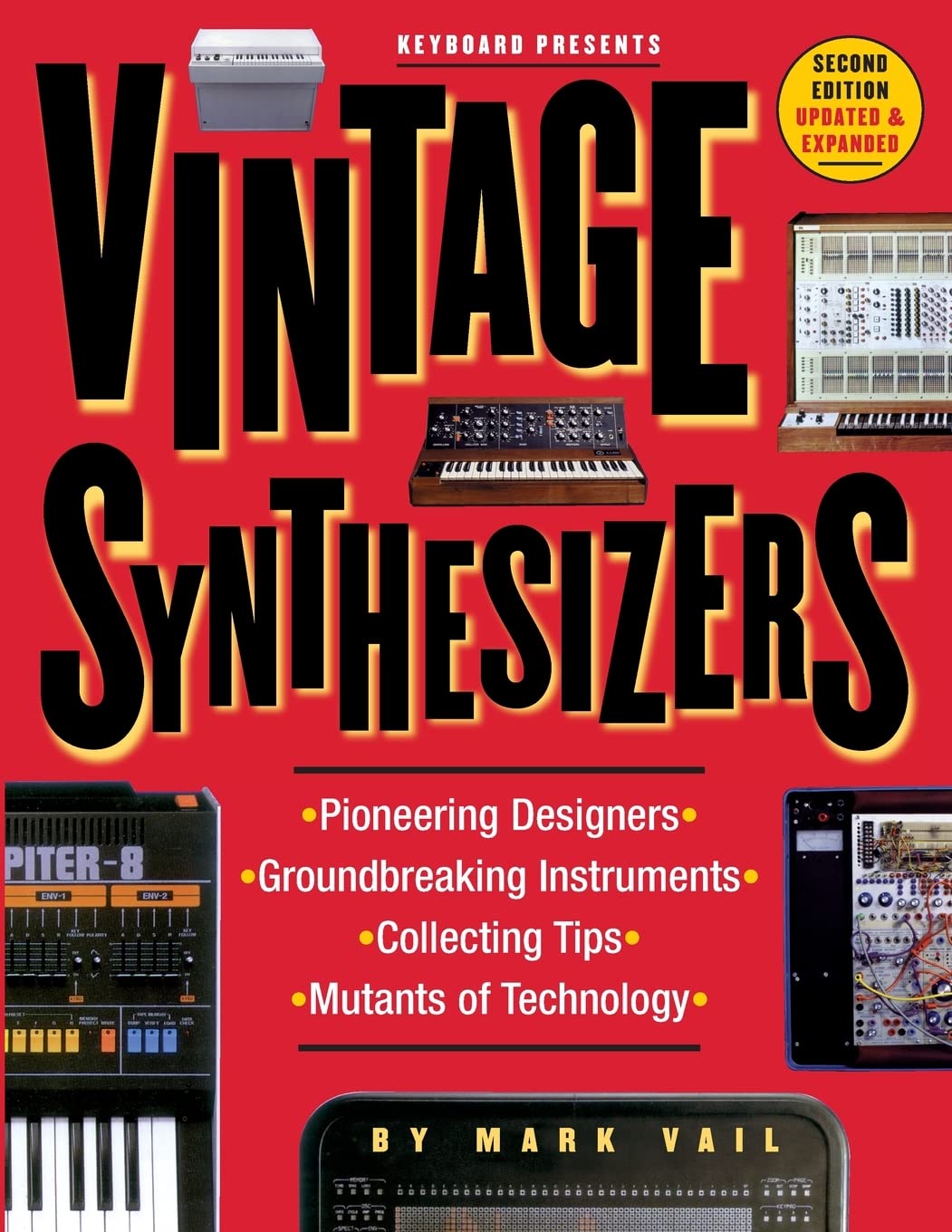
Switched On Make Synthesizer Evolution Vintage Synthesizers Creating Sound Fundlementals of Synthesizer Programming Kraftwerk

© Matrixsynth - All posts are presented here for informative, historical and educative purposes as applicable within fair use.
MATRIXSYNTH is supported by affiliate links that use cookies to track clickthroughs and sales. See the privacy policy for details.
MATRIXSYNTH - EVERYTHING SYNTH