MATRIXSYNTH: Search results for "apollo studio"

Showing posts sorted by relevance for query "apollo studio". Sort by date Show all posts

Sunday, June 28, 2009

Synth.nl 'Apollo' Studio 2009

You can find more pics and the list at Synth.nl's Apollo Studio page. Massive.

Click here and scroll to see some prior posts on the making of Apollo Studio. Be sure to click through the links in the posts.


Wednesday, January 07, 2009

Apollo Studio

Synth.nl has been tracking the building of his new studio online. I've been watching it but holding off on a post until some synths appeared. :)

The have. You can find all posts on the building of Apollo Studio here.

"In this picture you see the left part where my analog corner will be again. In the third cabinet from the right I put the UPS for the studio, but when I switched it on I heard that it has fans and makes noise, so I will move it to the server room. Not all my analog synthesizers are going here by the way, because in the new setup I will also have a special place for all my modulars. They are going to be all together on the second desk that Gerrit is building at this moment."

Saturday, July 26, 2025

Luke Million Studio Tour Update July 2025


video upload by Luke Million

"Following the Studio Tour Video I made last November, here is an update with recent acquisitions and changes to my workflow in my Studio.

Some highlights are the Moog Messenger, Arturia DrumBrute Impact 1984 Edition, Synido TempoPAD C16, Aly James Lab Vprom 3.0, Beyerdynamic DT1990 Pro, Modartt Pianoteq 8 and some Franklin Audio Devices.

The biggest change is in my 2nd Studio where the B Team is kept. I have connected those synths to a Franklin Audio SS-6 Switchable Input Stereo DI which then sends audio to my Universal Audio Volt 476 interface connected to a Macbook Pro Laptop.

You can view the original Studio Tour Video here -"

Saturday, June 19, 2010

Apollo Studio

Synth.nl's Apollo Studio

Sunday, February 08, 2009

Apollo Studio Synth Mounting Complete

follow-up to this post

Remember, you can see how Apollo Studio was built step by step here.

Note the Siel KIWI to the right of the JP-8000.

Wednesday, January 14, 2009

Apollo Studio Furniture (Part 8)

pile of gear shot via Synth.nl's Apollo Studio.

Wednesday, October 21, 2009

Synth.nl Apollo Studio 1 (2009)


YouTube via Synthnl
"First shots from my new Apollo Studio. The music is a track called 'Atlantico' from my new OceanoGraphy album. More information on http://www.synth.nl"

Wednesday, May 14, 2014

Erik Norlander and Galactic Collective Help Celebrate Bob Moog's Birthday

You saw the videos posted here and here, as well as the announcement here and the rare Moog Apollo prototype & modular system.  The following are some official pics of the event and the press release from The Bob Moog Foundation.

"Asheville, NC - May 2014... Synthesizer pioneer Bob Moog's upcoming 80th birthday was commemorated in grand fashion on May 8th with a "Tribute to Dr. Bob" concert by virtuoso synthesist Erik Norlander and his band The Galactic Collective to benefit the Bob Moog Foundation.

The concert, held at Asheville's Isis Music Hall, featured Norlander, accompanied by bandmates Jeff Kollman on guitar, Mark Matthews on bass, and Nick Le Par on drums. Norlander's onstage rig included three very special, fully restored vintage synthesizers from the Bob Moog Foundation Archives, including a 1967 Moog modular, an early Minimoog Model D, and an extremely rare Moog Apollo.

"The convergence of the Moog modular, the Minimoog, and the Moog Apollo in one performance is nearly unprecedented," notes Michelle Moog-Koussa, executive director of the Bob Moog Foundation. "Not since Keith Emerson toured with a prototype Apollo in the early '70s have they been heard together in live performance, making this "Tribute to Dr. Bob" concert a truly historic occasion."

The 1967 R. A. Moog Co. modular is an iconic synthesizer on permanent loan from the University of North Carolina at Greensboro. It was built for the first electronic music studio in the state, and hand delivered by Bob Moog.

The 1973 Minimoog was donated to the Foundation by Asheville composer and arranger Tom Coppola, who used it to record the signature three-note "Duracell sound", among many other commercial and musical applications. The Minimoog was the first mass-produced commercially available synthesizer that the working musician could afford. It is considered by many to be the most iconic synthesizer of all times.

Norlander used the Foundation's Minimoog and modular for giant bass sweeps and drones, adding weight and atmosphere to his tracks, "Arrival," "Sky Full of Stars" and "The Dark Water."

The priceless Moog Apollo is one of the few of its kind in the world. This 1973 instrument, newly and fully restored by the Bob Moog Foundation, served as a prototype for the production model Polymoog. The Apollo is one of the earliest polyphonic synths, synthesizers that could play more than one note at a time.

Norlander brought the Apollo alive in a stunning solo during his signature piece, "Dreamcurrents," using the harpsichord program to conjure the early days of polysynth performance art with classic, vintage tones. He reprised the harpsichord again in the waltz section of "After the Revolution," normally played on acoustic piano. Norlander later employed famous "Vox Humana" program in his bombastic choral opening of "Neurosaur" and used the Apollo soft analog brass sound for his gentler introductory theme on "Fanfare for Absent Friends."

"Bob Moog brought a new voice to the musical landscape, and our musical vernacular would be very different without his enduring contribution," Norlander remarked. "The name 'Moog' is synonymous with art, science and innovation, and as a keyboardist and synthesist, I can think of no greater tribute than using Bob's timeless inventions as the core instruments in my own craft."

Drew Heller, guitarist for the African fusion band Toubab Krewe, opened the show for the Galactic Collective, joined by his father, Grammy award winning producer/composer Steven Heller. Bob Moog had a close musical relationship with Toubab Krewe; Steven Heller was long-time friend and musical collaborator. Their acoustic set was marked by stories about Moog's generosity, fearless pursuit of the unknown, and his sense of humor."

Tuesday, June 25, 2013

Synth.nl Apollo Documentary by Thomas de Rijk (2010)

Published on Jun 25, 2013 Michel van Osenbruggen·18 videos

"In 2010 I was contacted by Thomas de Rijk who was studying at that time at the Willem de Kooning Film Academy in Rotterdam. He asked if I wanted to cooperate in a documentary for his school project. And of course I agreed. He made this very cool documentary about my burn-out and how I got into producing my own music. I think he did a great job! The documentary is in the Dutch language, but it has English subtitles. I hope you enjoy it. I has some nice NASA HD footage (courtesy NASA) and also some nice shot from my Apollo Studio. It took a while before it ended up online, but here it is:) The music you hear is coming from my Apollo album. I hope you enjoy it. Thanks a lot Thomas!"

Saturday, November 05, 2011

Rob Papen visits Synth.nl 2011


YouTube Uploaded by Synthnl on Nov 5, 2011

"A while ago Rob Papen visited my Apollo studio. Together with his crew he was filming some footage for his upcoming book and DVD about sound design on synthesizers. While they were filming in my studio I filmed them with my own camera. So this short movie is sort of a 'making of'. More info about the DVD will follow on http://www.robpapen.com. I made all the 3D animations in this movie with Cinema 4D."

Sunday, May 05, 2013

AKAI MPC-60II SN 90125-00144

Note: links to listings are affiliate links for which the site may be compensated.
via this auction

"For sale is this used Akai MPC-60II. The MPC-60II is the music production studio that has single-handedly taken over the Rap and R&B music genres as the main instrument of Hip Hop production. Designed by Roger Linn (Linn Drum), the MPC-60 is a one-box-does-it-all sequencer-sampler workstation. This particular example, serial number 99125-00144 works great and is the perfect addition to any professional or home studio.

The built-in sequencer is very complete and professional. There are 99 tracks per sequence, 99 patterns, and 99 sequences that can be created, edited and stored in the MPC-60II with ease. Most artists create their patterns in real-time adding drum parts to a beat-loop spontaneously creating a groove that captures the vibe. These patterns are varied and chained into a sequence. Full MIDI, SMPTE and various other forms of external control prepare the MPC-60 for any studio situation.

The Sampler section is lo-fi but highly respectable. Its 12-bit sampling at 40KHz is pretty good. Sample editing, looping and transforming is simple to do. And finally, there’s even a built-in drum machine for extra groove! Finally, the 18 voices of polyphony should be plenty of room for anyone who wants to create Hip Hop on the machine of professional artists worldwide including Apollo 440, BT, Jean-Michel Jarre, Jimmy Edgar, DJ Shadow, Jermaine Dupri, and A Guy Called Gerald.

The main differences between the original MPC-60 and the MKII was the casing and a head-phone jack but either machine is still very useful for today’s aspiring musicians.

This particular example is in used condition and good working condition and comes with an IEC power cable. The MPC is missing 5 mounting screws, though is structurally intact. As can be seen in the photos, the "soft key 1" and "space" buttons display serious wear, and there are visible scratches on the backlit LED panel. Though the unit works, I suggest having a tech do a fundamental service to bring it back up to studio-ready shape."


Tuesday, May 14, 2024

MEET MANIC! // VCAs with SUPERPOWERS! - New Eurorack module from DivKid & Apollo View Modular


video upload by DivKid

"MEET MANIC! The new DivKid & Apollo View Modular Eurorack module. Designed to be a precise and flexible VCA with SUPERPOWERS!

Manic is built for stereo at it’s core, crossing VCA, ring modulation, wavefolding (in both Serge and Buchla variants), and saturation (TanH soft clipping and hard clipping) with a host of features in a compact 8HP interface ready to ignite your audio and CV patching and processing.

Manic is out now in all good modular stores.

Manic manual and links on the DivKid website // https://divkidvideo.com/manic/"


An Apollo View Modular & DivKid collaboration

Manic introduces an exploration of dual channel mono, mono to stereo or true stereo modulation and sound shaping within a sleek 8HP module designed for both creative freedom and technical precision. Each channel offers precision linear VCA functionality with traditional unipolar amplitude control or bipolar behaviour for complex ring modulation effects. While we all need more VCAs! The secret sauce lies in the post VCA shape outputs.

The Shape1 output features TanH soft clipping and Serge-style wavefolding, while Shape2 boasts hard clipping alongside a Buchla-style wavefolder. The contrasting topologies between the left and right channels unlock dynamic stereo widening effects, making the stereo image both expansive and mesmerising. While the circuits are different they have been tweaked to provide variance for creating stereo images from mono sources while also working with stereo inputs for a balanced, yet enhanced stereo spread.

Designed to excel with both audio and CV signals, Manic effortlessly processes incoming signals for a broad spectrum of uses. The intuitive layout ensures immediate hands on control making it ideal for live performance and studio experimentation.

FEATURES

A collaborative design from both DivKid & Apollo View Modular
Selectable unipolar or bipolar VCA circuitry per channel
Three distinct shape outputs per channel: Inverted, Clipped, and Wavefolding
TanH soft clipping & hard clipping
Serge style wavefolding & Buchla style wavefolding
Stereo operation with perfectly matched gains for the clipping and wavefolding circuits, creating a stunning stereo widening effect.
DC-coupled signal path for processing both audio and CV signals.
Input and modulation normalisations for simple mono to stereo operation
Flexible signal flow allows for creative combinations, such as ring modulation into clipping or wavefolding.

SPECS

8HP
30mm depth
+12V 180mA -12V 135mA

Tuesday, August 24, 2010

Synth.nl's Apollo Studio


more pics here

This is where I need an everything label.

Thursday, January 07, 2010

Mr. Braska Visits Apollo Studio


more pics and a write-up of his adventures on Synth.nl.

"Here is mr. Braska approving the drum module I build from the Thomas Henry Electronics Drums Cookbook on Breadboard."

Wednesday, January 13, 2010

Mr. Braska Visits Apollo Studio Part 4


Some more great shots of Mr. Braska the little frog are up on Synth.nl. If you click on the Braska label at the bottom of the post there you will find all posts featuring Mr. Braska.

Pictured:
Elektor Formant modular
MFOS Sequencer, synthesizers.com, moonmodular, and DIY

Sunday, July 23, 2006

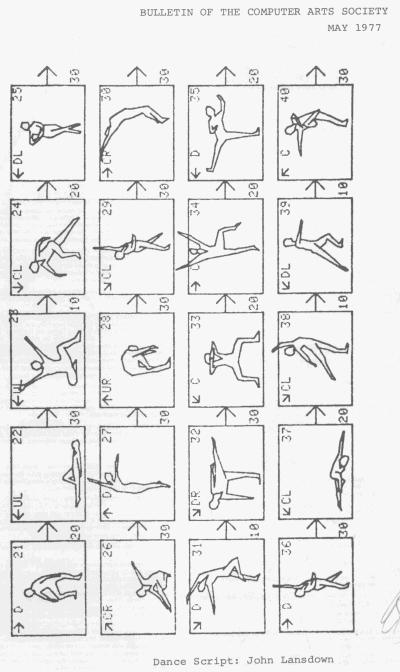
Peter Zinovieff Electronic Music Dairy Summer 1976


This one in via First Last.

http://members.tripod.com/werdav/vocpzino.htm

Peter Zinovieff was the founder of EMS.

"Electronic Music Studios Ltd (EMS) London, England. Beginning in a backyard bomb shelter, Peter Zinovieff has created the EMS Company devoted solely to the production of electronic music instruments." Quote pulled from this page.

Some excerpts from the diary:

"Today is another grey day ... I wish I was in Raasay. There was a storm last night and the studio roof started to leak. It has leaked every year since it was built and every year it is repaired. Water is dripping onto the computer section. Part of the ceiling looks as if it is going to collapse."

"What an idiosyncratic place they must have found EMS. Chickens in the garden. Computers in the basement. Children rushing around the kitchen. I wisk Sofka to school on the Honda. I meet Robin half way down Putney Hill. 400 yards zoom. "

"We discuss, rather drunkenly, the future of synthesizers and how organs are becoming more like synthesizers and synthesizers more like organs I explain that I have decided that EMS should not try and compete in this market but that we should continue to stick to educational and sophisticated machines."

"I tell Ludwig about the terrible week that has just passed and the exciting constructive week that lies ahead. Ludwig tells me of the bad financial state we are in and how the studio is too expensive for EMS to support and how I'm too extravagant. I can tell he is tired. I suggest that we discuss it at the EMS meeting tomorrow. Already then the meeting is diluted from microprocessors and Bessel functions into one of financial fussing. Another decision.
Later Ludwig quietens down. Nothing better than tea and cake, wine and a peat fire. We really get on very well. It must be a nightmare running EMS' financial affairs. We get to bed at about 1. I am glad Ludwig is back."

"We discuss the Glasgow Hospital project. This is an application that has been submitted to the Wolfson Foundation for a large amount of money to be spent on the computer interrogation of patients and the computer diagnosis of their illnesses. Apparently the right 12 questions could diagnose any known disease. The idea is that the patients will be asked questions in regional accents by the computer. They would then respond by pressing a set of simple keys. Yes, no, sometimes etc. EMS will provide all the hardware and the hospital would provide the doctors. It would be very interesting if it works. Alan will be in charge of the project."

"I must stop the EMS people drinking too much at these lunches. Peter Eastty will be slurred and cantakerous this afternoon if he has any more.
All the EMS team are very high powered. Even though some - like David Cockerell, Richard Monkhouse and Alan Sutcliffe are friends and consultants, they still play an enormously important role in the company. We are extremely lucky. "

"Two pop stars arrive with a roadie at 7. They meet everyone going off from the meeting to play pool at the pub. David and Tim are experts at billiards. In Raasay we found an old bagatelle set. I hope it pulls them back there. David walked in snow for the first time in his life at the new year in Raasay.
It soon turns out that the roadie is the greatest pop-star. He's from Tangerine Dream. One of the others wears a long furry earring. Call me Indie Robin recognises him from Chicago. He says he's travelling incognito. It's a good earring he wears for that.
German pop-stars always seem more workmanlike than Americans. English ones fall into one or other camp but usually are dressed up. The Germans wear scruffy jeans and shave. They have come to look at the Vocoder. We also show them the latest modules that Tim is making.
Robin soon takes them off for who knows what with some friends. Rose, Leo and I go to a newly-opened Russian restaurant in Putney. I become maudlin for the gypsies and the islands of Petersboorg that I never knew."

"I had a terrible dream last night about my neck being cut away leaving my head stuck rigid on my body. I woke rather sick. It must have been too much wine at dinner. Suddenly I realise that it is pouring with rain and that I had removed the polythene sheeting from the roof for Hans' lunch the day before yesterday. That is why I had nightmares and why I feel sick.
My worst fears are justified. Water is once again pouring into the studio. Two panels have fallen off the ceiling Onto the computer racks."

"We open a bottle of Champagne. Ludwig thinks I am extravagant. After lunch Richard comes with the video camera interface. It works as soon as he plugs in the board. My programs have been adapted and we are able to test it straight away.
With this invention I am able to derive patterns from a video image. At the sirnplest these images might be a waveform drawn on a piece of graph paper but at a more complex level I think I will be able to derive very useful musical patterns from more random video images. For instance say I point the camera at a flower and say I apportion density of image to harmonic content and I scan from left to right across the stern of the flower. Then imagine that these sounds are pretty mediocre. Dull. Say then that I turn the camera slightly to the left or choose another flower. Will the sounds be more or less interesting? They certainly won't be the same. What images will give the best sounds. In a way it is getting a video picture to provide a pattern for improvisation.
We try it out. I point the camera into the garden. I run VOCAB and I assign the Video parameters to control DOB.
Suddenly the most marvellously rich, varied and amazing sounds come pouring out of the speakers. They ripple and change. They are the first alssolutely fantastic sounds that the oscillator bank has made. Everyone is moved. At first no-one believes that they are not pr~omposed but as I turn the camera the sounds change. They are convinced. In some ways we are frightened. It's like in the story of tuning in to the death cries of roses as they are cut.
We call over Ludwig. He rings up Germany. I ring David in Paris we hold the telephone to the loudspeakers but there is probably little chance that they can hear what is going on. The children come down. I dare not alter anything. Perhaps the program has got into a random loop. I save it and restart it. Wherever I point the camera there is another set of sounds. Each more rich and varied than the last.
I must keep this a secret. I shall give it to Harry for Orpheus. We must not allow these marvellous things to be heard for a year or two. Apollo's gift to Orpheus was music. I wonder where these sounds come from. Perhaps it's not fluke that we have been working on Orpheus for 3 years. This is our reward.
What a day ! Perhaps all days will now be magical again!
I shall use the last seven days of this journal for my Glasgow Musica Nova talk.
Peter Zinovieff
Summer 1976
source: Bulletin of the Computer Arts Society May 1977 "

Monday, May 20, 2013

Studio Electronics Boomstar 3003 - The first 10 minutes


"This is the first 10 minutes of noodling with my new Studio Electronics Boomstar 3003

- This is NOT a song. It is pure awesome noise
- It is 4 notes going round and round triggered by Midi from an Ableton Live Arp. Don't wait for the drop
- There are no effects whatsoever. No limiting, compression, nada
- Recorded via a UAD Apollo into Live, MP3'd in iTunes

This thing is brutal. F'ing love it."

via allthegear.net

Saturday, March 16, 2024

LondonSXPO-24


video uploads by sonicstate

Playlist:

LondonSXPO-24 Manifold Research Centre : TMINTT
Well this looks pretty interesting - you can patch 'The Map Is Not The Territoire' matrix mixer using magnets
LondonSXPO-24 Knobula: Pianophonic updates
Jason from Knobula had some firmware updates to the rather impressive 'Pianophonic' module, plus a shiny new mirrored faceplate for 'Kickain'
LondonSXPO-24 Enjoy Electronics GODFATHER rides again
Martin from Enjoy Electronics, makers of The GODFATHER demonstrated the latest updates to Nick
LondonSXPO-24 Rides In The Storm: BOC module
Uwe George from Rides In The Storm runs us through the new BOC module
LondonSXPO-24 Gamechanger Plasma Voice Modules
Last time we caught up with Ilya from Gamechanger Audio he was in our studio showing us the MotorSynth - the Plasma Voice Modules were almost ready, but not quite finished.
At the show we were able to see - and hear them for the first time, and get another quick peek at the new pedal too.
LondonSXPO-24 Erica Synths: BullFrog Accessories
It's always a pleasure to see Ģirts at a show, and here he was showing some updates and accessories for the education oriented Bull Frog synth
LondonSXPO-24 PWM: Latest on MANTIS Quad Mode
Always interesing hearing what Paul has been up to with his Malevolent and Mantis models - news is that Mantis is about to ship, and has some interesting new updates to the 'Quad' mode
LondonSXPO-24 Z-RAY: Wireless Lights in a briefcase
This is right up our street - cool portable battery powered wireless stage lights - oh yeah! Dominik had a briefcase full of prototypes for his latest project - to find out more, head to his website at thinkrad.io
LondonSXPO-24 Joranalogue Dim 2 is quite bright actually
In a slightly confusing naming incident, Joranalogue decided to call the latest module 'Dim 2'' - and it is definitely not dim at all. Quite the opposite ;-]
LondonSXPO-24 Apollo View: Rabbit Hole +more
Can't recall coming across Apollo View before, but Jon-Mark was showing some lovely looking modules including the Rabbit Hole - we took a look
LondonSXPO-24 Bastl Intruments channel The Matrix with Neo-Trinity?
Okay, tell me someone hasn't been watching re-runs of The Matrix
... Neo...Trinity..
come on, surely? ;-]
LondonSXPO-24 Vertice Analogue Filterbank from Euterpe
Stefano reckons you should spend a month with his rather splendid 'Vertice' filterbank - a beautiful if brutal instrument. And if his smiles are anything to go by, it should be a fun time :-]

Tuesday, July 07, 2015

Reminder: Pop-up Synth Studio | Los Angeles | July 11, 2015 | Free Synth Recording Workshop


Published on Jun 16, 2015 deepsignalstudios

Learn more at: https://www.deepsignalstudios.com/vin..."

"Bring your own laptop and headphones and record synthesizer tracks for your midi sequences for free at The Handbag Factory, 1336 S Grand Ave, Downtown Los Angeles, Ca Saturday, July 11th, 12pm to 6pm.

Deep Signal Studios will holding our first pop-up synth studio event, the Vintage Synth Recording Workshop at The Handbag Factory in Downtown LA. Bring your own laptop, headphones, and audio interface and record your completed sequences from any of the synths for free. USB-MIDI interfaces will be available for attendees to use. Or, play the keyboard parts live and track it into your session.

For those who have their DAWS only on desktop PCs they can bring midi files on a USB drive and have the synth parts tracked by Deep Signal Studios’ engineers from any of the synths through a UA Apollo interface into Ableton Live, Logic, Pro Tools and then transfer the audio back to the USB drive for home-mixing for a nominal fee. Attendees will also have the chance to hang out, meet fellow producers and enjoy refreshments. RSVP on Facebook.

Come hang out, meet fellow producers and enjoy refreshments.

at: (the) Handbag Factory
1336 S Grand Ave
Los Angeles, California
USA
Info line: +1-562-285-7029"

Monday, May 02, 2016

Infinite Looper 1.1 & Aleph Looper for iPhone


Infinite Looper 1.1 Published on May 1, 2016 Secret Base Design


iTunes:
Aleph Looper - Secret Base Design
Infinite Looper - Secret Base Design
Curious if there is any relation to the monome Aleph Looper from Ezra Buchla & Brian Cabtree. Both are loopers.

"Aleph Looper is the iPhone version of Infinite Looper (which is universal).
From the stage to the studio, Aleph Looper will let you capture musical ideas, and can provide the framework for songwriting, all in a single integrated app. Loop MIDI phrases easily, control six different instruments, and quickly assemble loops into full songs. Visit the Secret Base Design web site for details and demonstration videos.

* MIDI Looping
There are dozens of audio looping apps; Aleph Looper expands on this idea, allowing you to quickly select different synthesizers, and loop the MIDI to each with perfect synchronization. Each of the instruments can have up to eight simultaneous loops. The loops can be of different lengths, up to sixtyfour measures long.

* Internal SoundFont Engine
Built into the app is an extensive SoundFont library with hundreds of instruments, and multiple drum kits. Pianos, strings, guitar, brass, synthesizers -- it's all there. Everything you need to get going right away.

* Inter-App Audio
Aleph Looper can host IAA-compatible synth apps -- take advantage of the wide range of innovative synths.

* MIDI In and Out
The app recognizes MIDI from other apps, over Bluetooth connections, and from hardware controllers. Secret Base Design is the developer of the innovative Apollo MIDI over Bluetooth -- the first Bluetooth MIDI solution for iOS. We're also partners in the musicIO app, which allows both audio and MIDI to be sent over an ordinary iOS sync cable. The app is built using the excellent MIDIbus library -- the Secret Base Design team has been at the forefront of MIDI on iOS for years.

* More that just loops. Songs.
Built into the app is a loop sequencer -- select different sets of loops for each section of a song, and the app will step through them automatically. You can build complex compositions, so that your songs evolve and breathe.

* MIDI Export
The iPad is an excellent music sketch pad, but it's not the end of the road. Aleph Looper will export a MIDI file for a song, which can be loaded into professional desktop DAWs. Use your iPad to put together a demo, and then bring in the full set of studio tools to finish your masterpiece.

* Keyboards and Pads
The app features a responsive piano-style keyboard -- adjust note velocity by touching towards the tops of the keys. And because on-screen keyboards can be hard to play, there's also ten pages of programmable pads. You can quickly assign notes or chords to pads, making it easy to capture the progression for a song idea, and bring the whole thing into focus.

* Quantization and MIDI Latency
To lock down timing, you can toggle on quantization -- or leave it off, for a loose, natural feeling. If you use external MIDI controllers, there can be latency in the MIDI messages -- the app can time shift slight to account for the delay of Bluetooth connections or WiFi. And if you use an audio-to-MIDI converter app like MIDImorphosis, latency compensation can tighten up the timing.

NEXT PAGE HOME


© Matrixsynth - All posts are presented here for informative, historical and educative purposes as applicable within fair use.
MATRIXSYNTH is supported by affiliate links that use cookies to track clickthroughs and sales. See the privacy policy for details.
MATRIXSYNTH - EVERYTHING SYNTH